Professional High Quality Stage Lighting Manufacturer


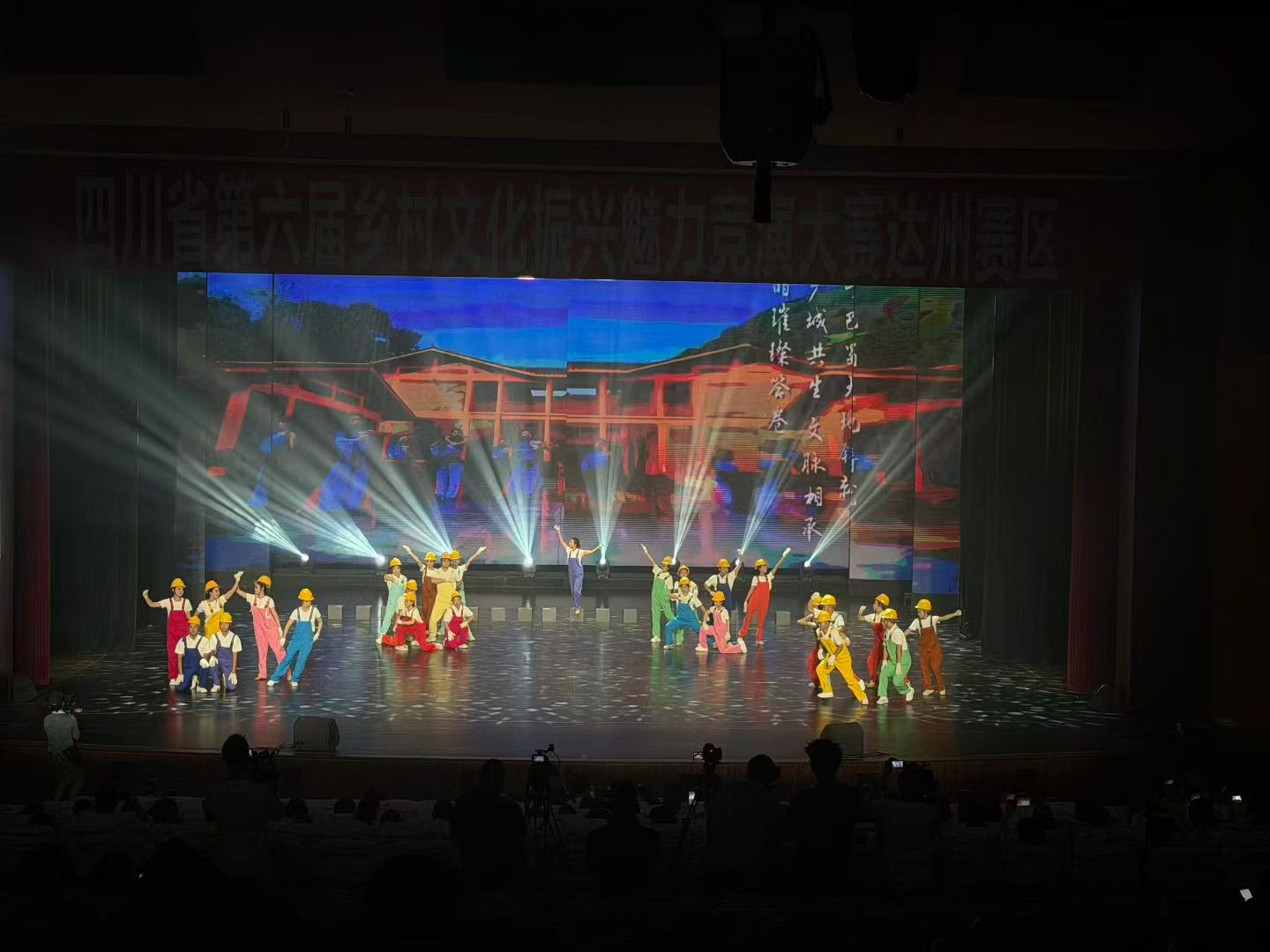
What are gobos in lighting? A gobo is a patterned disc placed inside a lighting fixture to shape or project light into a specific pattern, texture, symbol, or logo. Depending on the fixture and gobo design, it can create sharp patterns on a stage, wall, floor, backdrop, or other surface.
Gobos are commonly used in stage lighting, theater, concerts, corporate events, weddings, clubs, architectural lighting, and other productions where a standard beam of light needs an additional visual effect. A gobo can be fixed in position or rotated, and it can be made from different materials such as metal or glass.
For lighting designers, the important question is not simply what a gobo is. It is how the gobo works with the optical system, what type of gobo is suitable for an application, and which type of lighting fixture can project it clearly.
What Is a Gobo in Lighting?
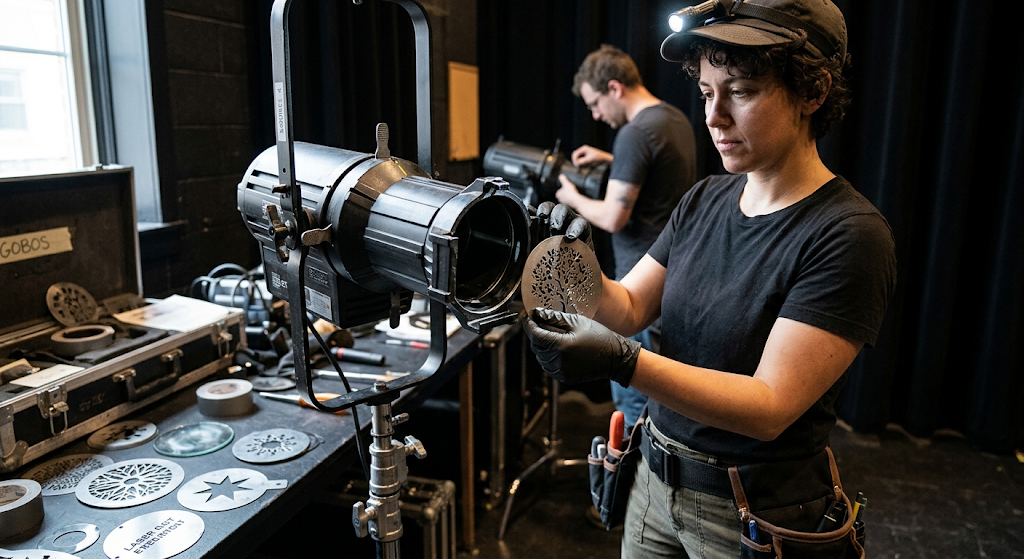
A gobo is a physical pattern or stencil placed in the optical path of a lighting fixture. When light passes through the open areas of the gobo, the pattern is projected through the fixture’s lens and onto a surface.
The word “gobo” is commonly explained as an abbreviation of “goes before optics”, referring to the position of the pattern before the lens or other optical components.
A gobo can contain simple geometric shapes, lines, stars, foliage, architectural textures, abstract patterns, or a custom logo. The final appearance depends on the gobo itself as well as the fixture’s light source, lens, focus, beam angle, projection distance, and optical design.
This means a gobo is not a complete lighting fixture. It is an optical component used inside a suitable gobo light, spotlight, profile fixture, or gobo-equipped moving head.
How Does Gobo Lighting Work?
Gobo lighting works by placing a patterned disc between the light source and the optical system. The light passes through or around the pattern, and the lens focuses the resulting shape onto a target surface.
A simplified gobo projection system can be understood as:
Light Source → Gobo → Lens → Focus → Projected Pattern
The quality of the projection depends on more than the gobo pattern. The optical system needs to produce enough intensity and focus to reproduce the pattern clearly. This is why a fixture designed for projection effects normally includes optical components such as a focus system and a concentrated light source.
Projection distance also matters. If the fixture is too close to the projection surface, the pattern may not have enough space to develop. If it is too far away, the image can become less visible depending on the fixture’s output and optical efficiency.
For stage applications, haze or atmospheric effects can make the overall lighting effect more visible, but a gobo projection itself is primarily designed to appear on a surface such as a wall, floor, backdrop, or scenic element.
What Are Gobos Used For?
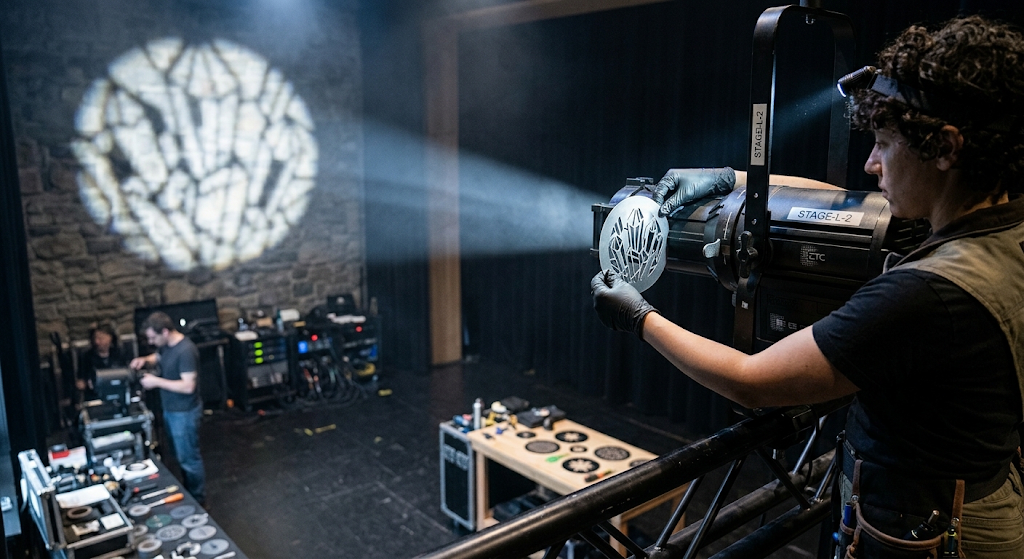
Gobos are used whenever a lighting designer needs to add a recognizable pattern or texture to a lighting scene. They can turn a plain beam into a visual element without changing the entire lighting system.
Stage and Theater Lighting
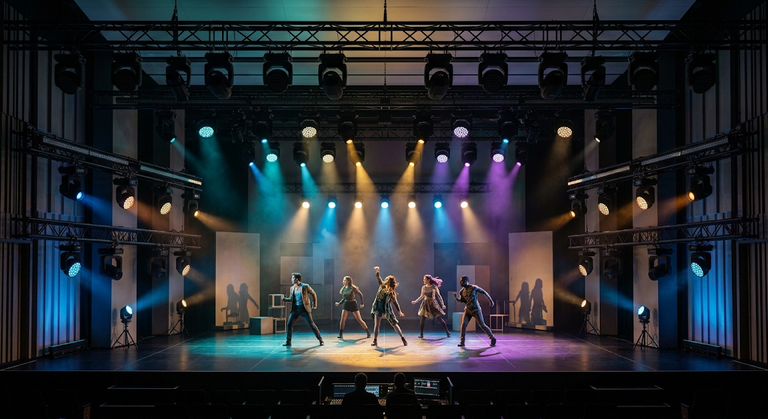
Stage gobos can create textures such as leaves, windows, clouds, architectural shapes, or abstract patterns. They can be projected onto scenery or used to add depth to a background.
Concerts and Live Events
Gobo lighting effects can add moving patterns to backdrops, screens, floors, or stage structures. Rotating gobos can create more dynamic effects when the pattern needs to move during a performance.
Wedding and Event Lighting
Gobos are often used to project decorative patterns, initials, names, dates, or other designs onto floors and walls. A custom gobo can therefore become part of the visual identity of an event.
Corporate Events and Branding
A logo gobo can project a company logo or other branded design onto a wall, floor, stage backdrop, or architectural surface. This makes gobo projection useful when lighting needs to support both illumination and branding.
Architectural and Decorative Lighting
Gobos can also create architectural textures on columns, walls, ceilings, facades, and other surfaces. Instead of using a completely uniform light, a gobo adds a controlled visual pattern to the illuminated area.
What Are the Different Types of Gobos?
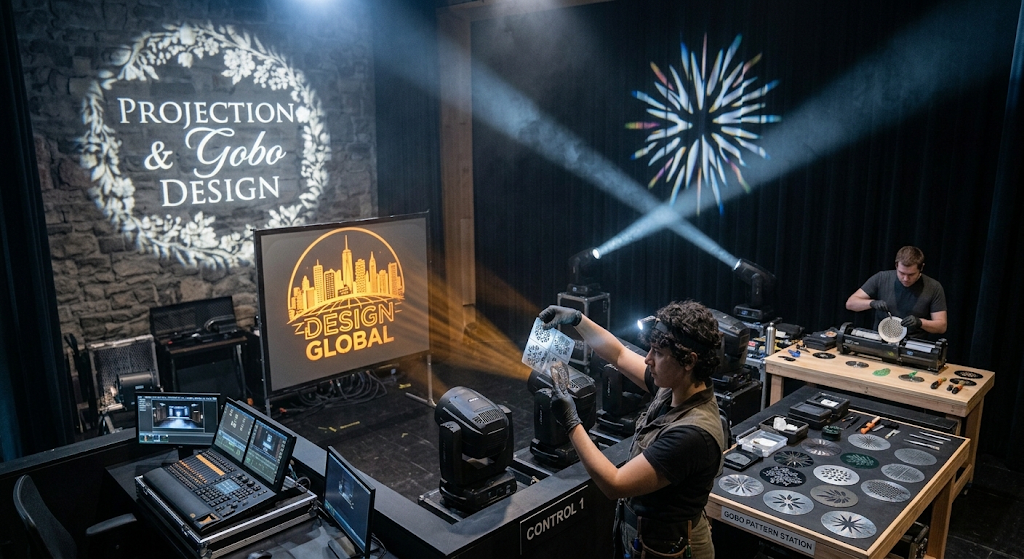
Gobos can be classified by their material, pattern structure, and how they are used inside a lighting fixture. The most common categories include metal gobos, glass gobos, fixed gobos, and rotating gobos.
| Common Gobo Types for Stage Lighting | ||
| Gobo Type | Main Characteristic | Typical Use |
| Metal Gobo | Pattern cut into a metal disc | Simple patterns, textures and shapes |
| Glass Gobo | Pattern or image formed on glass | Detailed patterns, logos and color effects |
| Fixed Gobo | Pattern remains stationary | Static textures and repeated projection |
| Rotating Gobo | Pattern can rotate during operation | Dynamic stage and entertainment effects |
What Is a Metal Gobo?
A metal gobo is a thin metal disc with a pattern cut into its surface. When light passes through the open sections, the pattern is projected through the fixture’s optical system.
Metal gobos are commonly used for geometric patterns, lines, textures, stars, foliage, windows, and other designs where the required detail can be produced through a metal pattern.
For simple stage textures and repeated effects, metal gobos can provide a practical solution. The exact gobo dimensions and thickness must match the fixture’s gobo holder or wheel.
What Is a Glass Gobo?
A glass gobo uses a glass disc to carry the projected design. Compared with a basic metal cutout, glass can support more detailed patterns and image structures.
Glass gobos are useful when the projection requires finer visual details, more complex artwork, or color effects. They are therefore often considered when a lighting project needs more than a simple single-color pattern.
For custom applications, the glass type, coating, image structure, dimensions, and fixture compatibility all need to be considered before production.
Fixed Gobo vs Rotating Gobo
One of the common questions when choosing a gobo light is whether to use a fixed gobo or a rotating gobo.
| Fixed Gobo vs Rotating Gobo | ||
| Feature | Fixed Gobo | Rotating Gobo |
| Pattern Movement | Stationary | Rotates during operation |
| Effect | Static texture or pattern | Dynamic pattern effect |
| Pattern Replacement | Usually requires changing the wheel or position | Individual rotating gobos can be replaced on suitable systems |
| Typical Application | Basic projection and texture | Concerts, events and dynamic stage effects |
The choice depends on the required effect and the fixture’s optical and mechanical design. A rotating gobo system offers more flexibility when the pattern itself needs to become part of the movement in a lighting cue.
What Is a Gobo Wheel?
A gobo wheel is a rotating or fixed mechanism inside a lighting fixture that holds multiple gobos. Depending on the fixture, a gobo wheel may contain several patterns that can be selected during operation.
A fixed gobo wheel holds patterns in predetermined positions. A rotating gobo wheel can allow individual patterns to rotate and, on some fixtures, can also support individual gobo replacement.
The number of gobos, wheel type, rotation function, indexing capability, and compatibility with the optical system are important specifications when evaluating a fixture with gobo projection.
This is one reason why a fixture designed for gobo projection is mechanically more complex than a basic wash light. The gobo mechanism has to work together with the light source, optics, focus system, and control electronics.
What Is a Gobo Moving Head?
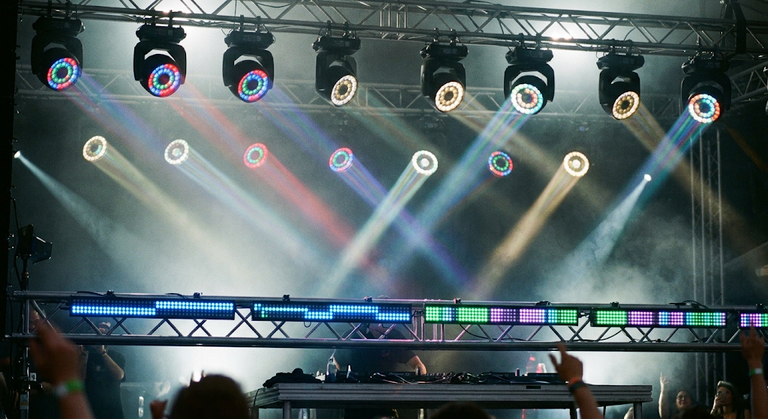
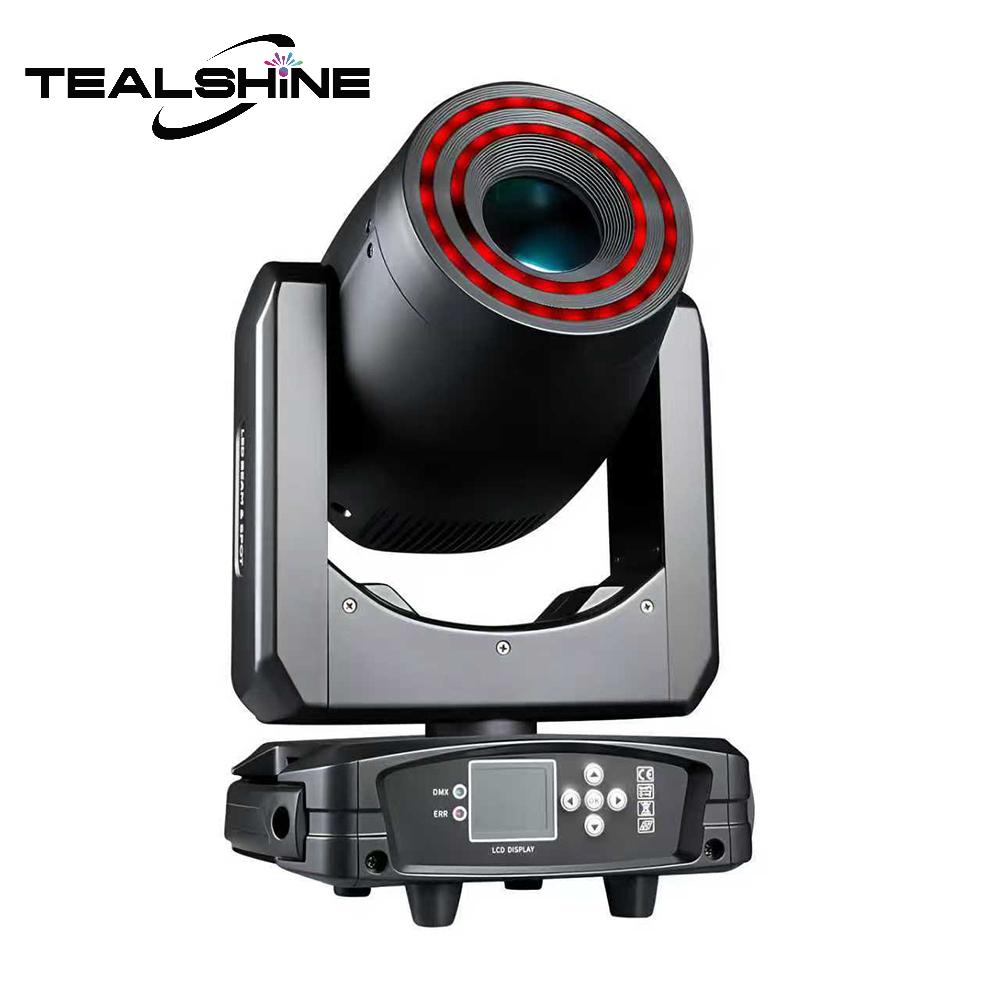
A gobo moving head is a moving head lighting fixture equipped with a gobo system that allows it to project patterns while the fixture itself can pan and tilt.
Unlike a basic beam moving head, a gobo moving head normally needs additional optical and mechanical components. These may include a gobo wheel, focus system, color wheel, prism, shutter system, and other effects depending on the fixture design.
The combination of movement and projection makes a gobo moving head light useful when the projected pattern needs to change position across a stage or venue.
For example, a lighting designer can use one fixture to project a pattern onto a backdrop, change the color, rotate the gobo, adjust focus, and then move the fixture to another position through pan and tilt control.
“`
This type of fixture demonstrates why the gobo system matters when selecting a moving head for projection effects. Tealshine’s TS-200SP specification includes both static and rotating gobo wheels, along with prism and electric focus functions.
Gobo Lighting vs Beam Lighting: What Is the Difference?
Gobo lighting and beam lighting can both use concentrated light sources, but they are designed to produce different visual results.
| Gobo Lighting vs Beam Lighting | ||
| Feature | Gobo Lighting | Beam Lighting |
| Main Purpose | Project patterns and images | Create narrow aerial beams |
| Pattern Projection | Yes, with a suitable gobo system | No, unless a separate gobo mechanism is included |
| Typical Visual | Shapes, textures, logos | Narrow shafts and aerial effects |
| Common Fixture | Spot moving head | Beam moving head |
A beam fixture should not be assumed to project gobos simply because it produces a narrow beam. The gobo wheel and projection optics are separate components. Tealshine’s comparison of beam, wash, and spot fixtures explains this optical difference in more detail. Learn more about beam, wash and spot moving head lights.
What Is Gobo Projection?
Gobo projection is the process of projecting a pattern from a gobo onto a visible surface using a suitable lighting fixture.
The projection can be used to create a small, sharply defined pattern or a larger image depending on the fixture, lens, focus, projection distance, and gobo size.
Common gobo projection applications include:
- Stage background textures
- Architectural patterns
- Wedding floor patterns
- Corporate logo projection
- Theater scenery effects
- Concert backdrop effects
- Club and entertainment lighting
- Decorative wall and ceiling projection
The same basic principle can therefore be used for both decorative patterns and more functional visual effects.
Can a Gobo Project a Logo?
Yes. A suitable custom gobo can be designed to project a logo, text, symbol, or other custom graphic.
However, the quality of a logo projection depends on the level of detail in the artwork, gobo material, optical system, focus, projection distance, and compatibility between the gobo and fixture.
Simple, high-contrast artwork is generally easier to project clearly than extremely fine graphics. For a custom lighting project, the gobo dimensions and fixture specifications should be confirmed before manufacturing the gobo.
How to Choose a Gobo for Stage Lighting?
Choosing the right stage lighting gobo starts with the fixture rather than the artwork alone. The gobo needs to fit the mechanical and optical requirements of the lighting fixture.
1. Check Gobo Size
Gobo dimensions must match the fixture’s gobo holder or gobo wheel. A pattern with the wrong outer diameter or inner dimensions may not fit correctly.
2. Choose the Right Material
Metal and glass gobos have different characteristics. A metal gobo can be suitable for many basic patterns, while glass can be considered for more detailed artwork or color effects.
3. Decide Between Fixed and Rotating
If the pattern only needs to remain stationary, a fixed gobo may be sufficient. If the pattern needs to rotate as part of the lighting effect, a rotating gobo system is more appropriate.
4. Consider Projection Distance
The distance between the fixture and projection surface affects image size, focus, and brightness. A fixture with an appropriate focus and optical system will produce a more usable projection across its intended working distance.
5. Match the Gobo to the Fixture
Before ordering custom gobos, confirm the fixture model, gobo wheel type, dimensions, thickness requirements, and optical specifications with the lighting manufacturer.
Can Gobos Be Customized for Stage Lighting?
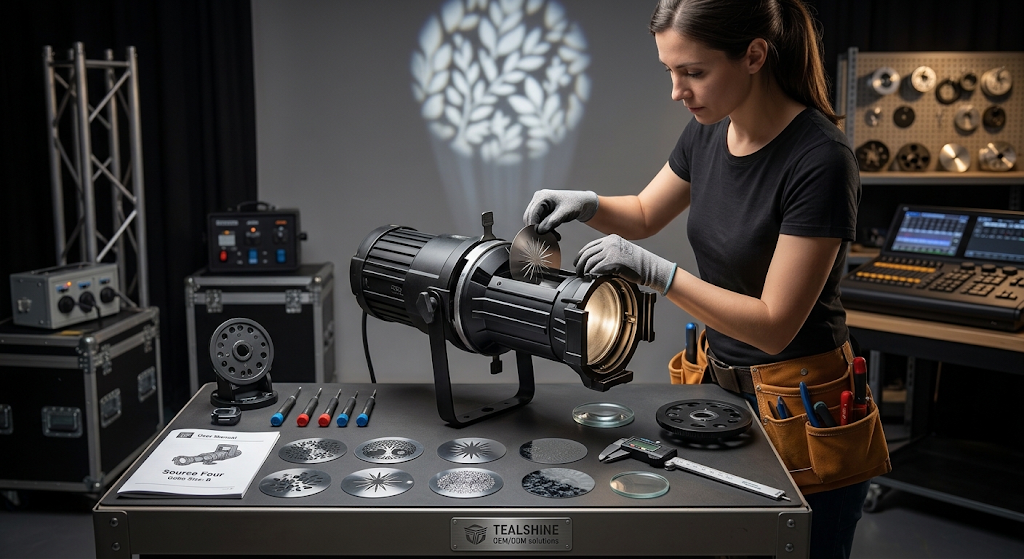
Yes. Custom gobos can be produced for specific lighting projects, including custom patterns, logos, textures, and other visual designs.
For an OEM or ODM lighting project, customization does not have to stop at the gobo artwork. The optical system, gobo wheel configuration, focus system, fixture structure, control software, and DMX functions can also be considered as part of the overall fixture design.
This is particularly relevant for distributors, rental companies, lighting contractors, and project buyers who need a fixture designed around a specific application rather than a standard catalog configuration.
Tealshine provides OEM/ODM stage lighting customization, including optical and fixture-related development for project-specific requirements. Learn more about Tealshine OEM/ODM stage lighting solutions.
Common Gobo Lighting Questions
What does gobo mean in lighting?
Gobo is commonly explained as “goes before optics.” In stage lighting, it refers to a patterned disc placed in the optical path of a fixture to shape or project light.
What is a gobo used for?
A gobo is used to project patterns, textures, shapes, logos, and other visual designs onto a surface such as a stage floor, wall, backdrop, or architectural structure.
What is a rotating gobo?
A rotating gobo is a gobo mounted in a mechanism that allows the pattern to rotate during operation. It is commonly used for dynamic stage lighting effects.
What is a fixed gobo?
A fixed gobo is held in a stationary position inside the lighting fixture. It projects a static pattern rather than rotating the image.
What is a gobo wheel?
A gobo wheel is a mechanism inside a lighting fixture that holds multiple gobos and allows the fixture to select different patterns during operation.
Can a moving head project a gobo?
Yes, but the moving head must have a suitable gobo system and projection optics. A standard beam moving head without a gobo wheel cannot normally project a gobo pattern.
What is the difference between a gobo and a prism?
A gobo uses a physical pattern to project an image or texture, while a prism splits the light into multiple beams. Some spot moving heads use both effects in the same fixture.
Can I use a custom logo as a gobo?
Yes. Custom logo gobos can be produced for suitable fixtures. The logo artwork, gobo material, dimensions, and fixture compatibility should be checked before production.
Final Thoughts
Gobos are one of the simplest ways to add controlled patterns, textures, and projected images to stage lighting. The gobo itself is only one part of the system. The final projection depends on the gobo material, gobo wheel, light source, lens, focus, projection distance, and the fixture’s overall optical design.
For basic textures, a fixed metal gobo may be enough. For dynamic stage effects, a rotating gobo can provide additional movement. For detailed artwork or logos, glass or custom gobos may be considered depending on the fixture.
When a lighting project requires both movement and pattern projection, a gobo moving head can combine pan and tilt movement with gobo, focus, color, and other optical effects in one fixture.
The key is to choose the gobo and lighting fixture as one optical system rather than treating the gobo as an independent accessory.
Table of Contents