Professional High Quality Stage Lighting Manufacturer


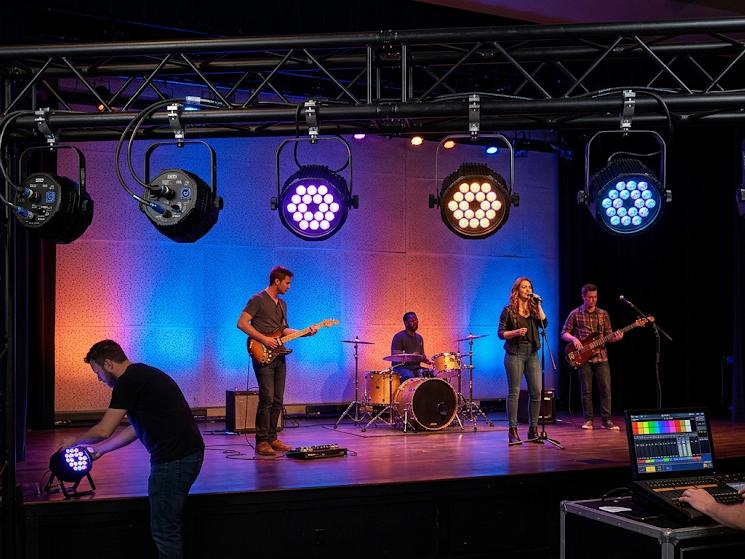
Table of Contents
If you are building or upgrading a stage lighting rig, one of the first questions is whether to buy LED PAR lights, moving head lights, or a mix of both. The two fixture types look different, cost differently and do different jobs, so the right answer depends on what your stage needs to do, not on which fixture is more impressive. This guide compares LED PAR lights vs moving head lights for stage wash, beam effects, DJ setups and live events, so you can choose with confidence.
The Short Answer
Choose LED PAR lights when you need reliable, even color coverage at a sensible price. Choose moving head lights when you need movement, beam effects, gobo patterns or the ability to change looks without re-aiming fixtures. Most professional rigs use both: PAR lights build the base color and wash, and moving heads add the dynamic layer on top.
A Quick Note on the Terms
“PAR” originally describes a parabolic aluminized reflector, a type of lamp and housing. In stage lighting today, a “PAR light” or “par can” usually means a fixed LED fixture that throws a wash of colored light, which is how we use the term here. A “moving head” is a fixture with motorized pan and tilt, so its beam can sweep across the stage and be repositioned on command. Many moving heads are built as wash, spot, beam or hybrid models, which changes what they do best.
What LED PAR Lights Do Best
An LED PAR light is a fixed fixture. You hang or place it, aim it once, and control its color, brightness and strobe through DMX or built-in modes. That simplicity is exactly why it remains the workhorse of stage lighting.
- Even stage wash: A row of PAR lights gives smooth, consistent color across a stage, backdrop or speaker area.
- Lower cost per fixture: You can cover a larger area with the same budget, which matters for churches, schools, bars and rental stock.
- Simple control: Fewer DMX channels and fewer settings mean faster setup and less programming.
- Lighter and easier to rig: PAR fixtures are generally lighter than moving heads, so they are easier to place on floor stands, truss or the floor for uplighting.
- Battery and outdoor options: Battery-powered and waterproof PAR designs make wireless uplighting and outdoor events practical. Browse our battery-powered LED lights for wireless options.
The trade-off is that a PAR light cannot move. If you want the light to land somewhere new, someone has to re-aim it by hand.
What Moving Head Lights Do Best
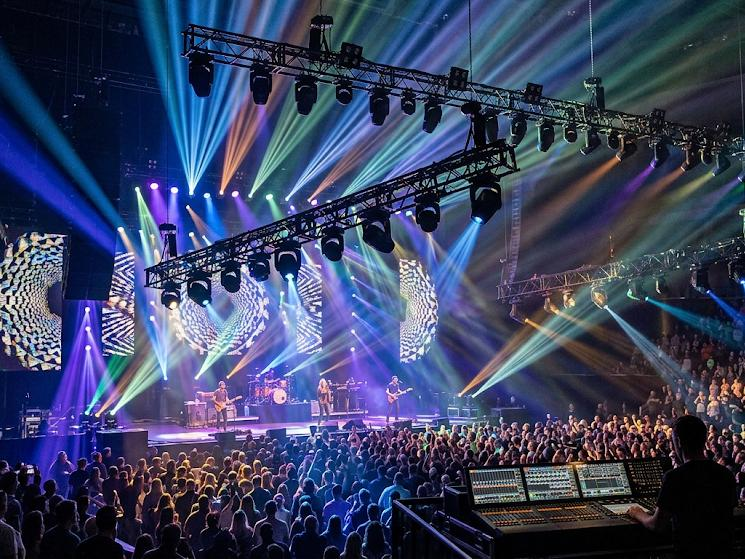
A moving head adds motorized pan and tilt, and most models add extras such as zoom, focus, gobos, prisms or tight beams. One fixture can hit many positions during a show, which is why moving heads define the look of concerts, clubs and festivals.
- Movement: Beams sweep, fan and chase across the stage and the audience space.
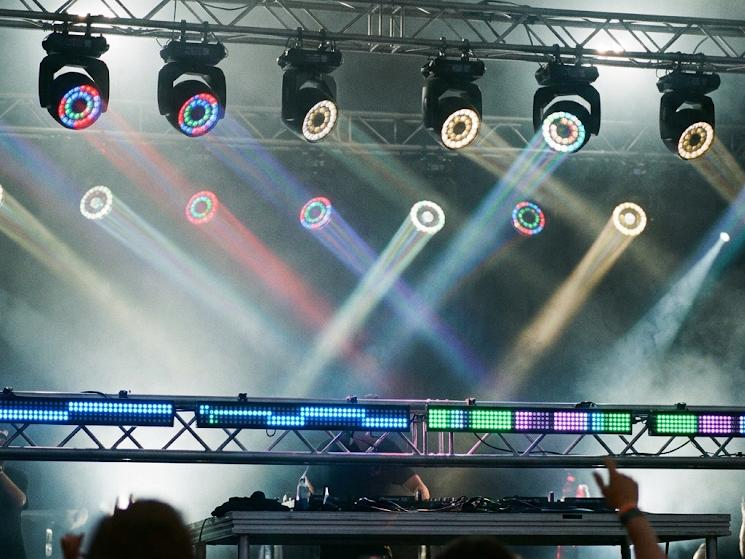
- Beam and aerial effects: Beam and hybrid models cut sharp shafts of light through haze, which gives that classic concert look.
- Gobos and patterns: Spot-style heads project shapes, textures and logos. See our guide on what gobos are in lighting.
- Flexible looks from fewer fixtures: One moving head can serve as a spotlight in one song and a wash in the next, depending on the model.
- Pixel and effect control: Advanced models offer pixel-mapped beams and rings. See beam pixel fixtures explained.
The trade-off is cost, weight and complexity. Moving heads are generally more expensive, heavier, need safe rigging, use more DMX channels and take longer to address and program.
LED PAR Lights vs. Moving Head Lights: Side-by-Side Comparison
The table below summarizes the main differences. Exact specifications vary by model, so treat it as a general guide for planning.
| Feature | LED PAR Light | Moving Head Light |
| Movement | Fixed, aimed by hand | Motorized pan and tilt |
| Main job | Wash, color fill, uplighting | Beams, spot, moving wash, effects |
| Beam control | Usually fixed angle | Zoom, focus, gobos, prisms (model dependent) |
| DMX complexity | Low, few channels | Higher, many channels |
| Rigging | Lighter, simple | Heavier, safety cable and truss needed |
| Cost per fixture | Lower | Higher |
| Setup time | Fast | Longer (addressing, programming) |
| Best for | Covering a wide area on a budget | Dynamic shows and visual impact |
Table 4: General comparison of LED PAR lights and moving head lights
Which One Fits Your Stage? Scenario Guide
Different venues call for different priorities. Use the table below as a starting point, then adjust for your room size, ceiling height, budget and the people who will operate the lights.
| Application | Start With | Why |
| Mobile DJ and small bar | PAR lights, then add a few moving heads | PARs set the mood cheaply; a pair of moving heads adds motion |
| Weddings and corporate events | PAR or battery uplights | Wireless uplighting is quick to place and keeps cables off the floor |
| Churches and schools | PAR wash | Even coverage, simple operation, easier for volunteer operators |
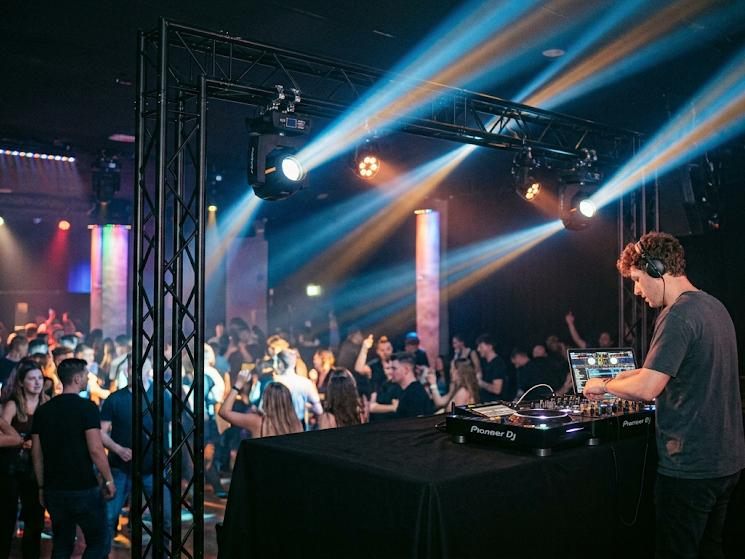
| Clubs and festivals | Moving heads (beam or hybrid) | Beams through haze create the main visual impact |
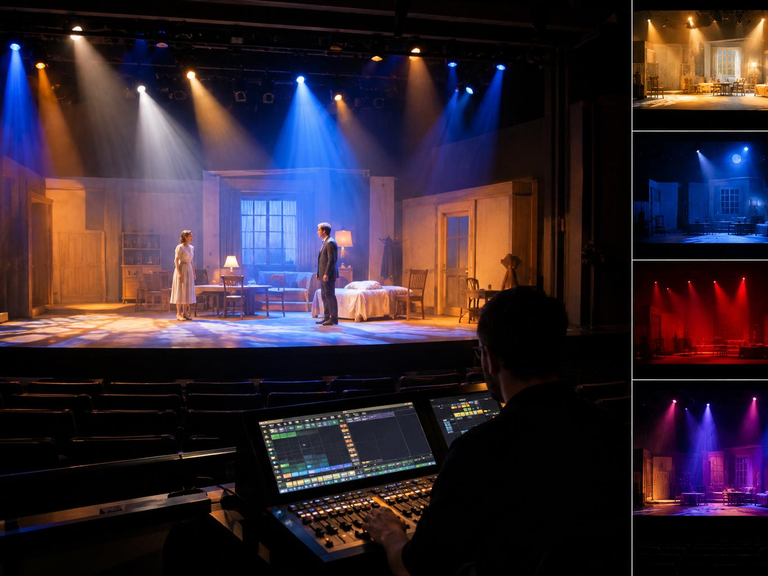
| Theaters | PAR or wash fixtures, plus moving heads for scene changes | Smooth color for the stage, flexible looks between scenes |
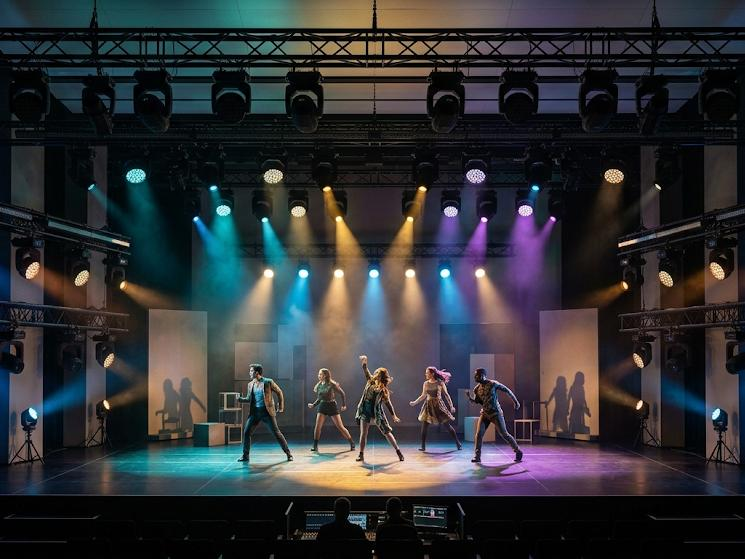
| Concerts and touring | A mix of both | PARs build the base; moving heads and effects create peaks |
Table 5: Suggested fixture priority by application
Why Most Rigs Use Both
Think of lighting as layers. The first layer is the wash: PAR lights, wall washers or LED bars that give the stage its color and make performers visible. The second layer is the effect: moving heads, strobes and beams that add energy. If you only buy effect lights, the stage can look patchy and dark between beams. If you only buy PAR lights, the show can feel flat. For a basic structure of positions and layers, read our stage lighting basics guide and our explanation of 3-point lighting.
A Practical Way to Spend Your Budget
If your budget is limited, a common approach is to cover the stage with PAR lights first, so every area has reliable color, and then add moving heads gradually as your shows demand more. If your events depend on big visuals, such as clubs and concerts, reverse the priority and begin with a small group of moving heads, backed by a few PARs for color fill. Whichever route you take, make sure your controller can handle the channel count. Our guide on what a DMX controller is explains how to match fixtures to a console.
Buying Checklist Before You Order
Before you commit to a fixture, check the following points. They apply to both PAR lights and moving heads.
- Light output and beam angle: Match brightness and angle to your throw distance and room size.
- Color engine: RGBW, RGBWA or RGBWA+UV options change how rich skin tones and pastels look.
- DMX channel modes: More modes give you flexibility; fewer channels keep programming simple.
- Cooling and noise: Fan noise matters in theaters and churches.
- Power and rigging: Check the total load, power linking and the weight of every fixture before you hang it.
- Protection and certification: Look for suitable IP ratings for outdoor use and recognized safety marks such as CE and RoHS.
- Customization: For distributors, rental companies and projects, ask whether the supplier can adjust LED beads, optics, housing, power supply or DMX protocol. Tealshine offers OEM/ODM stage lighting manufacturing for this.
Explore Tealshine Stage Lighting
Tealshine is a China stage lighting manufacturer focused on LED stage lighting for distributors, rental companies, theaters, concert venues and entertainment projects. Our range includes LED PAR can lights, moving head lights, LED light bars, battery-powered LED lights and wall wash lights, and our products hold CE and RoHS certificates. If you need a specific beam, color setup, housing or protocol, our OEM/ODM service covers optical, electrical and DMX customization.
Not sure which mix suits your venue? Contact our team with your stage size, ceiling height, budget and application, and we will suggest a fixture combination.
Frequently Asked Questions
Are LED PAR lights or moving head lights better for a small stage?
For most small stages, LED PAR lights are the better first purchase because they give even color coverage at a lower cost and with simpler control. Add one or two moving heads later if you want motion or beam effects.
Can moving head lights replace PAR lights?
Wash-type moving heads can do the job of a PAR light and also move, but they cost more and are heavier. For large areas of simple color, PAR lights are usually the more economical choice, so many rigs keep both.
Which fixture is better for a DJ setup?
A common DJ setup uses PAR lights for color and a few moving heads for beams and movement. If your budget only allows one type, PAR lights give broader coverage, while moving heads give more visual impact per fixture.
Do I need a DMX controller for PAR lights and moving heads?
Many PAR lights have built-in auto and sound-active modes, so they can run without a controller. Moving heads can also run built-in programs, but to use their full range of movement, gobos and effects, a DMX controller or lighting software is strongly recommended.
Can I use PAR lights outdoors?
Only if the fixture has a suitable IP rating. Look for waterproof or IP65-rated PAR lights, or battery-powered designs made for outdoor events, and avoid using indoor-only fixtures in rain or damp conditions.
Conclusion
The choice between LED PAR lights and moving head lights is not about which is better, but about which job you need done. PAR lights give you dependable wash at a manageable cost, and moving heads give you movement, beams and flexibility. For most stages, the strongest result comes from combining the two, in a proportion that fits your venue and budget.