Professional High Quality Stage Lighting Manufacturer


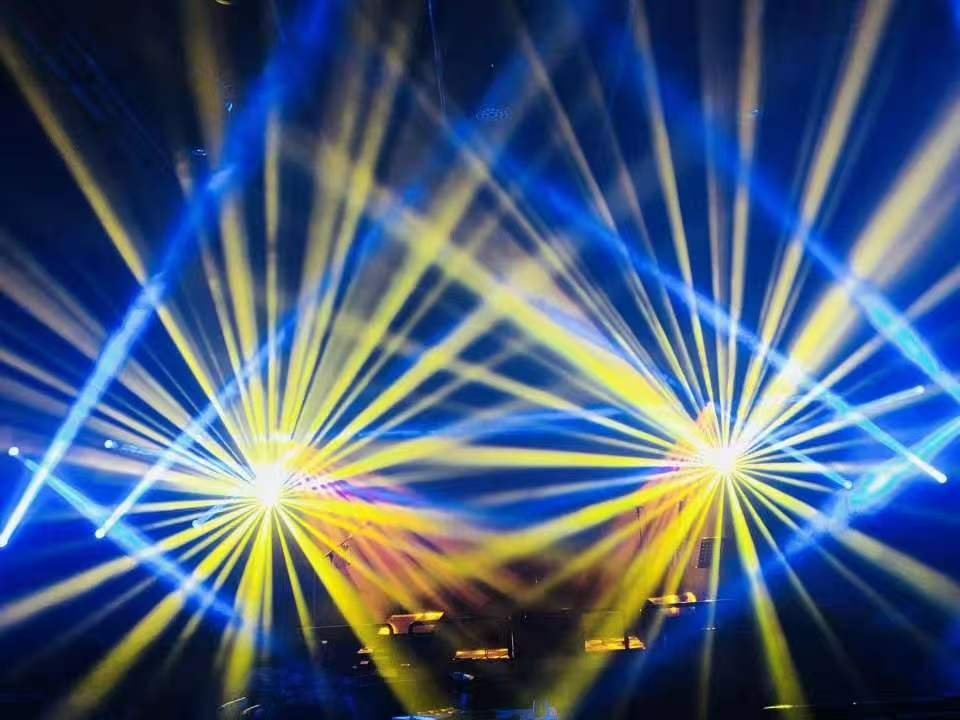
Table of Contents
A 150W beam moving head and a 150W wash moving head can carry the same wattage and look completely different in a room. The beam concentrates that output into a shaft roughly 3°–5° wide. The wash spreads the same power across 15°–25° or more. Wattage doesn’t decide which fixture you’re looking at — optics do.
This guide covers what actually makes a fixture a beam moving head light, why the lumen figure on a spec sheet doesn’t predict how punchy that beam will look, and what to verify before ordering.
What Makes a Fixture a “Beam” Type
A beam fixture uses a small-diameter, tightly collimated optic to keep light rays nearly parallel as they leave the lens. Collimation — narrowing a light source so its rays travel in the same direction instead of spreading — is what lets the beam stay tight over long distances instead of fanning out.
Wash and spot fixtures use wider lens arrays specifically designed to spread light. A beam fixture does the opposite on purpose: a smaller lens aperture and a single concentrated LED source (rather than a multi-lens array) keep the output as close to a parallel shaft as the optics allow.
The internal design reflects that goal. Most beam fixtures use a single high-intensity LED chip (or a tightly packed small cluster) paired with a reflector cup and a front lens shaped specifically to collimate that one source. A wash fixture spreads the same total wattage across many individual LEDs, each with its own small lens — the opposite engineering choice, aimed at even coverage instead of a concentrated shaft. That’s also why beam fixtures tend to run smaller and lighter than wash fixtures of similar wattage: fewer emitters and a simpler lens array take up less housing space.
Output: Why Lumens Alone Don’t Tell the Story
Two fixtures rated at the same total lumen output can look completely different in the air. Lumens measure total light output in every direction; they say nothing about how concentrated that light is once it leaves the lens.
The metric that actually predicts how punchy a beam looks is lux (or candela) measured at a fixed distance — light intensity per unit area, which is exactly what a narrow beam concentrates and a wide wash doesn’t.
| Metric | Measures | Useful For |
| Lumens | Total light output in all directions | Comparing overall fixture brightness |
| Lux | Light intensity landing on a surface at a set distance | Predicting how visible a beam looks at range |
| Candela | Luminous intensity in a specific direction | Comparing beam punch between fixtures directly |
When comparing two beam fixtures, ask for lux-at-distance figures (commonly quoted at 10m or 20m) rather than relying on the lumen total alone — it’s the number that actually predicts how the beam reads across a venue.
A concrete illustration: two fixtures both rated at 3,000 total lumens can produce very different results at 20 meters if one has a 3° beam angle and the other has an 8° angle. The narrower beam concentrates the same light into a smaller cone, which typically means a noticeably higher lux reading at that distance — often two to three times higher between a true beam and a soft “hybrid beam” fixture at the same lumen rating. That gap is exactly what a crowd sees as “punch,” and it never shows up if a spec sheet only lists total lumens.
Beam Angle Tolerance: What “Narrow” Actually Means
True beam fixtures typically run a 1.5°–5° beam angle. Some products marketed as “beam” moving heads actually spec closer to 8°–10°, which blurs into hybrid territory — noticeably softer and less punchy than a dedicated beam fixture, even if the listing uses the same word.
| Beam Angle | Category | Look |
| 1.5°–5° | True beam | Tight, punchy shaft — sharp aerial effects |
| 6°–10° | Hybrid / soft beam | Visible but noticeably less concentrated |
| 15°+ | Not a beam fixture | Reads as wash, not beam |
If a listing doesn’t state a specific beam angle in degrees, ask directly before ordering — “beam” in a product title is a marketing category, not a verified spec.
Fixed Optics vs. Zoom
A fixed-lens beam holds one angle permanently — simpler, generally cheaper, and reliable for a rig that always sits at the same throw distance. A zoom-equipped beam adjusts angle on a motor, typically across a narrow range like 2°–14°, letting the same fixture punch tight for a long throw or open slightly for closer work without swapping hardware.
The tradeoff runs the other way too: a zoom mechanism adds a motor, gearing, and another point of mechanical failure that a fixed lens doesn’t carry. For touring rigs that travel and get reloaded weekly, that’s a real maintenance factor — fixed-lens beams generally see fewer optics-related service calls over a multi-year rental life than zoom units, simply because there’s less moving hardware to wear out.
Thermal Load: Why Beam Fixtures Run Hot
Concentrating output into a small emitter area concentrates heat the same way. A beam fixture’s single high-intensity LED source generates more heat per square millimeter than a wash fixture’s array, where the same total wattage is spread across dozens of individual diodes each dissipating a smaller share of the load.
That’s why beam fixtures typically carry larger heat sinks and more aggressive cooling fans relative to their size than wash fixtures of similar wattage. Ask about rated continuous run time at full output — a beam fixture that throttles brightness after 20 minutes of continuous use at max output will visibly dim mid-show, a detail that matters more for long festival sets than short cued effects.
Tealshine’s Beam Range: Matching Output to Venue Size
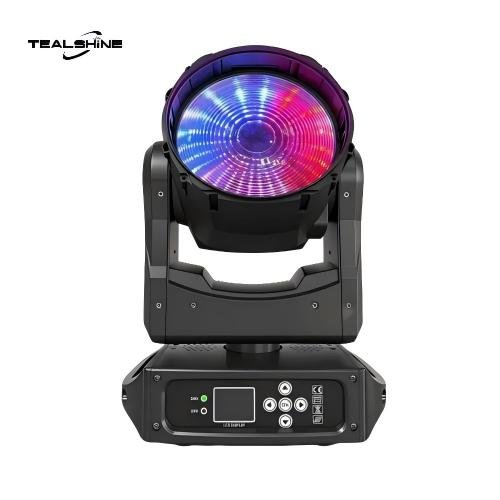
The 120W LED moving head beam is the lightest option, sized for small-to-mid venues and DJ setups. The 150W beam steps up output for larger rooms without a major weight increase. The 200W module beam uses a higher-output module source for venues where the 150W option doesn’t punch far enough through haze. The 150W Mac One beam runs the same 150W RGBL source in a housing style built to match rigs that already run that aesthetic.
Use Cases: Where Beam Effects Actually Work
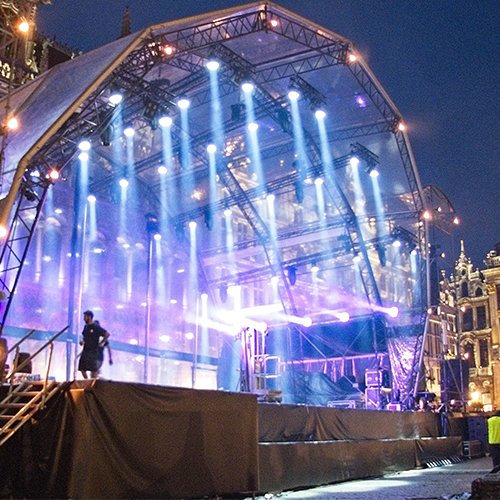
- Aerial sweeps over a crowd — the narrow shaft stays visible and defined across long distances, especially through haze.
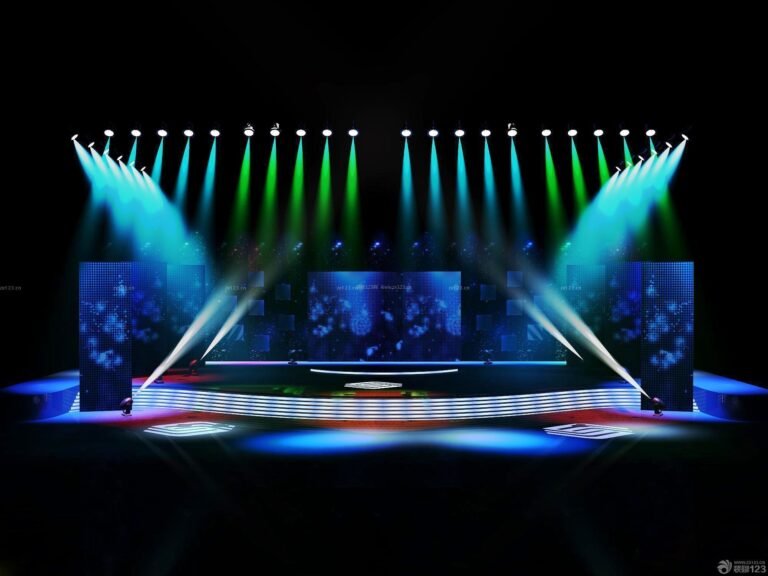
- Festival and touring rigs — banks of beam fixtures create sharp, geometric patterns that read clearly from far back in a crowd.
- Architectural and building-scale effects — a tight beam can trace a visible line across large distances that a wash fixture can’t replicate.
Beam fixtures generally underperform for close-range color wash or backdrop lighting — the narrow angle leaves gaps and hotspots at short throw distances, which is a job for wash moving heads instead.
A concrete example: eight beam fixtures arranged in a fan pattern above a festival stage, cued to sweep in unison on a drop, read clearly to a crowd 50 meters back through stage haze. The same eight fixtures pointed at a 10-meter-wide backdrop from 5 meters away would leave visible dark gaps between each beam’s footprint — the wrong tool for that distance, regardless of how bright each individual unit is rated.
Procurement Risk: Verifying Beam Claims Before You Buy
- Request the beam angle in degrees, not just the word “beam” in the product title.
- Ask for lux-at-distance figures rather than relying on lumen totals alone.
- Confirm whether haze or fog is required to see the beam clearly indoors — most beam effects rely on particulate in the air to be visible as a shaft rather than just a bright dot on a surface.
- Request a sample unit before ordering in volume, and compare the beam side by side with a reference fixture rather than trusting spec sheets alone.
Frequently Asked Questions
Do beam moving heads need haze or fog to work?
Effectively, yes. Without haze in the air, a beam fixture mostly shows up as a bright dot where it hits a surface rather than a visible shaft of light. Indoor venues running beam-heavy looks typically run a haze machine alongside them.
Is a higher-wattage beam always more visible than a lower-wattage one?
Not necessarily. Beam angle and optic quality affect visible intensity as much as wattage does. A well-collimated 150W beam can outperform a poorly focused 200W unit at the same distance.
Can a beam moving head also work as a wash light?
Not effectively. The narrow optic that makes a beam punchy at distance leaves gaps and hotspots at close range — a dedicated wash fixture covers that job instead.
Final Thoughts
A beam moving head light earns its place on a rig through optics, not wattage alone. Verify the actual beam angle in degrees, ask for lux-at-distance rather than trusting lumen totals, and match output to venue size and haze conditions before ordering.
Browse Tealshine’s moving head lighting range to compare beam, wash, and hybrid models side by side.