Professional High Quality Stage Lighting Manufacturer


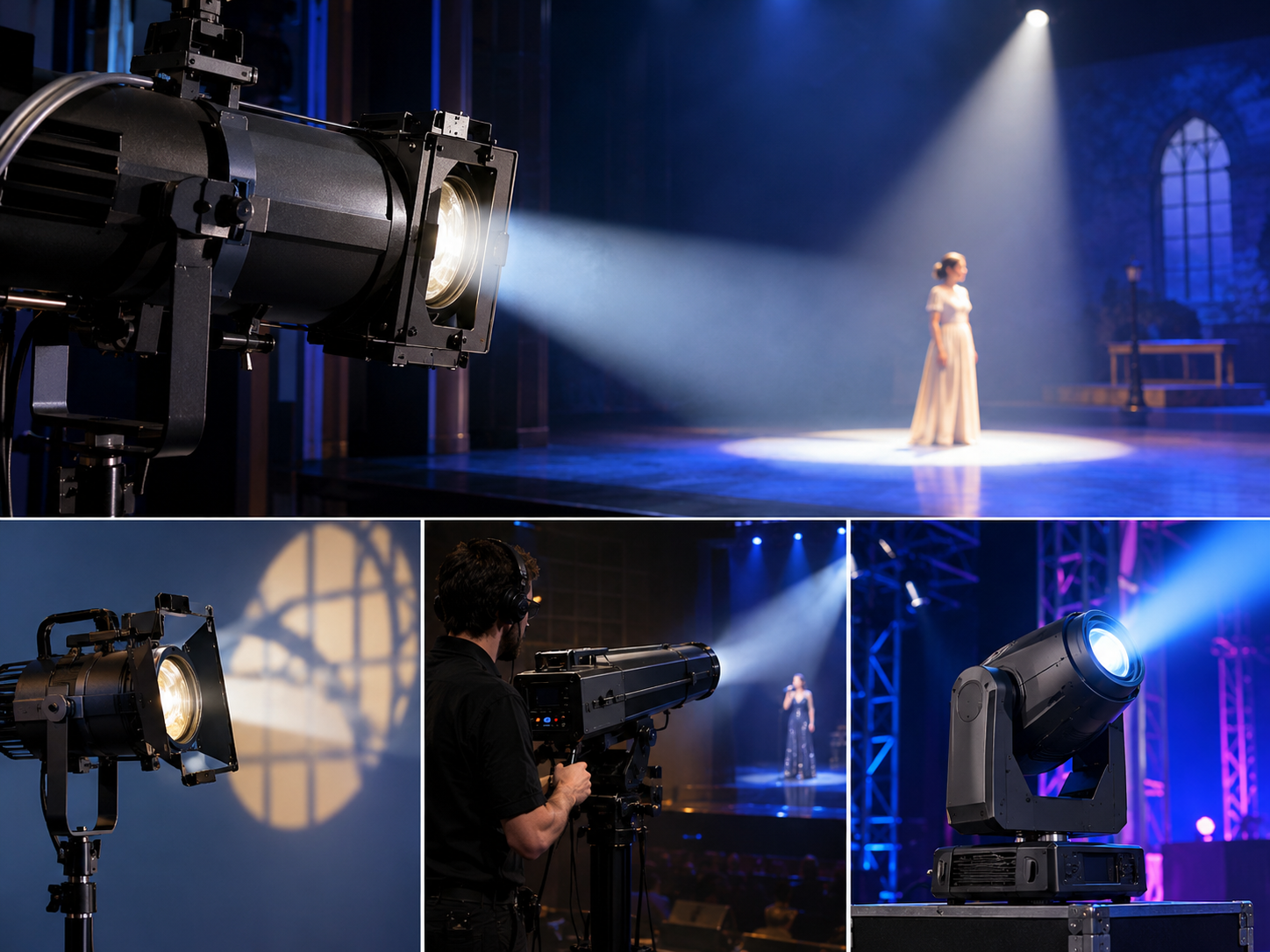
Table of Contents
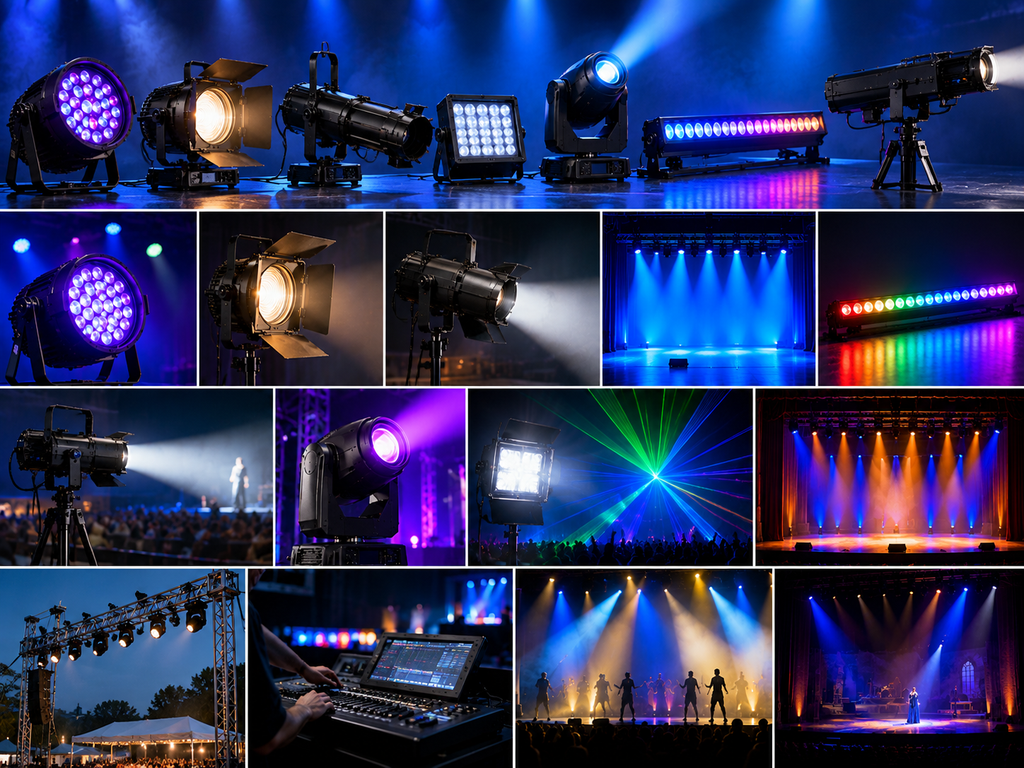
The main types of stage lights are PAR lights, Fresnels, profile spotlights, flood and wash lights, LED bars, followspots, moving heads and effect lights such as strobes and lasers. Each type shapes the beam in a different way, so the right choice depends on the job you need the light to do: lighting faces, washing the stage in color, framing a precise area, following a performer, or adding a dramatic accent.
If you have ever searched for stage light names or wondered what the lights above a band or on a theatre grid are actually called, this guide is for you. We cover the different types of stage lights, what each one does best, how the names differ between the US and UK, and how to combine fixtures for concerts, theatres, bands, weddings and events. Decide what the light needs to do first. Models and wattage come later.
What Are the Main Types of Stage Lights?
Most stage lighting fixtures fall into four working groups:
- Spot fixtures create a defined, controllable pool of light.
- Wash fixtures spread soft, even light across a wide area.
- Automated fixtures move, change color or change shape on cue.
- Effect fixtures add short, dramatic accents.
Some products are hybrids, so the optics matter more than the label on the box. The table below is a job map rather than a shopping list.
| Light type | Main job | Beam character | Typical use |
| Profile / ERS / Leko | Precise areas, gobo projection | Sharp to soft, shaped by shutters | Theatre front light, lecterns, logos |
| Fresnel | Soft area coverage | Soft edge, adjustable spread | Acting areas, side light, studios |
| PAR | Color wash, backlight | Soft oval or round field | Bands, churches, events, DJs |
| Flood / cyc / wall wash | Broad scenic coverage | Wide or even distribution | Backdrops, walls, cycloramas |
| LED bar / batten | Linear color and effects | Long, even line of light | Risers, curtains, scenic edges |
| Followspot | Tracks a performer | Defined beam, hand-operated | Solos, entrances, award shows |
| Moving head | Changes position and look by cue | Beam, spot, wash or hybrid | Concerts, clubs, modern theatre |
| Strobe / blinder | Short visual accent | Flash or audience-facing burst | Drops, transitions, finales |
A small stage may use only three of these families and still look excellent. A touring concert rig may use all of them in one night.
Theatre or theater? Both spellings are correct. “Theatre lighting” is standard in the UK and much of the world, while “theater lights” is common in the US. The fixtures are the same, but some names change: a profile in the UK is an ERS in North America, and Leko is a widely used nickname for the same fixture.
Spot Lights: Types of Stage Lights for Precise Focus
Spot fixtures are the tools you reach for when light must land in exactly the right place and nowhere else. They are the backbone of traditional theatre lighting and are used wherever a performer, speaker or object needs to be isolated.
Profile Spotlights (ERS or Leko)
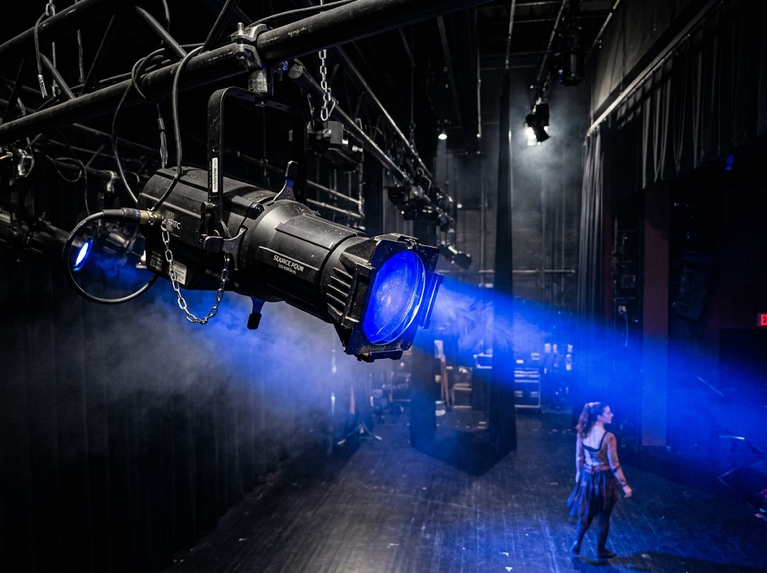
A profile spotlight produces a defined beam that internal shutters can trim into a clean shape. Many models also accept an iris or a gobo, which makes them ideal for lighting an actor without spilling onto scenery, framing a lectern, or projecting a window pattern or logo.
- Best for: acting areas, specials, gobo projection, long front-of-house throws.
- Watch out for: lens angle. The lens angle and throw distance decide the size of the pool on stage, so a mismatched lens gives a pool that is too small or too large.
Followspots
A followspot is built around an operator. The operator keeps the beam on a moving performer and may control size, color and intensity. Followspots fit musicals, concerts, award shows and entrances where a fixed special cannot cover the performer’s route.
- Best for: lead vocalists, soloists, presenters, grand entrances.
- Watch out for: you need a safe operator position, a clear sight line, a communication path to the lighting designer and some rehearsal time. On smaller shows, a fixed profile or a programmed moving head can often do the same job.
Moving Spots and Other “Spotlights”
“Spotlight” is a broad term, not one optical design. It can mean a fixed profile, a manually aimed spot, a followspot or an automated moving spot. Before you buy anything labeled “spot,” check whether it offers shutters, gobos, focus, zoom and frost. A moving spot is excellent when one automated unit must hit several preset positions, while a fixed profile is simpler and quieter for a permanent acting area.

Wash Lights: Types of Stage Lights for Coverage and Color
Wash fixtures cover larger areas with a soft, blended field. They create the base layer of almost every lighting design, whether that means a warm look for a drama or a saturated color field for a band.
PAR Lights
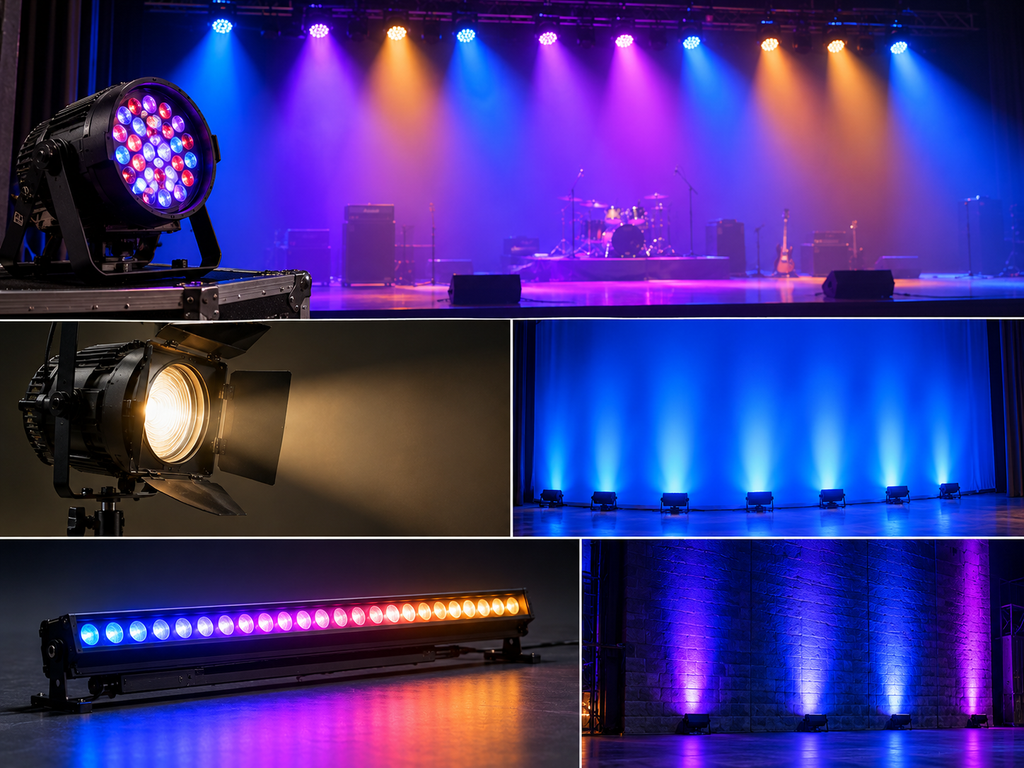
PAR lights are popular because they are compact, flexible and strong on color. Traditional PAR cans use a lamp and lens combination. Modern LED par can lights combine several color emitters in one housing and often add smooth dimming, strobe and DMX control, which makes them a favorite for colorful stage lighting.
- Best for: backlight, side color, small-stage band washes, uplighting, portable DJ and church rigs.
- Watch out for: beam angle. A narrow PAR can create hot spots on a shallow stage, while a wide one may lose useful intensity over a long throw.
Fresnel Lights
A Fresnel produces a soft-edged field that blends easily with neighboring fixtures. Many let you change the spread from spot to flood by moving the lamp or optics relative to the lens, and barn doors can trim the edges. They do not give the crisp framing of profile shutters, but that soft edge is exactly why theatres love them: transitions between areas look natural instead of showing visible circles.
- Best for: acting-area washes, side light, studio work, gentle scene transitions.
- Watch out for: spill. Barn doors help, but they will not match the precision of a profile.
Flood, Cyc and Wall Wash Lights
Floodlights spread light across a broad area with limited beam shaping. Cyc fixtures use an asymmetric distribution to light a cyclorama or backdrop evenly from the floor or an overhead position. Wall wash fixtures do a similar job on walls, scenic surfaces and architectural features at events and venues. For a deeper explanation of how this category works, read our guide on what a wash light is.
Do not judge these fixtures by center-beam brightness alone. For a backdrop, look at uniformity, throw distance, spacing and how the fields overlap from top to bottom.
LED Bars and Battens
LED bars and battens produce a long line of output. They can light a cyc, riser, curtain, scenic edge or the front of a stage. Pixel-controlled models divide the fixture into zones, which allows chases and mapped effects. Use pixel control only when the show needs it, because more zones consume more DMX channels and more programming time. For an even backdrop wash, a well-spaced non-pixel bar is often the better tool.
Moving Head Lights: Beam, Spot, Wash and Hybrid
Moving head lights add motorized pan and tilt to beam, spot, wash or hybrid optics. A single fixture can change position, color, gobo, prism, focus and zoom on cue, which is why moving heads dominate concerts, clubs and modern entertainment lighting.
| Moving head type | What it does | Best for |
| Beam | Narrow, intense aerial beams that cut through haze | Concert looks, sky beams, big impact moments |
| Spot | Defined pool with gobos, focus and zoom | Projected patterns, specials, tight positions |
| Wash | Soft, wide field with color mixing | Lighting performers or scenery in color |
| Hybrid (beam/spot/wash) | Switches between optical roles | Small rigs that need flexibility |
Hybrids save space and budget, but each mode usually involves a compromise compared with a dedicated fixture. Movement also does not replace coverage: build a stable wash layer first, then give moving heads defined cues. Haze makes beams visible, so a beam fixture without haze can look disappointing.
Effect Lights: Strobes, Blinders, Lasers and Haze
Effect fixtures create accents rather than general coverage. Use them for selected moments and review audience exposure, venue rules and product instructions before the show.
- Strobes produce repeated flashes for drops, transitions and high-energy moments.
- Blinders create a broad, audience-facing burst, often for a chorus or applause moment.
- Lasers form beam and pattern effects but are a separate safety category with classifications, scanning rules and operator requirements that vary by region.
- Haze and fog machines make beams visible, but they can affect smoke alarms, ventilation and performers, so confirm venue approval before load-in.
Keep flash effects short and intentional, provide any warnings required by the venue, and never use an effect fixture as the only light on a performer.
Is “LED” a Type of Stage Light?
Not exactly. LED describes the light source, not the optical job. An LED stage light can be a PAR, a Fresnel, a profile, a bar, a moving head or an effect light. That is why “LED light” should not sit beside “PAR” and “Fresnel” as if all three were equal categories. Two LED fixtures can both be efficient and still produce completely different beams.
When you compare LED fixtures, check these points:
- Color engine: RGB, RGBW, RGBA, RGBWA+UV, tunable white or a warm and cool white mix.
- White-light quality: color temperature, color rendering and consistency between units.
- Dimming: smoothness at low levels and any visible stepping.
- Camera behavior: flicker at your frame rate and shutter speed if the show is filmed or streamed.
- Cooling and noise: fan noise and heat behavior during a full-length show.
- Optics: beam angle, zoom and edge quality.
- Protection rating: indoor use or an IP rating for outdoor stages.
Color, Gobos and Beam Control
The type of fixture decides the beam shape, but several accessories and features decide how that beam looks on stage.
- Color mixing: LED fixtures create color electronically. Older tungsten fixtures use colored gels in front of the lens.
- Gobos: metal or glass stencils that project patterns, textures, logos or window shapes.
- Shutters and barn doors: shutters give sharp cuts, while barn doors give rougher edge control.
- Iris: narrows the pool without changing its brightness distribution much.
- Frost and diffusion: soften the edge so fixtures blend together.
- Prisms: multiply a beam into several images, popular in club and concert looks.
Stage Lighting Terms You Will See
| Term | Meaning |
| Wash | Soft light covering a wide area |
| Spot | A tighter, more defined pool of light |
| Special | A fixture focused on one specific person, object or position |
| Gobo | A stencil that projects a pattern or logo |
| Throw | The distance from the fixture to the target |
| Beam angle | How widely the light spreads |
| Front light | Light from the audience side that shows performers’ faces |
| Backlight | Light from behind that separates performers from the background |
| Cyc | A smooth backdrop (cyclorama) lit to create sky or color fields |
| DMX512 | The standard control protocol for dimming, color and movement |
| Rig | The complete lighting setup, including fixtures, truss and control |
Best Lighting for Stage Performances by Venue and Event
There is no single best stage light, only the best combination for the space and the audience. Use the table as a starting point.
| Venue or event | Core lights | Add for impact |
| Concert stage | PAR or LED bar wash, moving wash | Beam moving heads, strobes, haze, followspot |
| Band on a small stage | 4–6 LED PARs for color | 1–2 moving heads, a simple strobe accent |
| Theatre | Profiles and Fresnels for front and side light | Cyc or flood for backdrop, gobos for texture |
| Wedding or ballroom | Soft uplights, warm washes | Gentle spots, a few gobo patterns |
| Church or school hall | Warm and cool white washes, PARs | Low-noise fixtures, subtle color changes |
| DJ or party room | Color washes, a few spot or beam heads | Short strobe, laser (with safety checks) |
| Outdoor stage | Weather-rated PARs and washes | Waterproof moving heads, rain covers |
Concert and Band Lighting
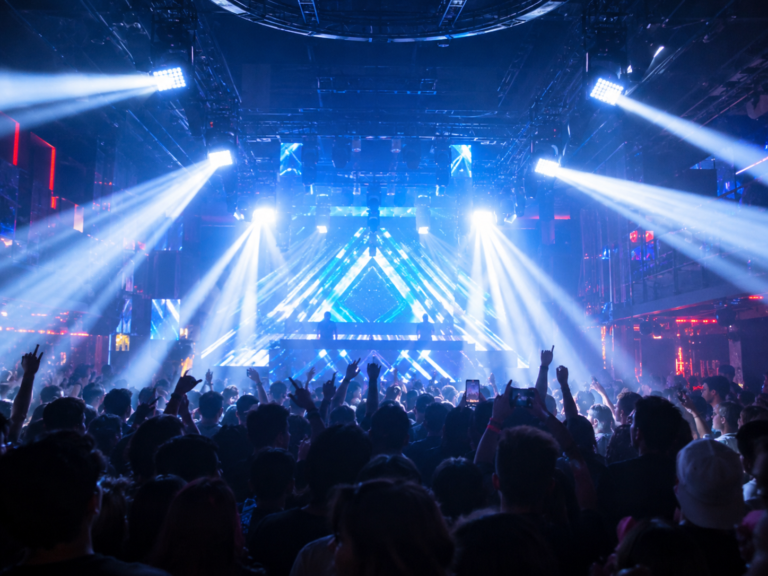
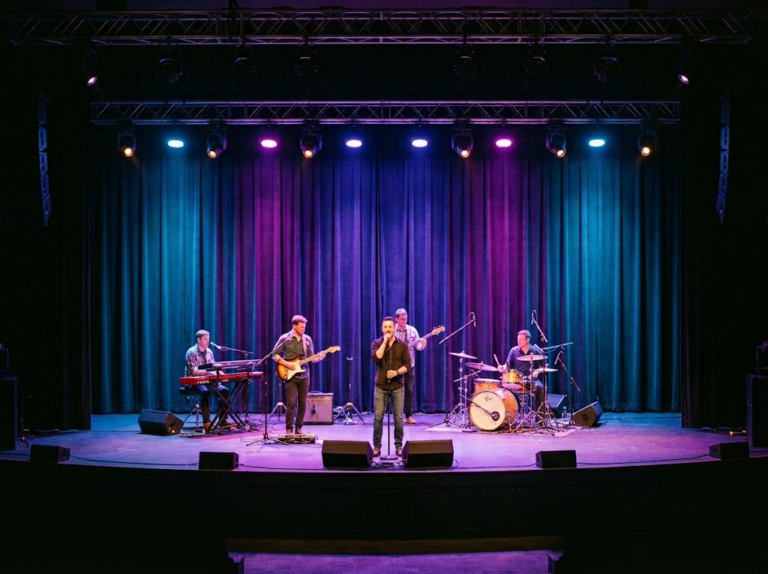
For concert lights, think in layers. Start with a color wash so the performers are always visible, add backlight for depth, then bring in moving heads for beams and cue-driven movement. Reserve strobes and blinders for big moments. A band on a small stage can look professional with a handful of PARs and a couple of moving heads.
Theatre Lighting
Theatre lighting prioritizes visibility and mood. Front light from profiles and Fresnels shows faces, side light adds shape, backlight separates performers from the set, and a cyc or flood paints the background. Color and intensity changes are usually subtle and tied to scenes rather than beats.
Weddings, Ballrooms and Events
Event spaces need flattering, low-glare light. Uplights tint walls and columns, warm washes keep skin tones natural, and a few gentle spots can highlight a cake, a dance floor or a head table. Quiet, silent-running fixtures matter here far more than raw output.
DJ and Party Lighting
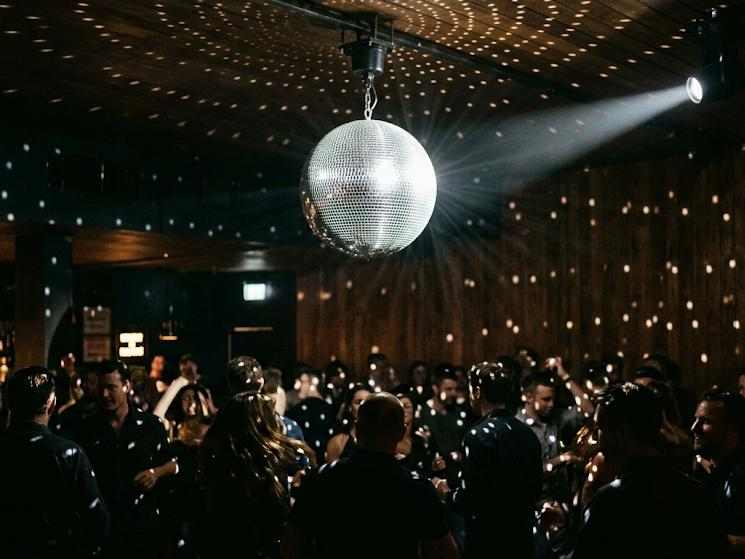
Party lighting is about energy and movement. If you are deciding where to spend your budget, our comparison of LED PAR lights vs. moving head lights walks through the trade-offs in cost, coverage and effect.
DIY Concert Lighting on a Budget
You do not need a huge rig to get a strong look. A sensible starter kit usually looks like this:
- Four to six LED PAR lights as the color wash.
- One or two moving heads for beams and movement.
- A basic DMX controller to run cues.
- Quality DMX and power cables, plus safety cables and clamps.
- A small haze machine if you want visible beams.
Expand one layer at a time. Backlight first, then front light, then effects.
How to Choose the Right Type of Stage Light
Start with the visual task, then test a representative fixture in the real space.
- List the jobs. Write down face light, stage wash, backdrop, specials, movement and effects.
- Map the positions. Record throw distance, mounting height, stage depth and sight lines.
- Choose the beam family. Profiles shape, Fresnels and PARs blend, cycs cover surfaces and movers change targets.
- Check control. Confirm DMX modes, channel footprint and controller compatibility.
- Check the environment. Review indoor or outdoor rating, noise level, power draw, rigging and service access.
- Plan power and rigging. Add up total load, use rated clamps and always fit a safety cable.
- Test the look. Compare edge quality, color, dimming and coverage from the audience position, and on camera if the show is filmed.
Common Mistakes When Choosing Stage Lights
- Buying by wattage alone. Optics, beam angle and color quality matter as much as output.
- Skipping the wash layer. A rig full of beams but no even coverage leaves performers in the dark.
- Mixing too many beam angles. Visible circles and uneven edges make a stage look unfinished.
- Ignoring throw distance. A fixture that looks great at 3 meters may look weak at 10.
- Forgetting control. Counting DMX channels and addresses before load-in saves hours of troubleshooting.
- Overusing effects. Strobes and lasers lose impact when they are on all the time.
- Ignoring safety. Lasers, haze, rigging and flash effects all need venue approval and proper practice.
Types of Stage Lights FAQ
What are the main types of stage lights?
The main types are PAR lights, Fresnels, profile spotlights (ERS or Leko), flood and cyc lights, LED bars, followspots, moving heads and effect lights such as strobes and lasers.
What is the most common type of stage light?
LED PAR lights are the most common in portable and small-venue rigs because they provide color and broad coverage at a sensible cost. Theatres more often rely on profiles and Fresnels for controlled front light.
What is the difference between a spotlight and a wash light?
A spotlight isolates a smaller target with a defined edge. A wash light covers a wider area with a softer, blended field. Some fixtures add zoom or frost, so the line between them can overlap.
Why do theatres use Fresnel lights?
A Fresnel creates a soft-edged field that blends across acting areas and hides uneven coverage, which keeps the audience focused on the performance.
What are stage lights called?
Common names include PAR cans, Fresnels, profile spots (ERS or Leko), floods, cyc lights, LED bars, followspots, moving heads, strobes and blinders. Different regions sometimes use different names for the same fixture.
Do moving head lights replace fixed stage lights?
Not always. Moving heads add flexible positions and effects, but fixed PARs, Fresnels and profiles can be simpler for stable coverage. Many professional rigs use both.
Can stage lights be used outdoors?
Only if the exact fixture, connectors and installation have a suitable protection rating. An outdoor-rated fixture does not protect the power, data or rigging around it.
How are stage lights controlled?
Most professional fixtures use DMX512 for dimming, color, movement and effects. Many also offer auto, sound-active and master/slave modes for simple setups.
What is the best lighting for stage performances?
The best lighting combines a reliable wash for visibility, backlight for depth, and a few accent or moving fixtures for impact. The exact mix depends on the venue, the audience distance and the type of performance.
Choose the Job Before the Fixture
The different types of stage lights make sense once you compare what each one actually does. Profiles shape precise areas, Fresnels and PARs build coverage, floods and bars light surfaces, followspots track performers, and moving or effect lights add change and excitement. Write down the visual jobs first, then compare optics, control and installation needs, and your lighting choices will be much easier.