Professional High Quality Stage Lighting Manufacturer


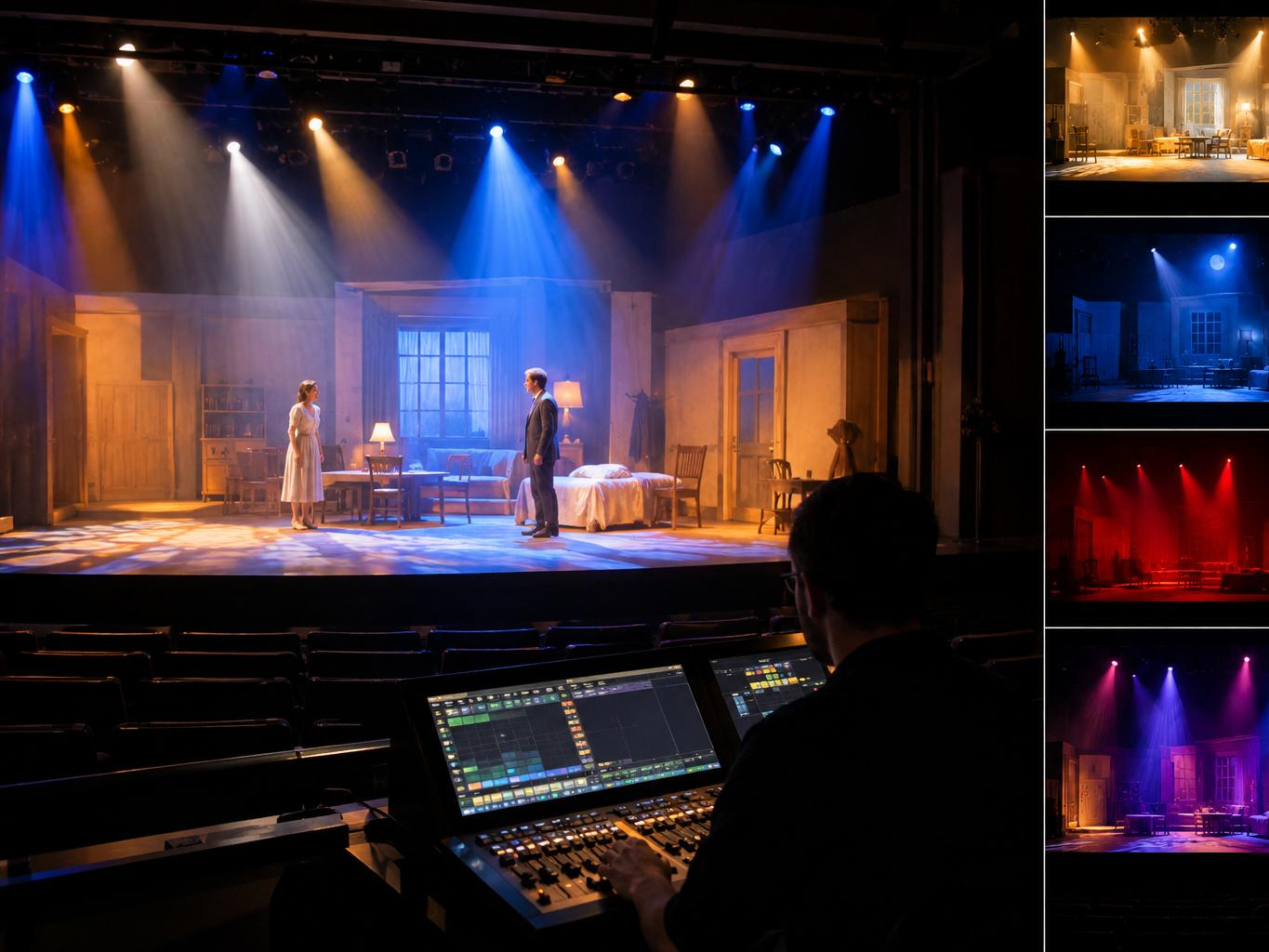
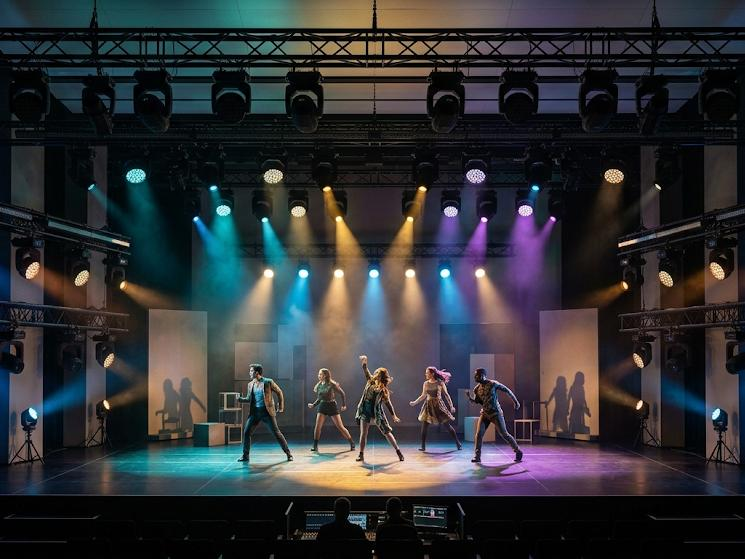
Theatrical lighting design is about more than making actors visible. It helps an audience understand where to look, recognize changes in mood, and follow the story as it develops. A warm wash can make a scene feel welcoming, a narrow beam can isolate a performer, and carefully controlled backlighting can separate actors from the scenery.
For theater managers, lighting designers, production teams, and equipment buyers, good lighting design requires both creative decisions and practical planning. The fixture types, beam angles, color options, mounting positions, and control system all affect the final result.
This guide explains the main principles of theatrical lighting design, the fixtures commonly used in theater productions, and how to plan a lighting system around the needs of a performance.
What Is Theatrical Lighting Design?
Theatrical lighting design is the process of planning and controlling light to support a stage production. It combines artistic choices with technical considerations, including fixture placement, intensity, color, beam shape, timing, and control.
Lighting designers work with directors, set designers, performers, and technical crews to create a visual environment that supports the production. The same stage can represent a bright summer afternoon, a quiet bedroom, or a tense nighttime street simply by changing the direction, color, intensity, and distribution of light.
Effective theater lighting usually serves several purposes:
- Visibility: Making performers, expressions, costumes, and important stage details visible to the audience.
- Focus: Directing attention toward a character, object, or specific part of the stage.
- Mood: Establishing emotional qualities such as warmth, tension, isolation, excitement, or mystery.
- Depth: Separating performers from the background and helping the stage appear three-dimensional.
- Time and place: Suggesting daylight, moonlight, an indoor environment, or a change in location.
- Transitions: Supporting changes between scenes without requiring the entire stage to go dark.
These functions often work together. A lighting cue may improve visibility while also changing the mood and directing the audience’s attention. The goal is not to make every fixture noticeable, but to make the lighting serve the performance.
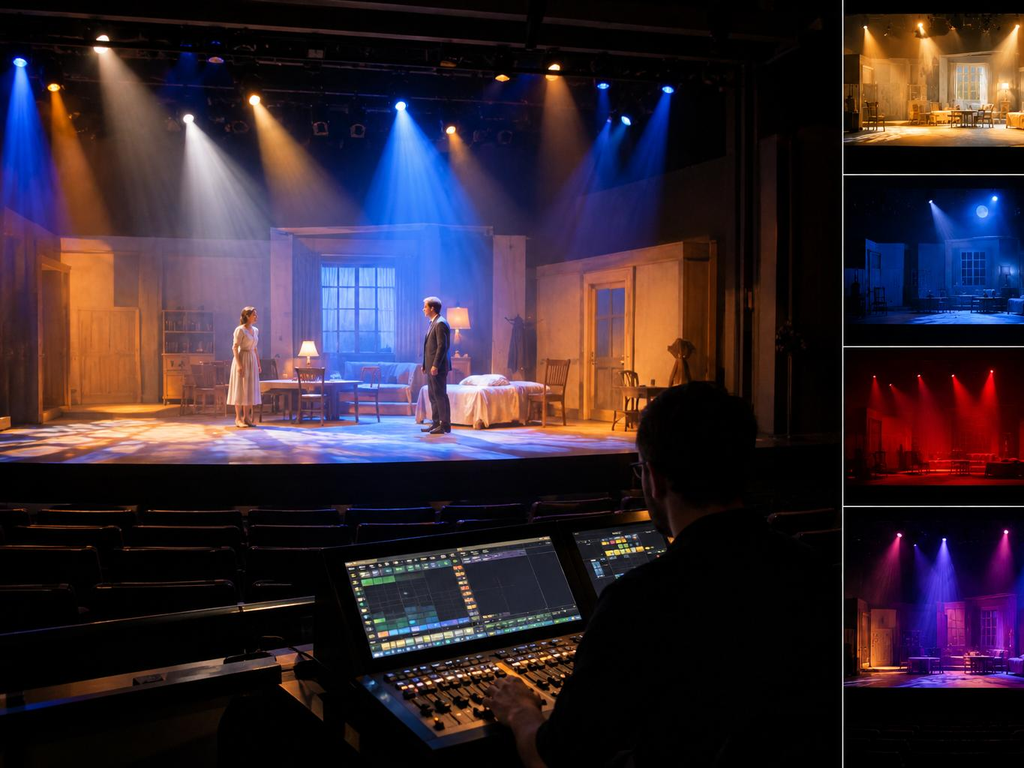
What Types of Lights Are Used in Theater?
Table of Contents
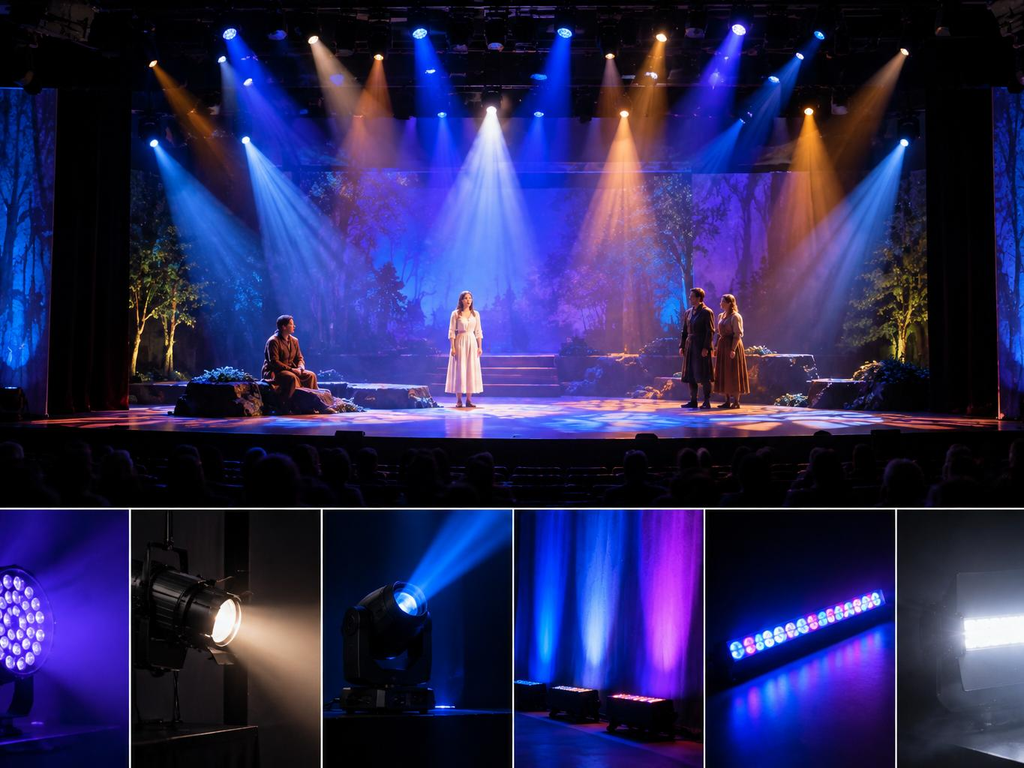
Different stage lighting fixtures solve different problems. Some provide broad coverage, while others create movement, texture, or concentrated beams. A practical theater lighting system often combines several fixture types instead of relying on a single product category.
1. PAR Lights for General Stage Wash
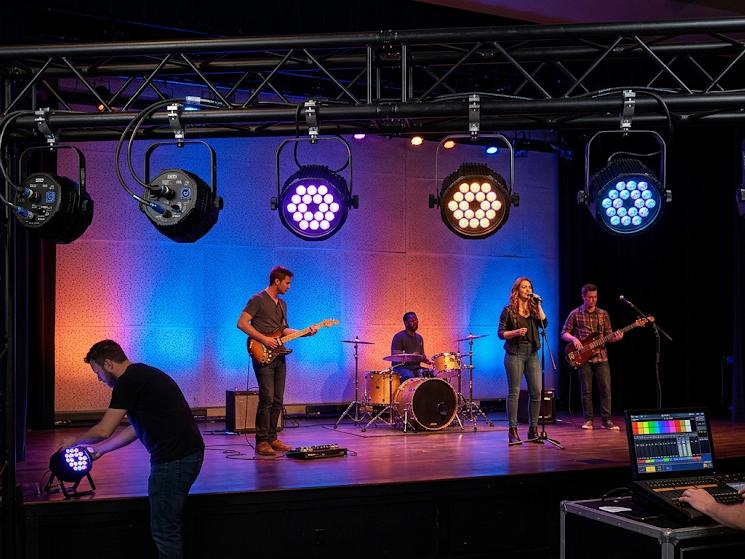
PAR lights are commonly used to provide broad stage coverage and colored illumination. They can help light groups of performers, establish a base color for a scene, or add color to stage scenery.
LED PAR fixtures are particularly useful when a production needs multiple colors, repeatable lighting cues, and relatively straightforward installation. However, the beam angle and light distribution matter just as much as the available colors. A narrow beam may leave gaps between performers, while an excessively wide beam may spill onto areas that should remain dark.
When planning a wash, consider the width of the acting area, the distance between fixtures and performers, and whether overlapping beams will produce consistent coverage. Read our guide to what PAR lights are and how to choose them for more information about fixture functions and applications.
2. Spotlights for Focused Illumination
Spot lighting is used when a designer needs to emphasize a performer, prop, or defined area of the stage. It can help audiences follow a solo performance, a key moment in a scene, or an actor moving through a larger space.
The term spotlight can refer to different types of equipment. A profile fixture with shutters can create a carefully shaped field of light, while a spot-capable moving head can direct a beam toward changing positions. These fixtures are not interchangeable in every situation.
When a production requires precise control over the shape of the illuminated area, check whether the selected fixture provides the necessary optics, framing shutters, focus adjustment, or beam control. A fixture that produces a bright central beam does not automatically provide the clean edges required for every theatrical application.
3. Moving Head Lights for Dynamic Effects
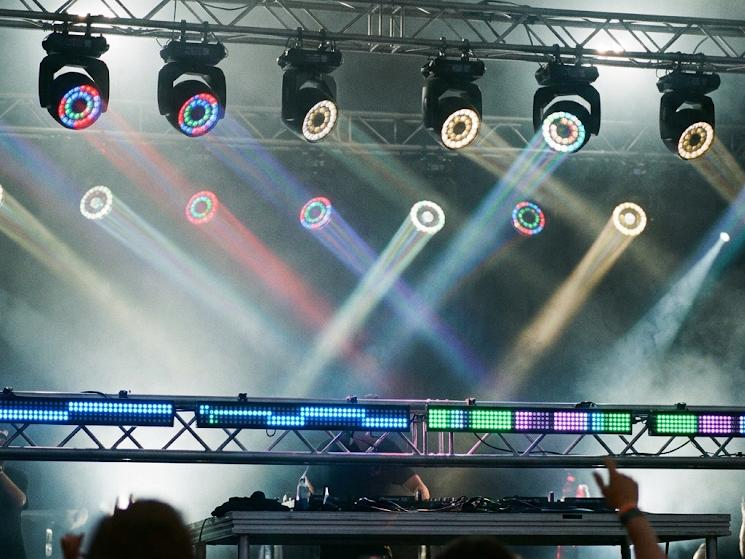
Moving head lights add directional movement and flexible effects to a lighting design. Depending on the fixture, they may support pan and tilt movement, color changes, zoom, beam effects, or gobo projection.
In theater, moving heads can support scene transitions, stylized movement, musical numbers, and productions that combine traditional acting with more dynamic visual effects. They can also reposition light between cues without requiring a technician to adjust each fixture manually.
However, movement should have a clear purpose. Constantly moving beams can distract from dialogue or compete with the performers. A more effective approach is to reserve dynamic movement for moments when it reinforces the action, then use stable lighting for scenes that require concentration and subtlety.
Explore Tealshine’s moving head lights to review the types of fixtures available for dynamic stage lighting applications.
4. LED Wall Wash Lights for Stage Backgrounds
Background lighting helps establish the visual environment behind the performers. LED wall wash lights can illuminate backdrops, scenic surfaces, and selected architectural elements with broad, controlled color coverage.
A background does not always need to be as bright as the acting area. If it is too bright, it can compete with the performers. If it is too dark, the stage may lose depth. The right balance depends on the scenery, the color palette, the viewing distance, and the atmosphere required for the scene.
Designers can use one background color for a calm scene and change it gradually during a transition. Subtle differences between foreground and background illumination can also help separate performers from scenery without making the lighting feel artificial.
For applications that need broad background coverage, explore LED wall wash lights and consider their beam distribution, mounting position, color control, and coverage requirements.
5. LED Light Bars for Linear Coverage and Visual Texture
LED light bars provide an elongated light source that can be useful for illuminating stage edges, scenery, backdrops, or architectural features. Depending on their design, they can produce a continuous wash or create segmented and pixel-based effects.
Linear fixtures are useful when the design calls for repeated lines of light, symmetrical visual elements, or consistent coverage along a long surface. They can also complement PAR fixtures and moving heads by adding a different shape and distribution of light.
Before selecting a light bar, check its dimensions, beam spread, color capabilities, control options, and installation requirements. A fixture that works well on a short stage may not provide sufficient coverage for a much wider set.
See Tealshine’s LED light bar range for options that can be considered for stage and backdrop lighting.
6. Strobe Lights for Specific Dramatic Moments
Strobe lights create rapid flashes or repeated bursts of light. In theater and live performance, they may be used for a brief dramatic accent, a stylized sequence, or a production that incorporates concert-style visual effects.
Strobes should be used selectively. Excessive flashing can distract from the performance and may create safety concerns for audience members who are sensitive to flashing light. Designers should consider the production context, venue guidance, audience needs, and applicable safety requirements before including strobe effects.
Where an effect is appropriate, plan its timing carefully and make sure it supports the scene rather than becoming an effect without a narrative purpose. Tealshine’s LED strobe lights provide a starting point for reviewing stage effect fixtures.
Essential Theatrical Lighting Techniques
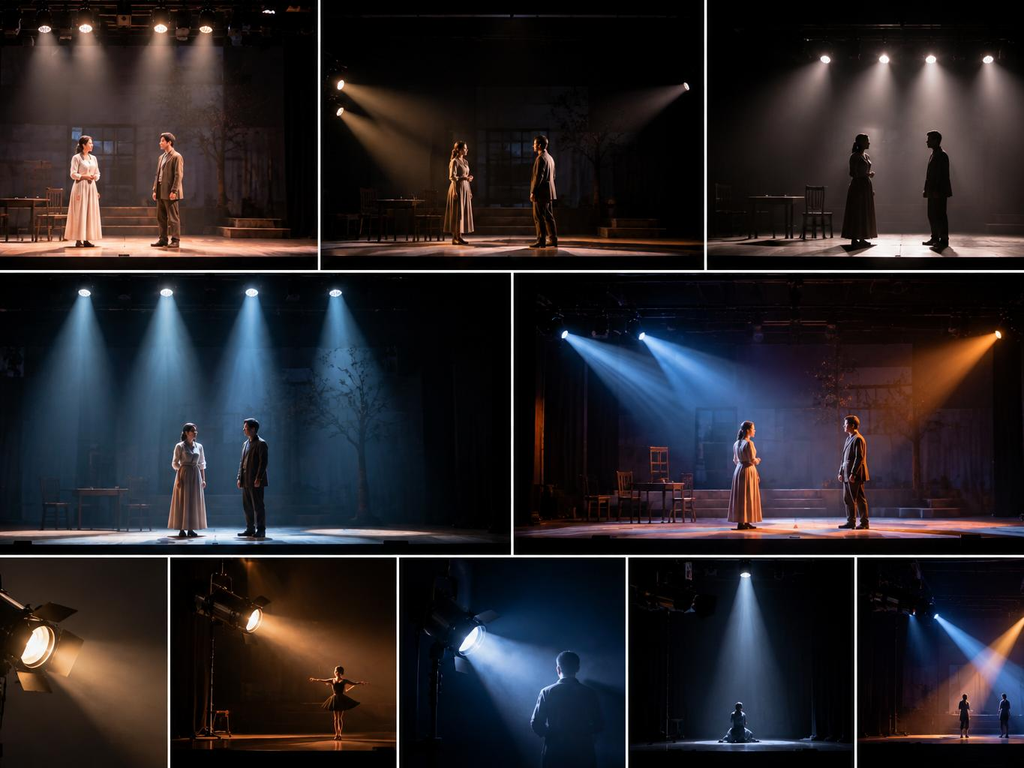
Fixture selection is only one part of theatrical lighting design. The direction from which light reaches the performers often has an equally important effect on visibility, facial expression, and stage depth.
Front Lighting
Front lighting illuminates performers from the audience side of the stage. It helps reveal facial expressions and costume details, making it an important part of many conventional theater setups.
Light that comes from directly in front of an actor can make the face easy to see, but it may also flatten facial features and reduce visible texture. Designers often use more than one front-lighting angle to improve modeling and reduce harsh shadows.
Front light should be bright enough to support the performance without eliminating the shadows that help define the face and body. The best balance depends on the height of the lighting positions, the distance to the stage, and the type of production.
Side Lighting
Side lighting reaches performers from the sides of the stage. It can emphasize body movement, shape, and physical detail, which is particularly useful in dance, movement-based theater, and productions that rely on expressive choreography.
Side light can also help separate performers from a background when front lighting alone produces a flat image. However, strong side lighting may create uneven facial illumination, so it often works best as part of a layered design.
Backlighting
Backlighting comes from behind the performers and is directed toward the audience or across the stage. It can create a rim of light around a performer, improve separation from the scenery, and add a sense of depth.
Backlighting is also useful for silhouettes and atmospheric scenes. Its intensity should be controlled carefully: if the source is too bright or points directly into the audience’s eyes, it can reduce visibility and create unwanted glare.
Top Lighting
Top lighting reaches the stage from overhead positions. It can establish pools of light, emphasize the shape of the stage, and create shadows that support a particular mood.
Because light from directly overhead can create deep shadows around the eyes and under the nose, it is rarely the only source used for naturalistic acting scenes. Combining top light with front or side light gives designers more control over facial visibility and overall contrast.
Cross Lighting
Cross lighting uses fixtures positioned at opposing angles to illuminate performers from different directions. This approach can improve coverage as actors move around the stage and help create a sense of dimension.
How Color Affects Theater Lighting Design
Color helps establish atmosphere, distinguish locations, and support changes in the story. However, color associations are not fixed rules. The same color can communicate different meanings depending on the set, costumes, music, intensity, and surrounding colors.
- Warm amber and warm white: Often useful for intimate interiors, candlelight effects, nostalgic scenes, or a welcoming atmosphere.
- Cool blue: Can suggest nighttime, distance, isolation, or a quiet atmosphere.
- Red: May communicate urgency, danger, anger, passion, or heightened energy.
- Green: Can create an unnatural, mysterious, or unsettling environment when used in the right context.
- Purple: May support fantasy, stylized scenes, or a more theatrical visual palette.
- Neutral white: Helps maintain a more natural appearance when accurate visibility and skin tones are priorities.
These are creative options rather than universal formulas. A designer should evaluate the actual appearance of a color on performers, costumes, scenery, and cameras instead of relying only on how a color looks on a lighting console.
It is also important to understand the difference between RGB color mixing and white-light quality. A fixture may generate a wide range of saturated colors but still need to be evaluated for how naturally it renders skin tones and costumes under white light. For productions that use cameras, color consistency and flicker performance may require additional testing.
How to Plan a Theater Lighting Setup
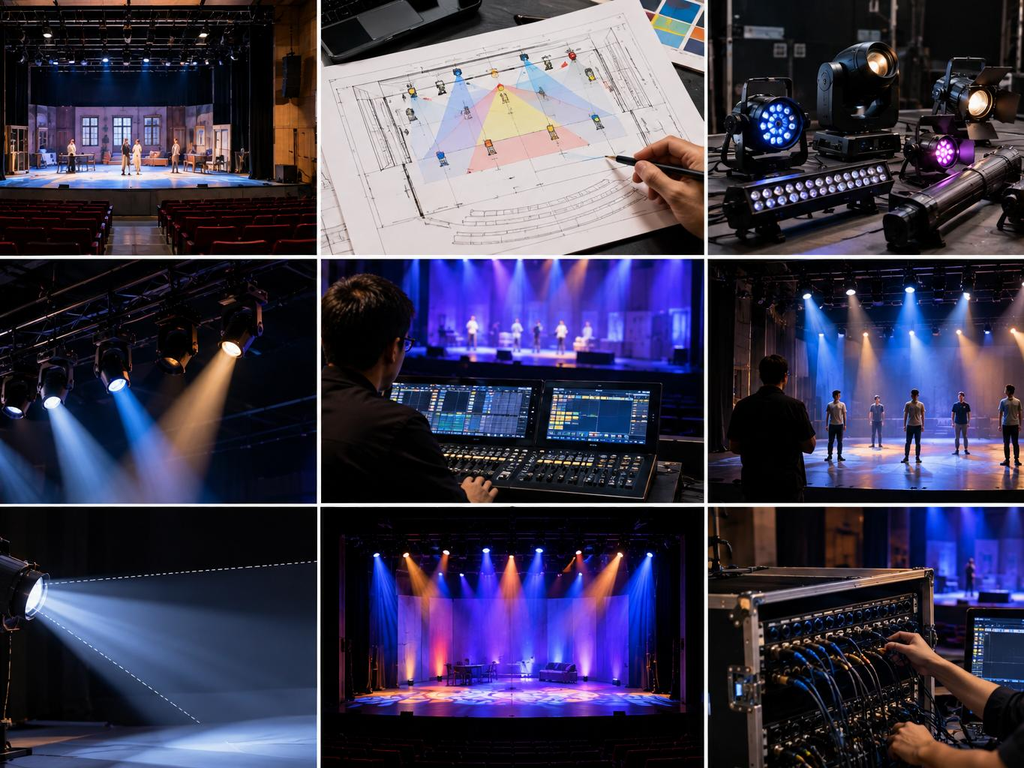
A practical theater lighting setup begins with the production requirements rather than a list of products. The same collection of fixtures can produce very different results depending on the stage layout, mounting positions, control system, and programming.
Step 1: Understand the Stage and Performance
Start by documenting the stage width, depth, ceiling height, audience viewing angles, scenery, and available lighting positions. Identify where actors will stand, where important action takes place, and whether the production includes dance, rapid scene changes, projections, or camera recording.
This information helps determine where additional coverage is needed and whether fixtures can be mounted in suitable positions. It also helps avoid selecting lights that cannot reach the intended area or produce the required beam shape.
Step 2: Divide the Stage into Lighting Areas
Divide the acting area into practical zones, such as stage left, center, and stage right, with additional zones for upstage and downstage areas where necessary. The exact layout depends on the size and shape of the stage.
Planning by zones makes it easier to identify coverage gaps and create lighting cues for different parts of the performance. It also helps the team understand how many fixtures may be required and where overlapping coverage will be useful.
Step 3: Combine Fixtures According to Their Roles
Build the lighting system around the functions required for the production. PAR lights may provide general wash coverage, wall wash fixtures may illuminate the background, and moving heads may create changing directions or effects.
Spot-capable fixtures can be included where more focused illumination is needed. Linear LED fixtures may support scenery and backdrop designs, while strobe fixtures can be reserved for specific effects when appropriate.
Not every theater needs every fixture type. A small school theater may prioritize even coverage, straightforward control, and ease of operation. A musical or a touring production may need more flexible movement, additional effects, and a more detailed cue structure.
Step 4: Check Beam Angles and Mounting Positions
The distance between a fixture and the stage affects the size and intensity of the illuminated area. Beam angle, lens design, mounting height, and the angle of incidence all influence the final coverage.
Before finalizing the layout, check whether adjacent beams overlap sufficiently to avoid dark gaps. Also look for unwanted spill onto scenery, projection surfaces, audience seating, or areas that should remain unlit.
Whenever possible, test representative fixtures from their intended positions. Product specifications are useful for planning, but a real lighting test reveals how the equipment interacts with the actual venue.
Step 5: Design the Control System and Lighting Cues
Lighting control allows operators to adjust intensity, color, movement, and other supported parameters during a performance. DMX512 is widely used to send control data to compatible lighting fixtures.
When planning a DMX system, check each fixture’s available control modes, channel requirements, addressing, and compatibility with the controller. More complex fixtures may use substantially more channels than simple wash lights, so the control plan should account for the complete system.
For a closer explanation of the control side, read our guide to what a DMX controller does. The controller, fixture settings, cabling, and programming all need to work together for reliable cues.
Step 6: Test the Setup Before the Performance
Test the lighting design with performers or stand-ins in the actual stage positions. Check facial visibility, shadow direction, background brightness, color consistency, movement paths, and transitions between cues.
Test the system at the expected operating levels rather than relying only on a brief power-on check. Confirm that fixtures respond correctly, cables are secured, mounting hardware is suitable, and the control system behaves consistently.
Record the final fixture positions, addressing, cue settings, and any important configuration details. Documentation makes future rehearsals, maintenance, and replacement easier.
Why DMX Control Matters in Theater Productions
Lighting cues often need to follow dialogue, music, choreography, or precise moments in the script. DMX control helps operators coordinate compatible fixtures so that changes in color, intensity, movement, and effects can happen in a repeatable sequence.
In a simple setup, the operator may control a limited number of fixtures and basic lighting states. A larger production may require separate groups, more complex cue timing, and careful management of the channel capacity available in the control system.
When selecting equipment, confirm that the fixture’s control modes provide the parameters the designer actually needs. A fixture with many effects is not necessarily the best choice if the production only needs stable wash coverage and smooth dimming.
For systems with multiple fixtures, consistent addressing and clear documentation are essential. They reduce setup errors and help technical teams identify problems during rehearsals or maintenance.
How to Choose Theater Lighting Equipment
For theater managers, production companies, rental businesses, and project contractors, equipment selection should balance artistic requirements with installation, operating, and maintenance considerations.
Match the Fixture to the Application
Begin with the lighting task. Broad stage coverage, focused illumination, background color, dynamic movement, and special effects require different optical and control capabilities. Avoid choosing fixtures only because their wattage or feature list appears impressive.
Evaluate Output and Beam Quality
Consider the throw distance, beam angle, usable light output, field uniformity, and the amount of spill. A bright fixture with unsuitable optics may be less effective than a fixture designed for the required coverage.
Review Color and Dimming Performance
Check whether the fixture can produce the colors and white-light appearance required by the production. Smooth dimming, consistent color output, and predictable fades are important for theatrical cues, especially when the lighting changes gradually during dialogue or dramatic scenes.
Confirm Control Compatibility
Verify DMX support, channel modes, connector requirements, addressing, and the control features needed for the intended setup. If the installation will use existing equipment, check compatibility before placing an order.
Consider Installation and Maintenance
Fixture weight, mounting options, ventilation, cable routing, access for servicing, and replacement parts can affect the long-term practicality of a lighting system. For touring productions, transport conditions and repeated installation also deserve attention.
Check Indoor and Outdoor Requirements
For permanent indoor theaters, priorities may include quiet operation, color consistency, and convenient maintenance. Outdoor productions require a separate review of ingress protection, connectors, temperature conditions, and the venue’s electrical and safety requirements.
Do not assume that a fixture is suitable for outdoor use simply because it is described as a stage light. Verify the specified protection rating and operating conditions for the exact model.
Work with a Manufacturer When Specifications Need Customization
Some projects have requirements that standard catalog products cannot fully meet. These may include particular beam angles, LED configurations, housing dimensions, branding, packaging, or control behavior.
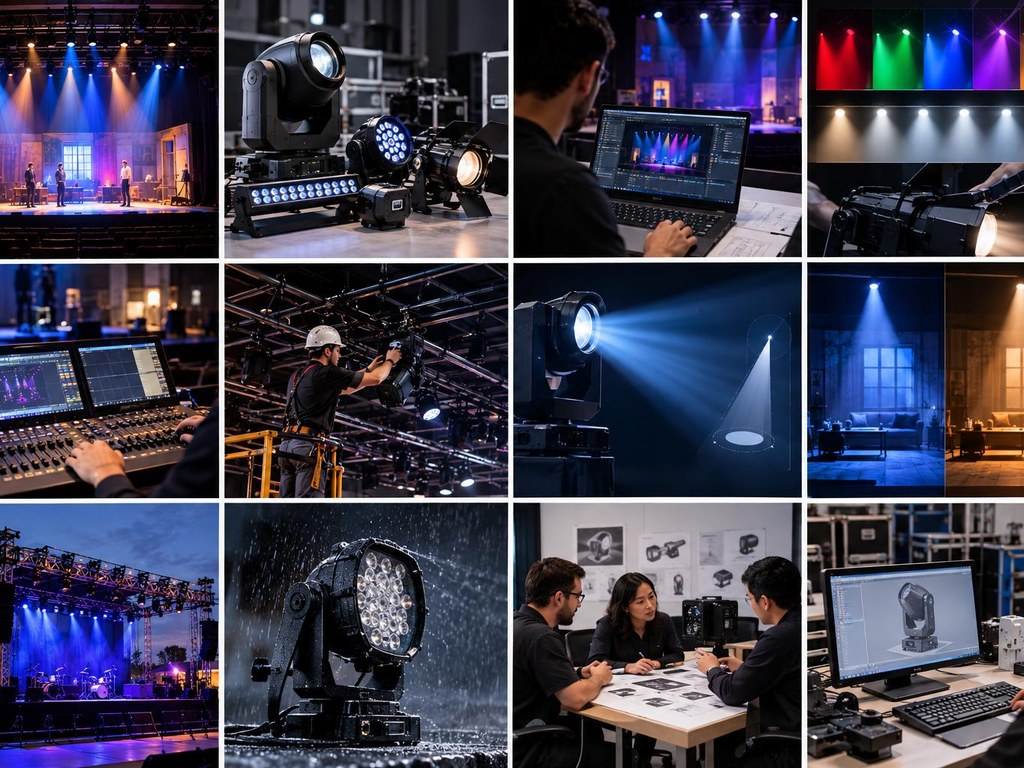
For distributors, rental companies, and project contractors developing a product range, it can be useful to discuss these requirements with a manufacturer before committing to a design. Tealshine provides OEM/ODM stage lighting manufacturing services for customers who need product customization or private-label solutions.
When requesting a quotation, provide the intended application, target specifications, expected quantity, control requirements, and any relevant compliance needs. A clear brief helps the supplier assess feasibility and identify which requirements can be met by existing models and which may require development.
Common Theater Lighting Design Mistakes
Using Front Light for Everything
Front light is important for visibility, but relying on it alone can make a stage look flat. Carefully balanced side, back, and top lighting can add depth and help separate performers from the scenery.
Making the Background Too Bright
A brightly illuminated backdrop can draw attention away from the actors. Adjust background intensity and color so that the scenery supports the scene without competing with the main action.
Choosing Fixtures Without Checking Coverage
Fixture wattage alone does not tell you whether the light will cover the required area. Review beam angle, throw distance, optics, and the actual mounting position before finalizing the layout.
Using Too Many Effects
Movement, color changes, and strobe effects can add energy, but excessive effects can distract from dialogue and storytelling. Each effect should support a clear purpose within the production.
Leaving Control and Safety Checks Until the Last Minute
Incorrect DMX addressing, unsuitable cable routing, insecure mounting, or an untested cue can interrupt a performance. Allow time for system checks, rehearsals, and documentation before the production opens.
Frequently Asked Questions About Theatrical Lighting Design
What is the main purpose of theatrical lighting design?
The main purpose is to support the performance by making stage action visible, directing audience attention, establishing mood, creating depth, and helping communicate changes in time, place, and emotion.
What types of lights are commonly used in theater?
Common fixture types include PAR lights for broad coverage, spot-capable fixtures for focused illumination, moving head lights for dynamic effects, wall wash lights for backgrounds, and LED light bars for linear coverage. The exact combination depends on the venue and production.
How many lights does a small theater need?
There is no universal number. The requirement depends on the stage dimensions, mounting positions, performance style, available power, coverage targets, and desired level of control. A lighting plan based on stage zones is a better starting point than selecting a fixed number of fixtures.
What is the difference between wash lighting and spot lighting?
Wash lighting is generally used to illuminate a broader area with relatively even coverage. Spot lighting is used to concentrate light on a smaller area or subject. Some fixtures can support multiple beam or zoom options, but their actual capabilities depend on the model.
Why is DMX used in theater lighting?
DMX512 allows compatible lighting fixtures to receive control data for parameters such as intensity, color, movement, and effects. It helps operators coordinate fixtures and reproduce lighting cues during rehearsals and performances.
Can LED stage lights be used for theatrical productions?
Yes. LED stage lights are used in many theatrical applications, including general wash, background illumination, color effects, and dynamic moving-light effects. Buyers should evaluate color rendering, dimming behavior, beam quality, noise, control compatibility, and other requirements relevant to the production.
Conclusion
Effective theatrical lighting design combines creative storytelling with careful technical planning. Fixture selection, lighting direction, color, beam control, and cue programming all influence how a performance appears to the audience.
The best lighting system is not necessarily the one with the most fixtures or the largest feature list. It is the system that provides the right coverage, supports the production’s visual goals, integrates with the control setup, and can be operated and maintained reliably.
For theater projects, rental inventories, and professional stage lighting installations, start by defining the application and required lighting functions. Then compare fixture performance, compatibility, installation needs, and customization options before finalizing the equipment list.