Professional High Quality Stage Lighting Manufacturer


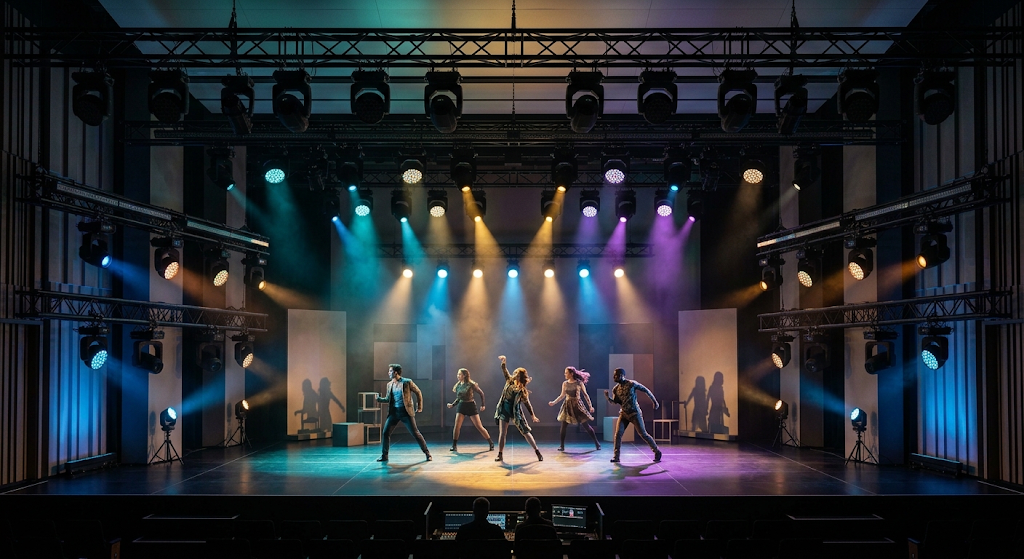
Table of Contents
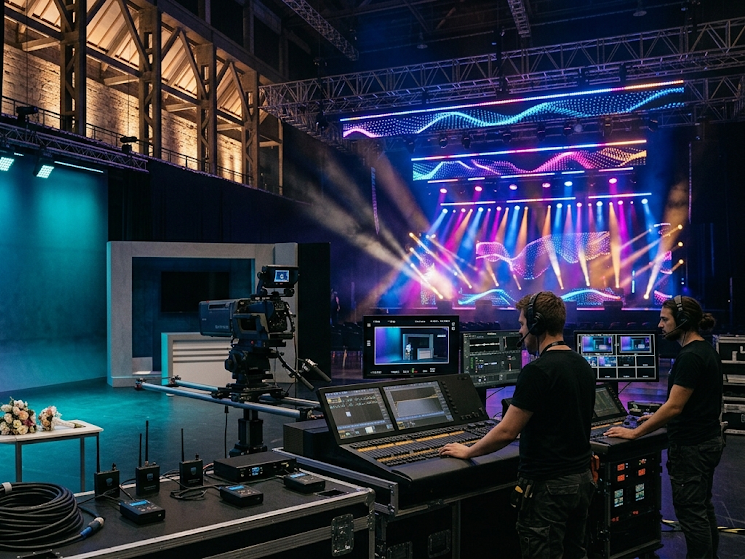
Stage lighting does more than make performers visible. It helps the audience know where to look, gives performers and scenery visual depth, establishes mood, and marks changes in music or action. Even a simple stage can look completely different depending on the direction, color, intensity, and timing of its lights.
For beginners, learning stage lighting basics starts with understanding what each fixture does and where it should be positioned. You do not need a complicated lighting rig to create an effective result. A few well-positioned lights can provide clear visibility, separate performers from the background, and make a performance feel more polished.
As a professional LED stage lighting manufacturer, Tealshine supplies lighting fixtures for theaters, concerts, event venues, entertainment projects, and other professional applications. This guide covers the essential stage lighting terms, common fixture types, lighting positions, basic setup methods, and DMX control concepts that beginners should understand before planning a lighting system.
What Does Stage Lighting Do?
A useful stage lighting plan starts with the purpose of each light rather than the number of fixtures available. Before choosing equipment, consider what needs to be visible, where the audience should focus, and what atmosphere the production needs to create.
1. Make Performers Visible
Visibility is the first requirement of most stage lighting setups. The audience should be able to see performers’ faces, expressions, movements, and costumes without struggling against excessive shadows or glare.
Front lighting is commonly used to illuminate performers from the audience side of the stage. The correct angle and brightness depend on the stage height, fixture position, and type of performance.
2. Direct the Audience’s Attention
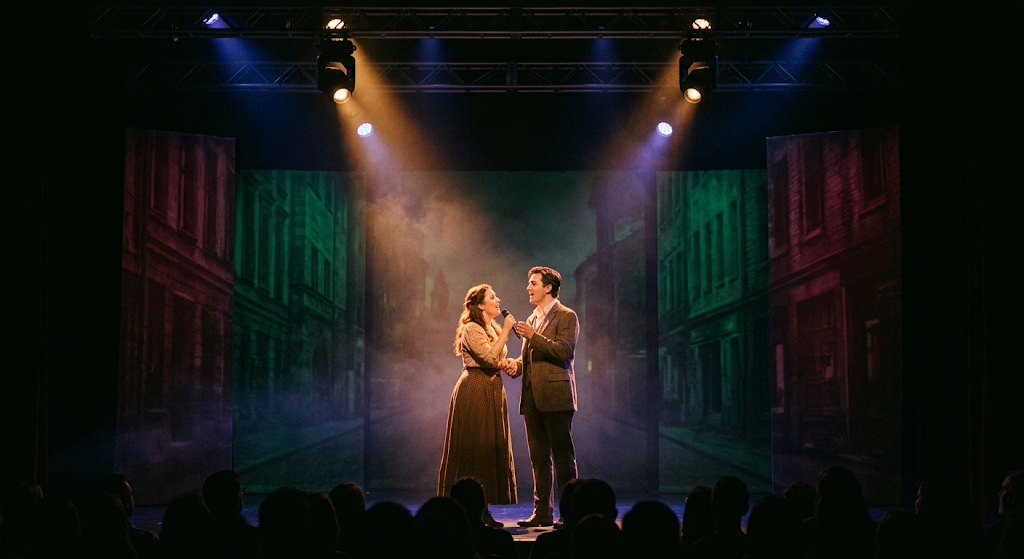
Lighting can guide attention toward a solo performer, a speaker, a particular section of the stage, or an important moment in a production.
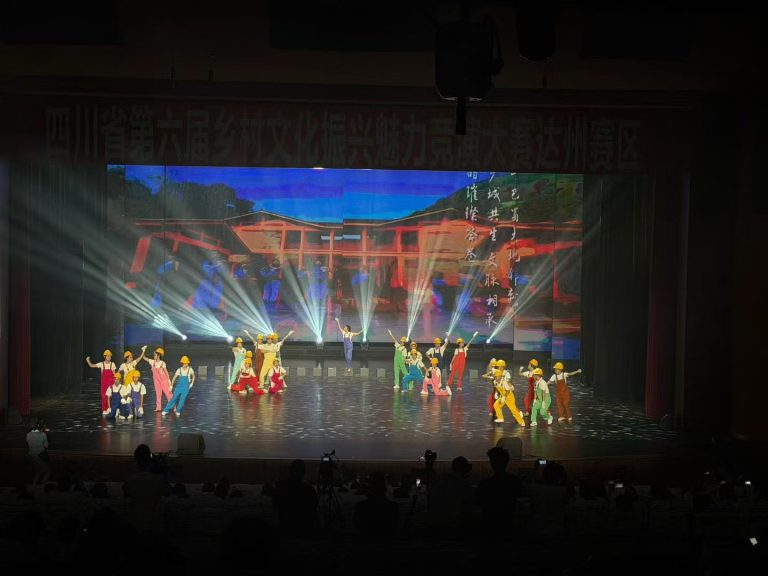
For example, a broad stage wash may be appropriate during a group performance, while a more concentrated beam can draw attention to a soloist. The goal is not to illuminate everything equally, but to make the important parts of the performance easy to follow.
3. Create Depth and Separate the Background
A stage can look flat when the performers, scenery, and background receive similar lighting from the same direction.
Side lighting and backlighting help create visual separation. Background lighting can also add color and depth to scenic walls, curtains, truss structures, and other surfaces behind the performers.
For a closer look at this technique, see our guide to background LED lighting.
4. Establish Mood and Energy
Color, contrast, movement, and timing all influence the atmosphere of a performance. Warm colors may help create an intimate or welcoming setting, while cool colors can suggest distance, nighttime, or a more dramatic environment.
Fast lighting changes may suit energetic music, while slow fades are often more appropriate for presentations, theater, or quieter performances. The lighting should support the action rather than compete with it.
Stage Lighting Terms Beginners Should Know
Understanding common terminology makes it easier to plan a lighting setup, communicate with a lighting operator, and compare equipment specifications.
- Wash: A broad field of light used to illuminate a performance area, backdrop, or scenic surface.
- Spot: A more defined beam used to isolate a performer, object, or section of the stage.
- Beam: A concentrated shaft of light often used for aerial effects and dramatic visual accents.
- Front light: Light directed toward performers from the front of the stage.
- Backlight: Light coming from behind performers to create separation and depth.
- Side light: Light coming from the side, often used to reveal body shape and movement.
- Cue: A planned lighting change associated with a particular moment in a performance.
- Fade: A gradual increase or decrease in brightness, color, or another lighting parameter.
- Gobo: A pattern placed inside a compatible fixture to project shapes, textures, or other designs.
- DMX512: A widely used lighting control protocol that allows compatible fixtures to receive instructions from a controller.
These terms describe different aspects of lighting. For example, “moving head” refers to a fixture that can change its pan and tilt position, while “wash” describes the type of light it produces. A moving head can therefore be a wash fixture, a beam fixture, or a spot fixture, depending on its optical design.
What Are the Main Types of Stage Lights?
Different stage lighting fixtures solve different problems. Some provide general illumination, while others create movement, texture, or special effects. A practical starter setup usually combines fixtures with complementary roles instead of relying on one type of light for everything.
1. LED PAR Lights
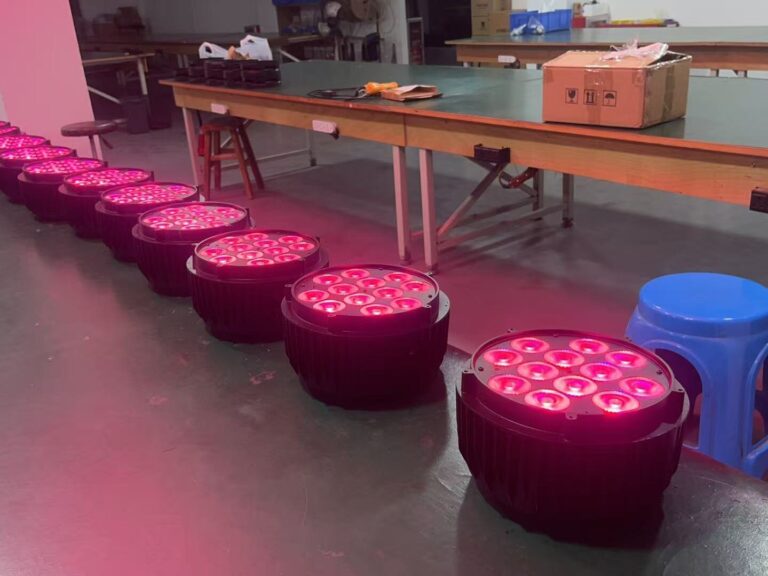
LED PAR lights are commonly used for stage washes, colored lighting, and general event illumination. They are a useful starting point for beginners because fixed-position fixtures can provide consistent coverage without requiring mechanical movement.
Depending on the model, LED PAR lights may offer RGB, RGBW, or other LED color configurations. Beam angle, output, fixture distance, and color mixing all affect the final result.
For a more detailed explanation of PAR fixture types and applications, read our guide to what PAR lights are and how to choose them.
2. Moving Head Lights
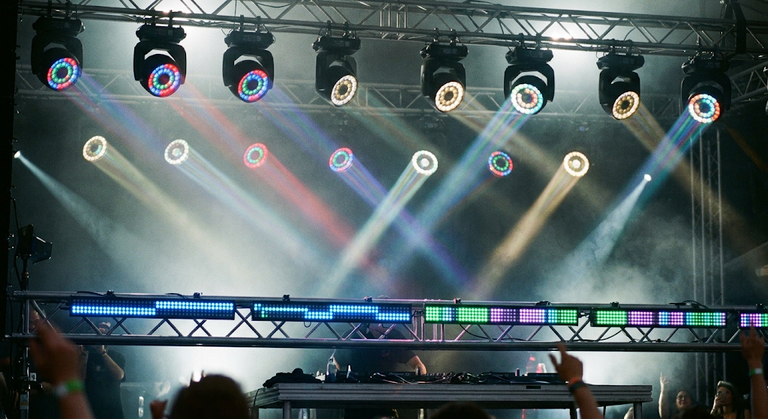
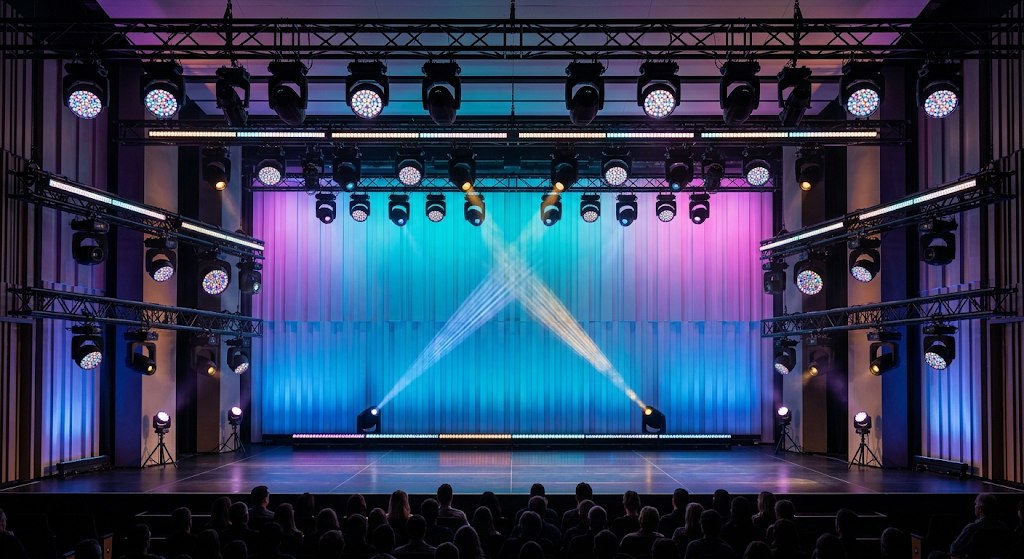
Moving head lights can pan and tilt during a show. Depending on the fixture, they may also change color, adjust beam size, project gobos, or produce prism and other effects.
They are especially useful when the lighting design needs movement or when a fixture must cover different areas during different scenes. A moving head can create aerial beams above a concert stage, move a wash across a backdrop, or project patterns onto a scenic surface.
However, movement should have a purpose. Constantly moving every fixture can make the stage visually busy and distract the audience from the performance.
Explore Tealshine’s moving head lights to compare fixture options for different stage and event requirements.
3. LED Wash and Wall Wash Lights
Wash fixtures spread light across a wider area. They can illuminate performers, scenery, backdrops, and architectural surfaces, depending on their optics and intended use.
Wall wash fixtures are particularly useful when the goal is to create an even color field across a large wall or backdrop. Fixture spacing and beam overlap matter: poorly planned placement can leave bright spots and dark gaps across the surface.
For background or architectural coverage, LED wall wash lights can be considered alongside other wash fixtures.
4. LED Light Bars
LED light bars use a linear arrangement of LEDs to create elongated washes, outlines, and visual accents. They can be installed along stage edges, truss structures, scenic elements, or the rear of a performance area.
Some models support segmented or pixel-style effects, allowing different sections of the fixture to display different colors or patterns. This can be useful for music-driven effects and visual sequences.
See Tealshine’s LED light bars for examples of linear stage lighting products.
5. LED Strobe Lights
Strobe lights produce short, intense flashes that can emphasize musical transitions, climactic moments, or high-energy sections of a performance.
They are effect fixtures rather than substitutes for general stage illumination. Use them selectively, coordinate them with the music, and consider audience sensitivity and venue requirements before programming strobe effects.
Tealshine also offers LED strobe lights for stage and entertainment applications.
6. Battery-Powered LED Lights
Battery-powered LED fixtures can simplify temporary lighting installations where running power cables is difficult or undesirable. They are often useful for event uplighting, wedding backdrops, venue decoration, and other locations where fast installation matters.
When comparing battery-powered fixtures, check the expected runtime at your intended brightness and color settings. Also consider charging time, wireless control options, and the fixture’s IP rating if it will be used outdoors.
Where Should Stage Lights Be Positioned?
Fixture position changes how a performer looks and how the audience perceives the stage. The ideal arrangement depends on stage dimensions, mounting height, audience sightlines, and the type of production, but the following positions are a useful starting point.
Front Lighting
Front lighting illuminates performers from the audience side. It helps make facial expressions and costumes visible, which is particularly important for presentations, theater, and vocal performances.
A common mistake is placing front lights too low or directing them too steeply toward the stage. This can create uncomfortable shadows or glare. The final angle should be checked from the audience area, not only from the lighting position.
Side Lighting
Side lighting comes from the left or right side of the performance area. It can reveal body shape and movement, making it especially useful for dance, physical theater, and performances that depend on movement.
Side lighting can also add contrast when the front wash is relatively soft. However, excessive side light may leave faces unevenly illuminated, so it should be balanced with other positions when facial visibility is important.
Backlighting
Backlighting comes from behind performers. It helps separate them from the background and can create outlines, silhouettes, and a greater sense of depth.
A backlight does not always need to be extremely bright. If it is much stronger than the front light, performers may become silhouettes or lose facial detail. The correct balance depends on the intended effect.
Top Lighting
Top lighting comes from fixtures mounted above the performance area. It can create defined pools of light, add texture, and help establish separate stage zones.
Its effect depends on the height and angle of the fixture. Strong top lighting can produce deep shadows around the eyes and under the chin, so it is often combined with front or side lighting.
Floor and Low-Angle Lighting
Low-angle fixtures can illuminate scenery from below or create unusual shadows on performers and set pieces. They are often used for dramatic reveals, architectural accents, and special effects.Because light from below is less familiar than ordinary front lighting, it can quickly change the mood of a scene. Use it deliberately rather than as a default source of performer illumination.
How Do Color, Brightness, and Beam Angle Affect Stage Lighting?
Choosing the right fixture is only part of the process. How the fixture is aimed, dimmed, and colored has a major impact on the result.
Color
Color can establish a visual theme, separate different parts of a stage, or signal a change in mood. RGB and RGBW fixtures offer flexible color mixing, while other LED configurations may be selected for particular color or white-light requirements.
Remember that color is affected by the surface being illuminated. A colored beam on a white backdrop will look different from the same beam on a dark curtain or a surface with a strong existing color.
Brightness
More brightness does not automatically mean better stage lighting. If the entire stage is illuminated at the same high level, the audience may have difficulty identifying the main subject.
Instead, think about contrast and hierarchy. The performer who matters most at a particular moment should usually remain visually clear, while background and scenic lighting should support the scene.
Beam Angle and Coverage
Beam angle determines how widely light spreads from a fixture. A narrow beam concentrates light over a smaller area, while a wider beam covers more surface from the same position.
The required beam angle depends on fixture distance, mounting height, the dimensions of the target area, and the intended visual effect. Compare these factors before selecting fixtures based on wattage alone.
Dimming and Transitions
Smooth dimming helps lighting changes look intentional. A slow fade can introduce a scene gradually, while a fast transition can mark a sharp musical or dramatic moment.
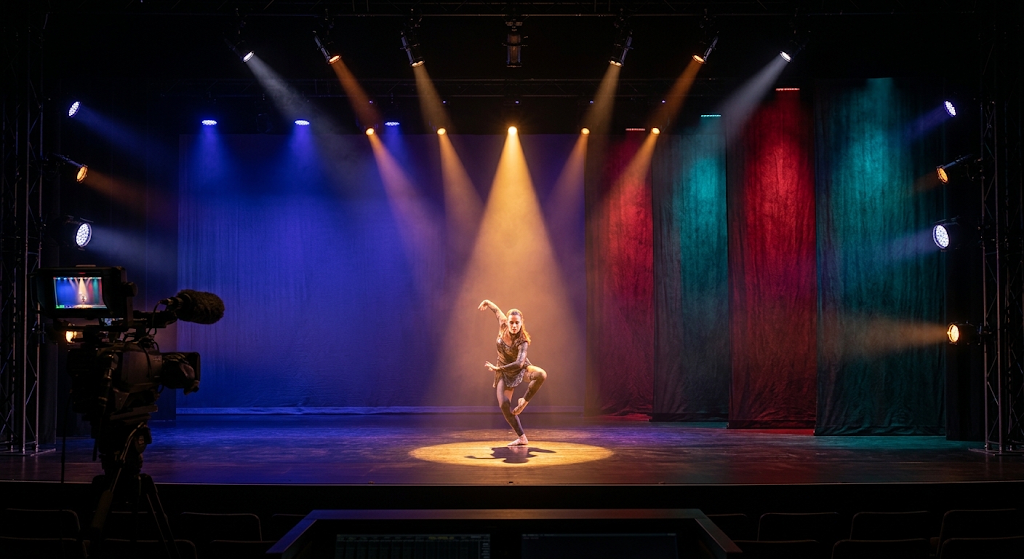
For productions recorded by cameras, flicker performance is also important. Test fixtures using the actual camera settings and operating conditions expected during the production rather than assuming every LED fixture will perform identically.
How to Set Up Stage Lighting for Beginners
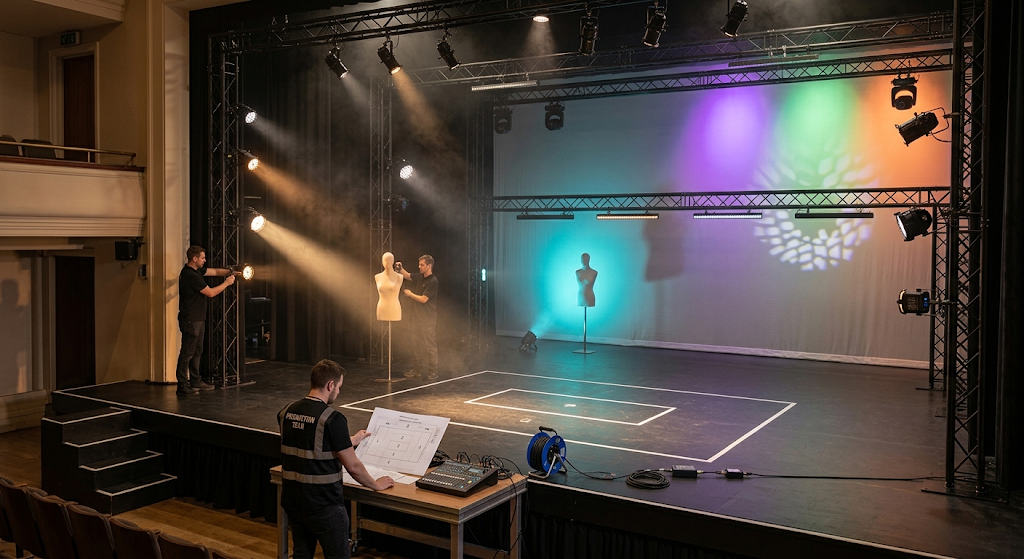
A beginner stage lighting setup should be simple enough to focus, control, and troubleshoot before the audience arrives. Start with the stage layout and performance requirements, then select fixtures to serve specific roles.
Step 1: Identify the Performance Area
Measure the stage width, depth, and available mounting height. Identify where performers will stand, where the audience will sit, and whether the production uses a backdrop, projection screen, or scenic structure.
These details help determine how many lighting positions are needed and how much coverage each fixture must provide.
Step 2: Establish Basic Visibility
Start with front lighting or another suitable source of performer illumination. Make sure faces and costumes are visible across the areas where the action takes place.
If the stage contains multiple performance zones, test each zone separately. A lighting setup that works well in the center may leave the edges too dark.
Step 3: Add Depth
Once the main performance area is visible, add side or backlighting to separate performers from the background.
If the backdrop is an important part of the design, consider whether it needs a broad wash, linear accents, or more dynamic effects. Avoid increasing background brightness simply to make the whole stage look brighter.
Step 4: Add Color and Effects
Use color to support the mood and structure of the production. Moving heads, LED bars, and strobes can add movement and energy, but each effect should have a clear purpose.
For a small venue, a few well-timed lighting cues may be more effective than running every fixture through continuous movement and color changes.
Step 5: Plan Control and Test the System
If the setup uses DMX, confirm each fixture’s operating mode and address before programming cues. Check that the controller profile matches the selected fixture mode and that the signal chain works as expected.
Test the system with the performers or presentation positions occupied. Review the result from the audience area and adjust fixture focus, intensity, and color as needed.
How Does DMX Work in Stage Lighting?
DMX is a common control method used to send instructions from a lighting console or compatible controller to stage lighting fixtures. Depending on the fixture and its selected mode, DMX can control functions such as intensity, color, pan, tilt, and built-in effects.
Each fixture uses a DMX address and a defined number of control channels. The address determines where the fixture’s control data begins, while the channel mode determines how many channels and functions it uses.
For example, a moving head may use different channels for pan, tilt, color, dimming, and effects. A PAR light may use channels for red, green, blue, white, and other functions, depending on its design.
When setting up a DMX system:
- Confirm the fixture’s DMX channel mode.
- Assign addresses according to the system plan.
- Make sure the controller profile matches the fixture mode.
- Check cable connections and signal routing.
- Test each fixture before programming the full show.
For a practical introduction to lighting control, read what a DMX controller does.
For larger systems, careful planning becomes more important. A written patch list, consistent fixture naming, and documented channel modes make it easier to troubleshoot problems and reproduce the setup at future events.
Basic Stage Lighting Safety
Stage lighting equipment may be electrically powered, mounted overhead, or operated in demanding environments. Safe installation and operation should be part of the planning process from the beginning.
- Use mounting hardware and safety attachments suitable for the fixture and installation.
- Have overhead rigging and electrical work carried out by qualified personnel.
- Check power loads and use appropriate power distribution.
- Route cables so they do not create trip hazards or block exits.
- Keep fixtures within their specified operating environment and allow for adequate ventilation.
- Disconnect power and follow the manufacturer’s instructions before cleaning or servicing equipment.
- For outdoor use, verify that the fixture’s IP rating and connections are suitable for the actual environment.
Strobe effects also require consideration of audience sensitivity and venue requirements. Follow the relevant safety guidance for the production rather than treating effects as purely decorative.
This section provides general guidance only. Always follow the fixture manual, venue rules, and applicable local requirements.
Frequently Asked Questions About Stage Lighting Basics
What lights do I need for a small stage?
Start with suitable lighting for performer visibility, then add fixtures for depth or background coverage. LED PAR lights are often useful for basic washes, while side lights, backlights, or moving heads can provide additional separation and effects. The required number of fixtures depends on stage size, mounting positions, and the type of performance.
What is the difference between a wash light and a moving head?
A wash light is designed to spread light over an area. A moving head is a fixture that can change its pan and tilt position. Some moving heads produce wash output, while others are designed for narrow beams or spot effects.
What is the difference between front lighting and backlighting?
Front lighting illuminates performers from the audience side and helps make faces visible. Backlighting comes from behind the performers and helps separate them from the background, creating depth or silhouettes. Many stage designs use both.
Do I need a DMX controller for stage lights?
Not every basic lighting setup requires a dedicated DMX controller. However, DMX control is useful when multiple compatible fixtures need coordinated dimming, color changes, movement, or effects. It is common in professional stage and event lighting systems.
How can I make a stage look less flat?
Start with balanced front lighting, then introduce side or backlighting to create depth. Background lighting can separate the scenery from the performers, while controlled color and contrast help guide the audience’s attention.
Can LED stage lights be used outdoors?
Yes, provided the specific fixtures are designed and rated for the intended environment. Check the IP rating, mounting requirements, connectors, power arrangements, and manufacturer’s instructions before using fixtures outdoors.
Start With the Basics, Then Build the Look
Effective stage lighting does not depend on the number of fixtures alone. It starts with clear priorities: make the performance visible, direct attention, create depth, and use color or movement when it supports the production.
Once these fundamentals are in place, additional fixtures can help build more complex looks and smoother transitions. Understanding the role of each fixture also makes it easier to select equipment that fits the venue, control system, and production requirements.
Tealshine manufactures professional LED stage lighting products for theaters, concerts, event venues, and entertainment projects. Its product range includes PAR can lights, moving head lights, LED wash and wall wash fixtures, LED light bars, strobe lights, and battery-powered LED lights. For distributors, rental companies, and project contractors, OEM/ODM customization can also help align products with specific project and brand requirements. Learn more about Tealshine’s OEM/ODM stage lighting manufacturing services.