Professional High Quality Stage Lighting Manufacturer


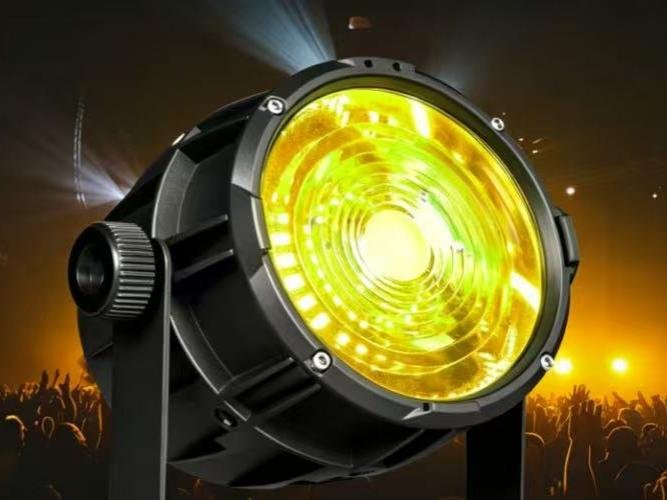
Table of Contents
What Is an LED PAR Can Light?
An LED PAR can light is a stage fixture that uses an LED array instead of a halogen lamp to produce colored or white light. “PAR” stands for parabolic aluminized reflector — the original lamp design, a sealed glass unit with a built-in reflector and lens. An LED PAR can light replaces that sealed lamp with LEDs and modern optics, which changes how the fixture performs.
It’s usually one of the first fixtures specified for a touring show, a theatre production, or a multi-purpose event hall. It washes a stage evenly, adds color to a set, or works as side light to sculpt performers.
LED changed more than energy use. A modern LED par can light draws a fraction of the power a halogen PAR can needs, at comparable brightness. It runs cooler, which matters in small rooms with low rigging. And because an LED engine mixes red, green, blue, and often white emitters, one fixture can output a wide range of colors and white tones — a practical fit for rental companies, contractors, and venues that need one fixture to handle multiple roles.
Key Specs to Check Before Buying
Brightness alone doesn’t tell you whether a fixture will work in your room. Check five things: optical spread, LED configuration, control protocol, color quality, and protection rating.
Beam Angle: Match the Optic to the Throw Distance
Beam angle controls how wide the light spreads on stage. A narrow angle throws a tight pool over a long distance. A wide angle spreads an even wash at closer range.
Some fixtures use a fixed lens. Others let you swap lenses or add a diffusion film to change the spread.
| Beam Angle | Best For |
| 10°–15° | Long throws, outdoor events, spot effects |
| 25°–40° | General stage wash at typical truss heights (around 6m) |
| 60° and wider | Short-distance uplighting, broad wash coverage |
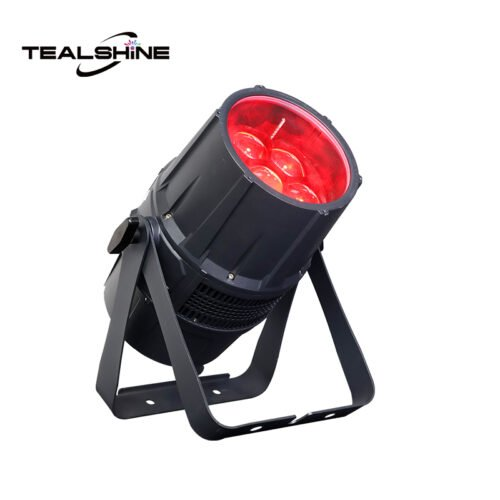
A zoom fixture adjusts beam angle without a lens swap. Tealshine’s 7×40W par can zoom covers this range in one unit.
LED Configuration: RGB, RGBW, and RGBA
The LED array decides color capability. Three configurations cover most fixtures on the market:
| Configuration | Adds | Best For |
| RGB | Three emitter colors, no dedicated white | Budget fixtures, color-only effects |
| RGBW | A dedicated white emitter | Cleaner white light, better overall brightness |
| RGBA | Amber for warmer tones | Theatre and decorative environments |
For video work, choose RGBW or higher. The dedicated white emitter gives cleaner skin tone reproduction than RGB alone.
DMX Control: Channels, Modes, and Connectivity
Professional fixtures communicate over DMX512, the standard control protocol in entertainment lighting. A console sends signals down a DMX line, and the fixture responds in real time.
- Basic units — 3 to 6 channels, covering color and dimming.
- Full-featured fixtures — 8 or more channels, adding individual emitter control, strobe, color macros, and dimming curves.
More channels mean finer control, but each one takes an address in your DMX universe. Check for RDM support too — it lets you remotely assign addresses and read fixture status without climbing to the rig.
Connector type matters as well. Three-pin locking connectors are most common; some venues use five-pin. A fixture that accepts both saves headaches during installs.
CRI and TLCI: Color Quality for Camera
CRI (color rendering index) measures how accurately a light reveals object colors compared to daylight. A rating below 70 works for some decorative washes. For skin tones and set photography, look for 80 or higher.
TLCI (television lighting consistency index) measures the same idea specifically for broadcast cameras. If the fixture will appear on video, confirm the manufacturer publishes both CRI and TLCI values. A CRI of 90 or above, with a compatible TLCI, is the safer choice for theatre and studio work.
Indoor vs. Outdoor Rated LED PAR Cans
IP rating decides where a fixture can safely run. An IP20 fixture works fine on a standard indoor stage. Outdoors, rain, dust, and condensation call for IP65 or better.
| IP20 (Indoor) | IP65+ (Outdoor) | |
| Environment | Standard stages, rehearsal spaces | Rain, dust, outdoor events |
| Housing | Standard enclosure | Sealed aluminum, protective glass |
| Cabling | Standard connectors | Watertight cable glands |
| Cooling | Fan or open venting | Passive aluminum fins (sealed housing) |
A fully sealed IP65 housing relies on aluminum fins for passive heat dissipation instead of a fan — fine, as long as the manufacturer sized the LED engine correctly for that cooling method. Tealshine’s IP20 par can with halo effect suits indoor club use, while the IP65 19×10W par can is built for outdoor and exposed installs.
Common Applications
- Concerts — audience lighting, truss washes, and side accent pools.
- Theatre — wash light, color source, or footlight, but only if the fixture dims smoothly without visible flicker — request a live dimming test before committing.
- Television studios — high-CRI units, since color consistency and flicker-free operation matter for camera work.
- Commercial venues — function halls, bars, and brand activations use color-changing par cans with minimal maintenance.
Rental companies handle and transport fixtures constantly. A sturdy housing, an impact-resistant lens, and manageable carrying weight matter as much as output. Many users prefer a lightweight aluminum body over heavy steel, with a mounting bracket that sits flat in storage.
For a broader look at how par cans compare to other stage fixtures, see our guide to what par can lights are and how they work.
What to Look for in a Supplier
If you’re buying in volume, the fixture is only part of the value. A manufacturer that can customize LED selection, optics, housing, and DMX implementation matters when you need your own brand or a project-specific build. Verify five things before you commit:
- Customization — LED bead selection, optical design, hardware housing, power supply, and DMX protocol options.
- Quality control — aging tests, per-unit brightness and color calibration, and documented failure-rate data.
- Technical documentation — DMX channel charts, photometry reports, dimension drawings, and user manuals.
- Compliance — CE, RoHS, UL, or other certifications relevant to your target market.
- Packaging and lead time — protective materials for freight, and a realistic turnaround for your order size.
Tealshine’s OEM/ODM services cover all five points directly, from LED bead selection through DMX protocol customization.
LED PAR Can Light FAQ
What are LED PAR can lights used for?
Stage wash, color washes, side lighting, backlighting, and audience up-lighting in concerts, theatres, broadcast studios, and commercial event spaces.
What’s the difference between RGB and RGBW LED PAR can lights?
RGB mixes red, green, and blue to create color, but the resulting white is often incomplete. RGBW adds a dedicated white emitter for cleaner white and more accurate skin tones.
Do LED PAR can lights work with DMX controllers?
Most professional models support DMX512. Check the channel count and RDM support — a fixture with selectable channel modes fits more easily into an existing DMX universe.
Can LED PAR can lights be used outdoors?
Only with a suitable IP rating — generally IP65 or higher. An indoor IP20 fixture isn’t weather-sealed and shouldn’t go outdoors.
What beam angle should I choose?
See the beam angle table above: narrow angles for long throws, mid-range angles for general wash, and wide angles for short-distance uplighting. Some models offer interchangeable lenses for more flexibility.
Final Thoughts
Choosing an LED PAR can light takes more than comparing peak brightness or price. Check beam angle, LED configuration, DMX channel layout, CRI/TLCI, protection rating, and how the fixture behaves at low dimmer levels. If you’re buying through a manufacturer or wholesale partner, confirm their quality control, documentation, and compliance support instead of relying on product photos alone.
Browse Tealshine’s full range of LED par can lights to compare all 12 models side by side.