Professional High Quality Stage Lighting Manufacturer


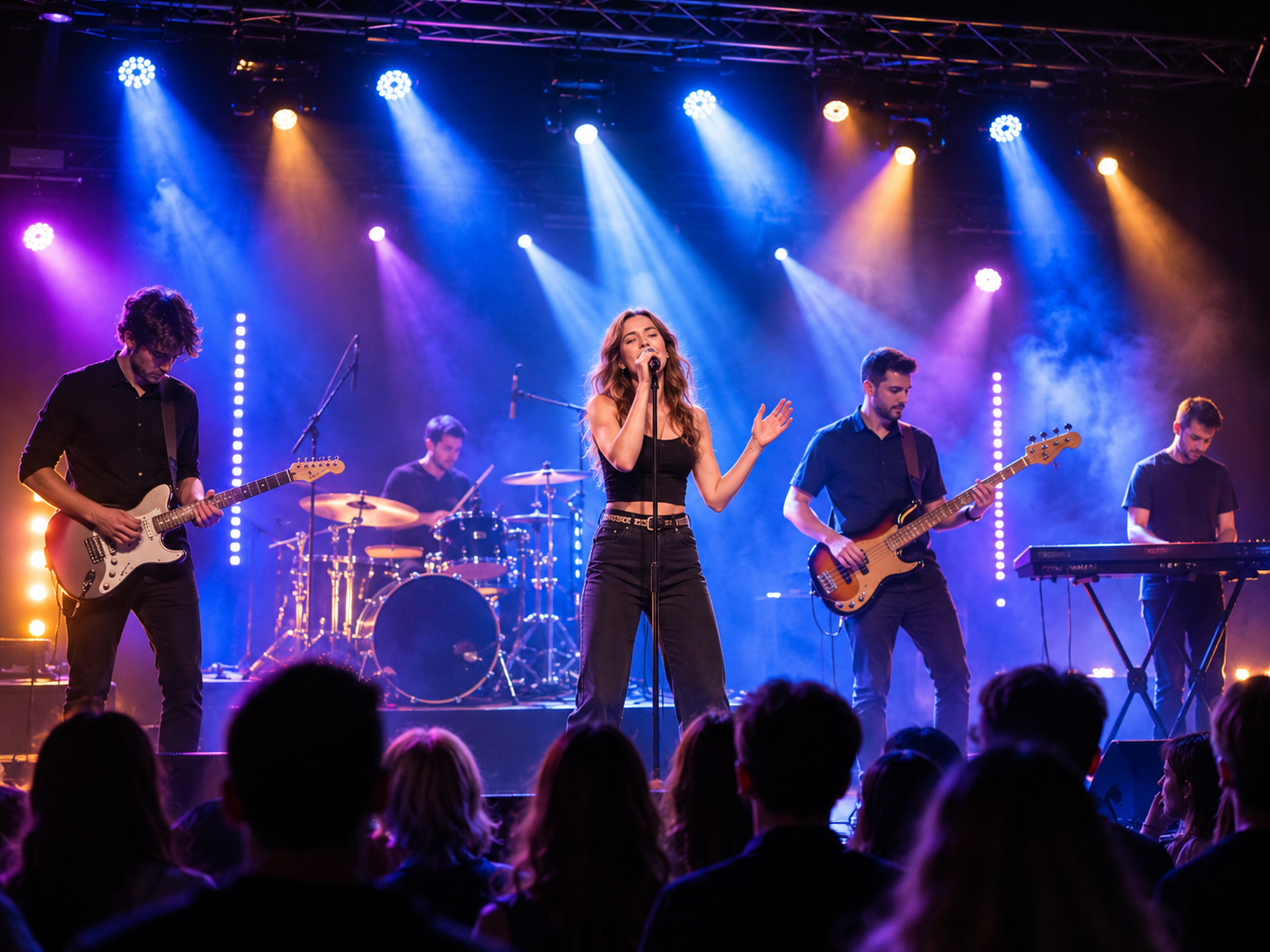
Table of Contents
A live band needs more than a few colorful lights to create an engaging stage performance. The lighting should make musicians visible, highlight important moments, support the rhythm of the music, and give the audience a clear visual connection with the performance.
A lighting setup for a four-piece rock band, for example, may need to highlight the lead singer and guitar solo while keeping the drummer visible at the back of the stage. An acoustic band may need softer illumination and more natural colors, while an energetic cover band may benefit from stronger color changes, moving effects, and carefully timed lighting cues.
The challenge is finding the right balance between visibility, atmosphere, and visual movement. Whether you are planning a small bar performance, building a DIY concert lighting system, or specifying equipment for a professional live music venue, the setup should match the band’s lineup, stage layout, and performance style.
This guide explains how to plan band stage lighting, choose suitable fixtures, arrange lights around different performers, and create practical lighting ideas for live shows.
What Makes Good Band Stage Lighting?
Good band lighting does not mean using the maximum number of fixtures or making every light move continuously. It means giving each fixture a clear purpose and making the lighting work with the music.
A useful live band lighting design should address four main requirements.
1. Keep Every Performer Visible
The audience should be able to see the musicians throughout the performance. This sounds obvious, but it is easy to overlook when most of the lighting is focused on colorful background effects.
The lead vocalist usually needs clear front illumination because facial expressions and interaction with the audience are important parts of the performance. Guitarists, bassists, keyboard players, and drummers also need enough light to remain visually recognizable.
A common mistake is to illuminate the front of the stage while leaving the drummer almost invisible. The result is an unbalanced stage where the audience can see the singer but loses much of the band’s overall performance.
2. Create Visual Separation Between Performers and the Background
A band can look visually flat when performers and the background receive light from similar directions and at similar intensities.
Backlighting and side lighting help create separation. A light positioned behind the musicians can outline their bodies and instruments, while side lighting adds shape and depth.
For a dark stage backdrop, colored LED PAR lights or LED bars can establish a background layer. Moving head wash fixtures can add changing coverage when the production needs more movement.
3. Match the Lighting to the Music
Different songs often require different visual treatments.
A quiet acoustic introduction may work better with warm, restrained lighting. A rock chorus may benefit from stronger contrast, more saturated colors, and wider stage coverage. A guitar solo can be highlighted with a brighter area of illumination or a more focused effect.
The objective is to make lighting changes feel connected to the music rather than random.
4. Keep the Setup Practical to Operate
Not every band travels with a dedicated lighting designer. Smaller groups may have to manage their own equipment, while venue technicians may operate the lights for several different performers in one evening.
A practical system should be easy to install, focus, control, and troubleshoot. A manageable collection of fixtures with well-planned scenes can often deliver a better result than a complicated rig that nobody has time to program properly.
Essential Stage Lights for Bands
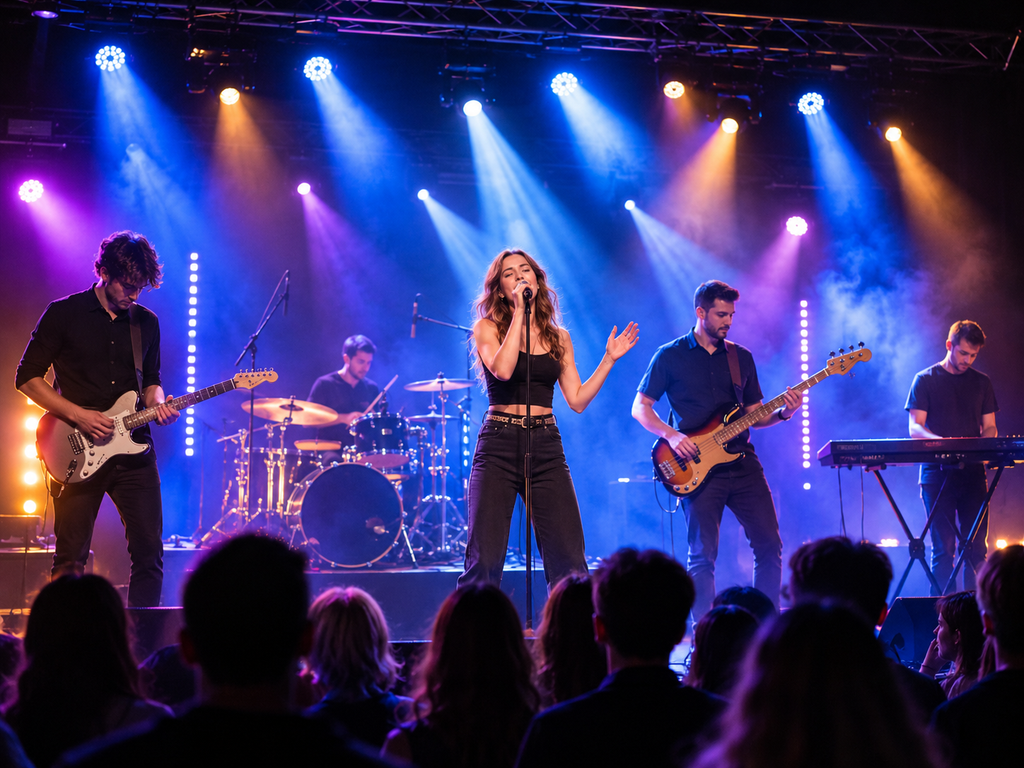
Different fixture types perform different jobs in a live band setup. Instead of selecting equipment based on appearance or advertised wattage alone, consider what each fixture needs to accomplish.
LED PAR Lights for Basic Stage Coverage
LED PAR lights are commonly used to create colored washes across the performance area. They can illuminate the stage from front, side, or rear positions, depending on the lighting design.
For bands performing in bars, rehearsal venues, schools, and smaller live music spaces, PAR fixtures can provide a practical foundation. Multiple fixtures can be arranged to cover different sections of the stage and produce coordinated colors.
They are particularly useful for:
- Adding color to the stage background
- Providing side and rear color washes
- Creating consistent lighting across several performers
- Supporting simple lighting scenes for different songs
When selecting LED PAR lights, pay attention to beam angle, output, color configuration, dimming performance, and control options. A wide beam may be useful for nearby stage coverage, while a narrower beam may be more appropriate for a longer throw distance.
For a broader overview of fixture categories and their applications, see our guide to different types of stage lights.
Moving Head Lights for Dynamic Concert Effects
Moving head lights bring movement into a band lighting setup. They can change direction during a performance, create sweeping effects, and help draw attention to different parts of the stage.
However, not every moving head performs the same function.
- Beam moving heads: Create concentrated shafts of light and are commonly used for aerial effects.
- Spot moving heads: Can project more defined patterns and gobos, depending on their optical features.
- Wash moving heads: Spread colored light across a wider area and can change their coverage during the performance.
For a live band, moving heads are particularly useful during energetic sections, instrumental breaks, and transitions between songs.
They should not replace the basic lighting needed to see the musicians. Instead, use them as an additional visual layer that adds movement without making the stage difficult to watch.
Explore our range of moving head lights to understand the different fixture options available for dynamic stage productions.
LED Bars for Backlighting and Background Effects
LED bars can create long lines of color behind a band, along the back of a stage, or across an overhead truss.
Their linear form makes them useful for building visual structure. Rather than illuminating only one small area, multiple bars can create a continuous background effect or emphasize the shape of a stage.
For live bands, LED bars can be used to:
- Create colored outlines behind the performers
- Add horizontal lighting elements to the stage design
- Produce silhouettes during selected musical sections
- Add visual depth behind the drum kit
- Create coordinated color changes across the backdrop
Pixel-controlled LED bars may also provide more detailed visual effects, depending on the fixture and control system.
Strobe Lights and Effect Fixtures
Strobe lights can create short bursts of light during dramatic moments. They are often used for rock performances, electronic music, and high-energy sections of a live show.
However, strobe effects should be used carefully. Continuous or excessive flashing can distract the audience and may create risks for people with photosensitive conditions.
Other effect fixtures, including lasers, can add visual impact to a concert. These should be selected and operated according to the venue’s safety requirements and applicable laser safety regulations.
For most bands, effect lighting should remain an accent rather than the foundation of the setup.
How to Arrange Lights for a Band on Stage
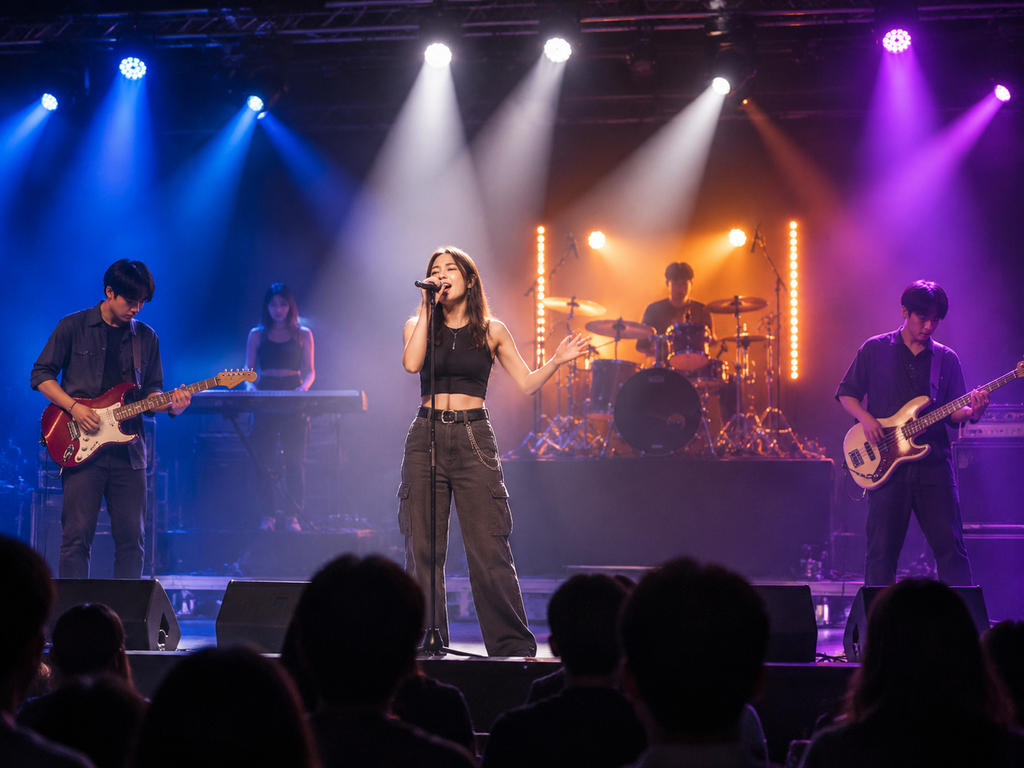
A successful band stage lighting setup starts with the actual position of the performers. The arrangement should reflect where musicians stand, how they move, and which parts of the performance need the most visual attention.
Front Lighting for the Lead Singer
The lead singer is often the main visual focus, particularly when the performance includes audience interaction, spoken introductions, or vocal solos.
Front lighting helps reveal facial expressions and makes the singer easier to follow. Depending on the venue, suitable LED PAR fixtures or dedicated spot fixtures can provide this illumination.
Avoid relying entirely on saturated colors for the singer’s front light. Strong color can affect how skin tones and facial details appear. A more balanced white-light source may be useful when clear performer visibility is important.
If the singer moves across the stage, consider whether the lighting covers the full performance area rather than only one fixed microphone position.
Side Lighting for Guitarists and Bassists
Guitarists and bassists often move between fixed playing positions and more active performance areas. Side lighting can help reveal body movement and the shape of instruments.
A combination of side-mounted PAR fixtures and rear lighting can add depth without requiring constant movement from the fixtures.
For guitar solos, a stronger lighting cue can help shift the audience’s attention toward the guitarist. This does not always require a followspot. A pre-programmed increase in brightness or a change in color can be enough for a smaller venue.
Backlighting for the Drummer
The drummer is usually positioned at the rear of the stage, which makes visibility a common challenge.
Backlighting can help outline the drummer and separate the drum kit from the background. LED bars placed behind or above the kit can create a visual frame, while PAR fixtures can add color to the surrounding area.
Be careful with fixture placement. Lights aimed directly into the drummer’s eyes or reflecting from shiny drum surfaces can become distracting. Test the arrangement from both the audience area and the drummer’s position.
Lighting for Keyboard Players and Additional Musicians
Keyboard players, backing vocalists, and other supporting musicians may occupy positions near the sides or rear of the stage.
They should remain visible without competing with the main vocalist for attention throughout the entire performance.
For a large band, dividing the stage into lighting zones can make programming easier. Each zone can have its own intensity and color settings, allowing the lighting operator to emphasize the relevant musicians when needed.
Band Stage Lighting Ideas for Different Venue Sizes
The best lighting setup depends on more than audience capacity. Stage width, ceiling height, mounting positions, available power, and the band’s performance style all influence the final equipment list.
The following examples are planning references, not fixed fixture quantities. A compact stage with a high ceiling may need a different arrangement from a wider stage with limited mounting positions.
Small Bars, Clubs, and Rehearsal Stages
Small venues usually have limited space for lighting stands and overhead equipment. The priority should be to provide clear performer visibility and enough color to make the stage visually interesting.
A practical starting arrangement may include:
- LED PAR lights for front, side, or rear color coverage
- A small number of moving head fixtures for movement and visual accents
- LED bars behind the band or near the drum kit
- A basic DMX controller or suitable standalone control system
For a three-piece or four-piece band, start by identifying the main performance positions. Make sure the vocalist, guitarists, and drummer can all be seen before adding additional effects.
If the venue has a low ceiling, avoid using narrow-beam fixtures that produce overly concentrated light at short distances. Wider coverage may be more appropriate, depending on the target area.
For DIY concert lighting, simplicity is an advantage. A few repeatable scenes for different songs can be easier to manage than a complicated sequence that requires constant manual adjustments.
Medium-Sized Live Music Venues
Medium-sized venues generally provide more space for separate lighting positions and additional fixtures.
A more layered setup may include:
- PAR lights for consistent color coverage
- Wash moving heads for adjustable stage illumination
- Beam or spot moving heads for selected effects
- LED bars for background and rear-stage lighting
- Strobes or blinders for occasional performance accents
At this level, the lighting design should consider different stage zones. For example, the lead vocalist may have a dedicated front-lighting area, while the drummer and guitarists receive separate side or backlighting.
If the venue hosts multiple bands, save a basic collection of lighting scenes that can be adapted to different stage layouts. This reduces setup time and gives technicians a consistent starting point.
Large Concert Stages and Outdoor Festivals
Large stages require more detailed coordination between fixture positions, control systems, power distribution, and the production team.
A professional band stage lighting design may combine:
- Multiple rows of PAR and wash fixtures for stage coverage
- Moving head wash fixtures for dynamic color and movement
- Beam moving heads for aerial effects
- LED bars or pixel fixtures for background structures
- Strobe panels and blinders for selected musical moments
- A professional lighting console for cue programming
The fixtures should be assigned clear roles. A large number of moving heads does not automatically create a better design if they all produce the same effect at the same time.
For outdoor stages, also consider environmental protection, weather conditions, cable routing, power distribution, and secure mounting. Fixtures installed outdoors must be suitable for the actual conditions in which they will operate.
How to Set Up Stage Lighting for a Live Band
Once the fixture types have been selected, the next step is building a setup that works with the band’s stage layout and performance schedule.
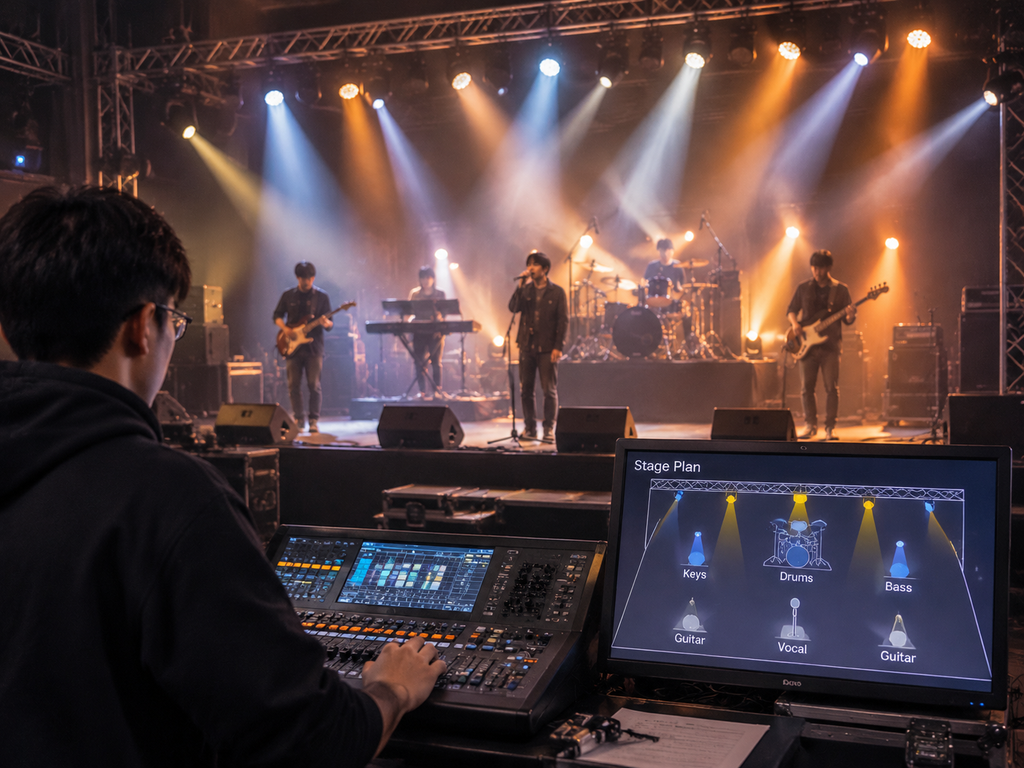
Step 1: Draw the Stage Layout
Start with a simple stage plan showing the positions of the musicians, microphones, drum kit, amplifiers, keyboard stands, and other equipment.
Mark the available lighting positions, including overhead trusses, side stands, and floor-level positions.
This helps identify areas that may be difficult to illuminate and prevents fixtures from being placed where they interfere with musicians or stage equipment.
For a typical band, the plan should clearly identify:
- Lead vocalist and microphone position
- Guitar and bass positions
- Drum kit and rear-stage area
- Keyboard or additional musician positions
- Main walking and movement areas
Step 2: Assign a Purpose to Each Fixture
Before installing the lights, decide what each fixture needs to do.
| Fixture Position | Main Purpose |
| Front truss | Illuminate performers and provide general visibility |
| Side positions | Add color and reveal performer movement |
| Rear truss | Create backlighting and stage depth |
| Behind the drum kit | Separate the drummer from the background |
| Overhead positions | Provide additional coverage and effects |
| Floor-level positions | Add low-angle accents or background effects |
The exact arrangement depends on the venue. A fixture should not be installed simply because there is an available mounting position.
Step 3: Focus the Lights Before Programming
Turn on the fixtures and check their coverage one group at a time.
First, confirm that the performers can be seen. Then adjust the side and rear lighting to create separation from the background.
Check for common problems such as:
- Dark areas between adjacent fixtures
- Excessive brightness on one performer
- Direct glare toward the audience
- Unwanted light spilling onto the backdrop
- Fixtures pointing into performers’ eyes
- Uneven color coverage across the stage
Whenever possible, evaluate the result from the audience’s viewpoint. The appearance from the lighting control position may be very different from what people see in the venue.
Step 4: Organize the Control System
A DMX-based setup allows lighting fixtures to be controlled through a central system. Depending on the fixture, operators may adjust brightness, color, movement, strobe functions, and other features.
Before programming, confirm the DMX mode and channel requirements for each fixture. Assign addresses carefully and make sure the controller is configured for the selected fixture modes.
For bands that perform regularly, organize the fixtures into practical groups, such as front wash, back wash, moving heads, and effects.
This makes it easier to create and recall scenes without adjusting every fixture individually. If you need a clearer understanding of the control process, read our guide to what a DMX controller does.
Step 5: Test the Setup During Rehearsal
A lighting system should be tested with the musicians in their actual performance positions.
Ask the band to play several sections of a song while the lighting operator checks visibility, coverage, movement, and transitions.
Pay attention to moments when performers move away from their usual positions. A guitarist walking toward the front of the stage, for example, should not suddenly disappear from the main lighting area.
Make adjustments before the performance rather than trying to solve every problem during the show.
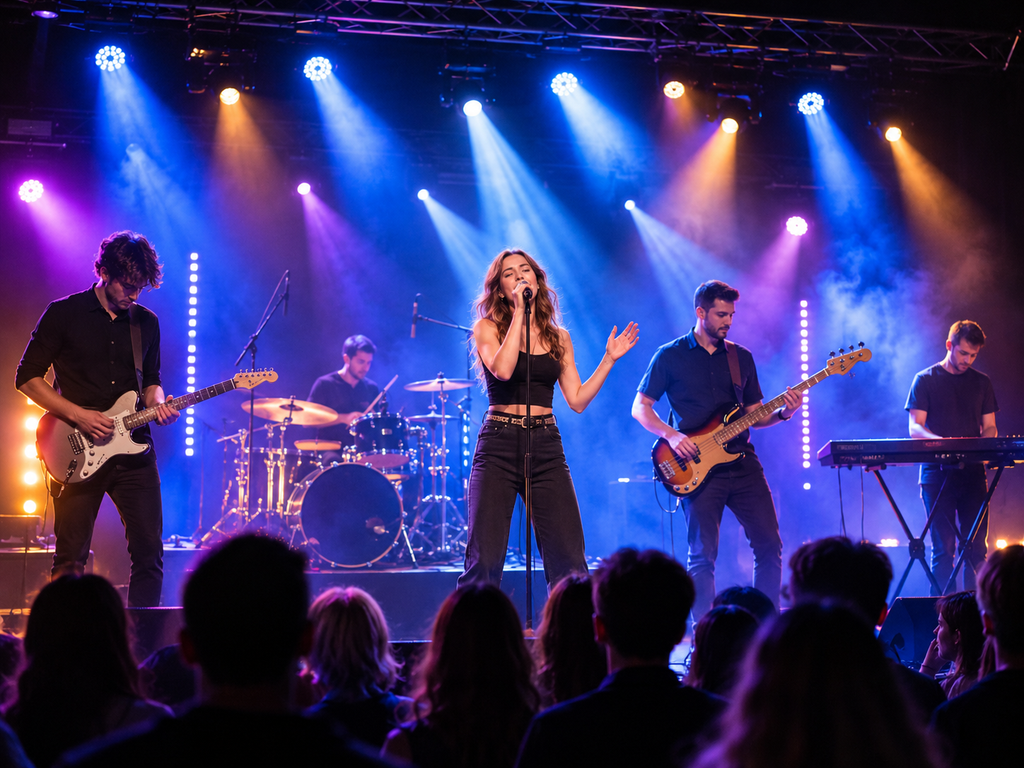
Concert Lighting Ideas: Make the Lights Follow the Music
One of the biggest differences between ordinary stage illumination and effective band lighting is timing.
The lighting does not need to change with every beat. Instead, use changes that support the structure and emotion of the music.
Intro: Build Anticipation
The opening section of a song can begin with a relatively restrained look. A dark background with a small amount of backlighting can create anticipation before the full band enters.
When the music builds, gradually increase the stage wash or introduce moving effects.
The transition should feel intentional rather than simply switching every fixture on at once.
Verse: Keep the Performance Clear
Verses often contain more restrained musical arrangements and vocal passages.
Use balanced front lighting to keep the lead singer visible. Keep background colors relatively controlled so the audience can focus on the performance.
If the song includes a quieter instrumental section, reduce unnecessary movement and effects.
Chorus: Increase Energy
A chorus is often a natural point for stronger visual changes.
You can introduce more saturated colors, increase the intensity of selected fixtures, or activate moving heads for wider stage movement.
Strobes may be used for selected accents where appropriate, but they should not become the default lighting effect for every chorus.
Guitar Solo or Instrumental Break: Shift the Focus
A guitar solo is an opportunity to change the lighting emphasis.
Increase the brightness around the guitarist, use a suitable moving head position, or change the side-lighting color to make the solo more visually distinct.
For smaller venues, a simple cue change can achieve this without needing a dedicated followspot.
Outro: Finish With a Clear Visual Moment
The ending of a song should feel deliberate.
Depending on the music, the lighting may fade gradually, hold a final color look, or use a coordinated effect at the final musical hit.
Avoid cutting all the lights randomly after the last note. A planned ending makes the performance feel more complete.
DIY Concert Lighting: How to Build a Setup on a Budget
A professional lighting system can involve considerable equipment and programming, but a smaller band does not need to purchase everything at once.
The best approach is to build the system in stages and prioritize the equipment that solves the most important problems.
Start With Basic Performer Visibility
Before purchasing moving heads or special effects, make sure the band can be seen clearly.
Start with suitable front or side illumination and enough fixtures to cover the main performance positions.
A small collection of LED PAR lights may be a practical starting point for a band that performs in different small venues.
Add Backlighting for More Depth
Once basic visibility is covered, add rear-stage lighting.
LED PAR fixtures or LED bars can create a background layer and help separate performers from the stage behind them.
This is often a more useful improvement than buying additional effect lights before the basic coverage is complete.
Introduce Moving Heads When Needed
If the band regularly performs energetic music or wants more dynamic stage visuals, consider adding moving head fixtures.
A small number of suitable moving heads can provide movement and effects without requiring an unnecessarily complicated lighting rig.
Choose the fixture type based on the intended job. Beam models are useful for aerial effects, while wash models are more appropriate for broader color coverage.
Keep the Control System Manageable
DIY concert lighting should be easy to operate during a real performance.
If the band does not have a dedicated lighting technician, consider fixtures with suitable standalone programs, sound-active functions, or simple controller integration.
However, sound-active mode should not be expected to reproduce carefully timed lighting cues. It reacts to audio input and may not understand the musical structure of a song.
For more repeatable results, programmed scenes provide greater control.
Common Band Lighting Mistakes to Avoid
Even a well-equipped stage can look unbalanced when the lighting is not planned carefully.
Using Too Many Effects at the Same Time
If moving heads, strobes, lasers, and color changes are all running continuously, the audience may struggle to focus on the performers.
Give each effect a clear role and reserve the strongest looks for important musical moments.
Ignoring the Drummer and Rear Stage
The drummer is often left in darkness because the main lighting positions focus on the front of the stage.
Add appropriate rear or side lighting to create better visibility without directing light into the drummer’s eyes.
Relying Only on Sound-Active Mode
Sound-active programs can be useful for quick setups, but they may respond inconsistently to different instruments and audio frequencies.
For a band with a regular setlist, programmed scenes or manually operated cues usually provide more predictable results.
Choosing Fixtures Based Only on Wattage
Higher wattage does not automatically mean better stage coverage.
Beam angle, optics, output, color settings, fixture distance, and mounting position all affect the final result. Compare the actual specifications and, where possible, test fixtures under realistic conditions.
Forgetting Installation and Electrical Safety
All overhead fixtures must be mounted using suitable hardware and installed according to their rated load and the venue’s requirements.
Power distribution, cable routing, grounding, and connections should be checked before the performance. Keep cables away from walking paths and ensure that stage equipment does not create trip hazards.
For temporary truss or overhead installations, use qualified personnel to assess the supporting structure and rigging arrangements.
Frequently Asked Questions About Band Stage Lighting
What lights are best for a live band stage?
A practical live band setup often combines LED PAR lights for color coverage, moving head fixtures for movement, and LED bars for background effects. The exact combination depends on the stage size, performance style, and budget. Clear performer visibility should always come before decorative effects.
How many lights does a band need on stage?
There is no fixed number. The required quantity depends on the number of performers, stage dimensions, mounting positions, fixture beam angles, and the intended lighting effects. Start by identifying the areas that need illumination, then estimate the coverage of each fixture.
How do you set up stage lighting for a small band?
Begin with front or side lighting to make all performers visible. Add rear lighting to create depth, then introduce a few color effects if the venue and budget allow. A simple controller or suitable standalone programs can make the setup easier to operate.
What is the difference between band lighting and concert lighting?
Band lighting focuses on illuminating musicians and supporting the visual structure of a live band performance. Concert lighting can cover a wider production environment, including large stages, audience areas, architectural elements, and more complex effects. The two overlap, but their scale and production requirements can differ.
Can I use LED PAR lights for band stage lighting?
Yes. LED PAR lights are widely used for band stage lighting because they can provide colored washes from fixed positions. They are particularly useful for small and medium-sized stages, background illumination, and side lighting. Choose a model with suitable beam coverage and output for the venue.
Is DMX necessary for DIY concert lighting?
Not always. Some fixtures offer standalone or sound-active modes that can work for simple setups. DMX becomes more useful when you want to control several fixtures together, save scenes, and create repeatable lighting changes throughout a performance.
How can I make band stage lighting follow the music?
You can use sound-active modes for automatic responses or program lighting cues for specific sections of a song. Pre-programmed scenes offer more precise control over intros, verses, choruses, solos, and outros. They are particularly useful for bands with a regular setlist.
What are some simple concert lighting ideas for small venues?
Start with a consistent color wash, add backlighting behind the musicians, and use a few controlled changes during important sections of the songs. A lighting change during a chorus or guitar solo can have more impact than continuous movement throughout the performance.
Build a Better Lighting Setup for Your Band
Effective band stage lighting starts with understanding the performance, not simply buying more fixtures. A balanced setup should make every musician visible, create depth behind the performers, and use color and movement to support the music.
For smaller bands, a practical combination of LED PAR lights and background lighting may be enough to create a strong visual foundation. As the production grows, wash moving heads, beam effects, LED bars, and more advanced control systems can provide additional flexibility.
At Tealshine, we support stage lighting projects for live performances, event production companies, rental businesses, and professional lighting buyers. If you are planning a new band lighting setup or expanding an existing equipment inventory, contact our team with your stage dimensions, application requirements, preferred fixture types, and estimated quantity to discuss suitable lighting options.