Professional High Quality Stage Lighting Manufacturer


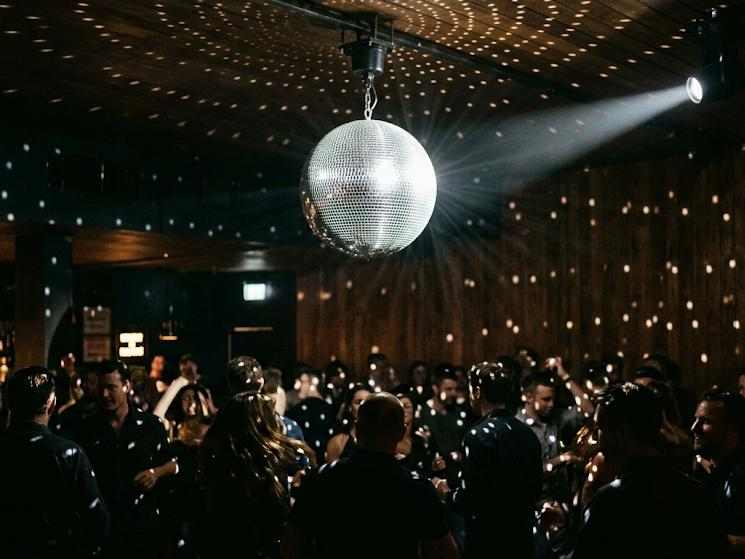
A disco ball can become the visual centerpiece of a dance floor, but simply hanging one from the ceiling does not guarantee an impressive lighting effect. Without a suitable light source, the mirror tiles may produce only faint reflections. With the right beam direction, background color, and supporting stage lights, those small reflections can spread across walls, floors, and the audience to create a much more dynamic atmosphere.
The key to an effective disco ball lighting setup is to give each fixture a clear role. A focused light creates the reflections, LED PAR lights establish the background color, and moving head lights add motion around the dance floor. Strobe effects can emphasize selected musical moments, but they should not overwhelm the mirror ball.
Whether you are planning lighting for a mobile DJ setup, a wedding reception, a nightclub, or a themed stage performance, this guide explains how to position the lights, choose suitable supporting fixtures, and build a setup that works in the actual venue.
How Does Disco Ball Lighting Work?
A disco ball, also called a mirror ball, consists of small reflective surfaces arranged around a spherical structure. When a focused light source hits these surfaces, the light reflects in different directions. As the ball rotates, the reflected points move across the surrounding space.
The result depends on more than the ball itself. The light source, beam angle, distance, mounting height, rotation speed, and ambient brightness all influence the final effect.
- Focused illumination: Directs enough light onto the mirror ball to produce visible reflections.
- Mirror surfaces: Scatter the incoming light into multiple reflected points.
- Rotation: Changes the direction of the reflections and creates movement throughout the room.
- Environmental contrast: Helps the reflected points stand out against the background.
This is why adding more fixtures does not always improve the result. If the mirror ball is poorly illuminated or the surrounding area is too bright, its reflections may be difficult to see. A well-positioned light and a controlled background can be more effective than a complicated rig with every fixture running at full intensity.
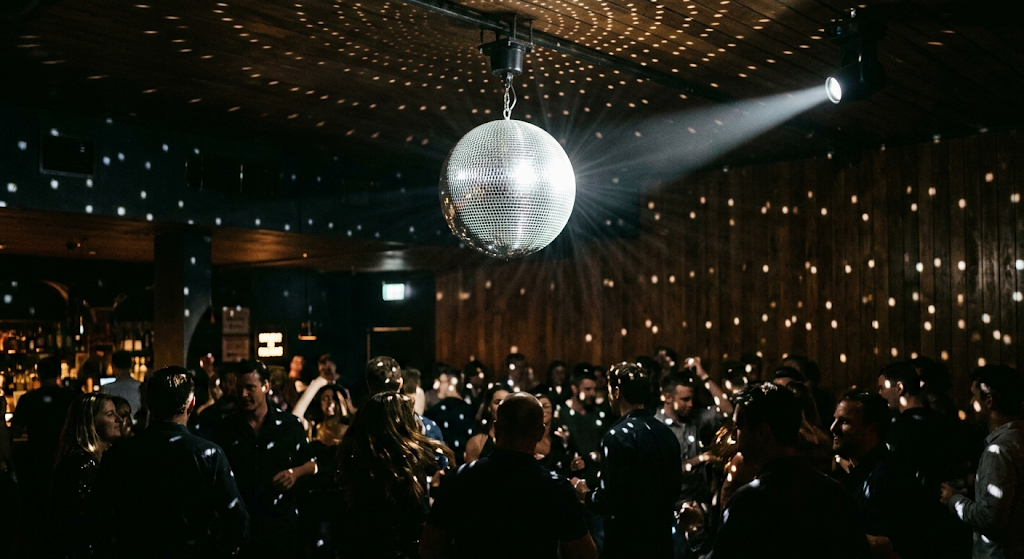
What Lights Work Best with a Disco Ball?
The best lighting combination depends on the size of the venue and the atmosphere you want to create. For a classic mirror ball effect, start with a focused light source that can illuminate the ball effectively. Then add supporting fixtures to shape the room around it.
| Light type | Main role | Best application |
| Pin spot or focused spotlight | Illuminate the mirror ball and create distinct reflections | Small DJ booths, wedding dance floors, retro-themed events |
| LED PAR lights | Provide background color and ambient coverage | Walls, backdrops, dance floor surroundings |
| Moving head lights | Add moving beams and frame the mirror ball effect | Nightclubs, larger dance floors, live events |
| LED light bars | Create linear accents and define the booth or stage structure | Modern DJ booths and decorative stage layouts |
| Strobe lights | Add short bursts of visual intensity | Selected high-energy moments |
Focused Spotlights for Clear Mirror Ball Reflections
A focused spotlight is often the most straightforward starting point for lighting a disco ball. A relatively narrow beam can concentrate light on the reflective surface instead of spreading most of the output across the surrounding room.
Position the fixture so that its beam reaches the ball without being blocked by trusses, decorations, or other equipment. Adjust the angle while observing the reflections across the dance floor. The goal is to produce a visible, useful pattern rather than simply pointing the brightest available fixture toward the ceiling.
A dedicated pin spot may be appropriate for smaller installations. Depending on the available equipment, a suitable narrow-beam stage fixture may also be considered. However, not every moving head or spotlight is designed to provide the same focused output, so check the fixture’s beam characteristics and performance at the intended distance.
LED PAR Lights for Background Color
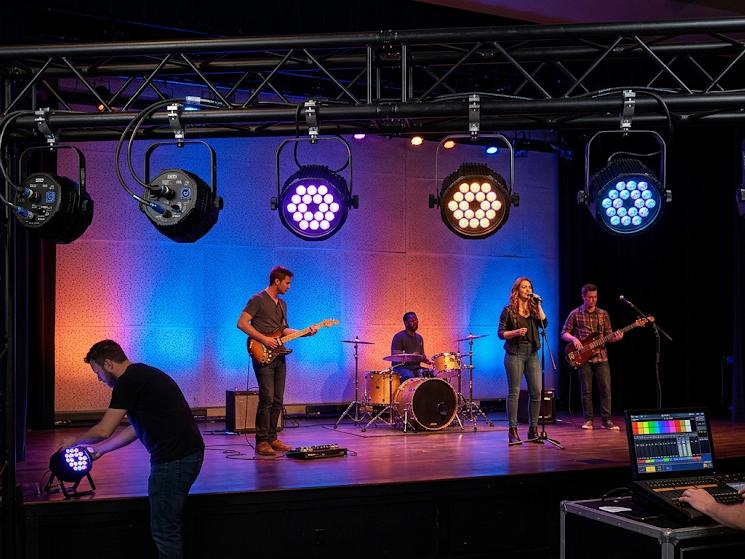
LED PAR lights are useful for adding color to the space surrounding a disco ball. They can illuminate walls, stage backdrops, architectural features, or the area around a DJ booth without needing to serve as the primary light source for the mirror ball.
For example, blue and violet can create a nightclub atmosphere, while amber, warm white, or soft pink may suit a wedding reception. The best color choice depends on the venue, decorations, music, and other light sources.
Explore Tealshine’s LED PAR Can lights when planning the background wash. Consider color mixing, dimming, beam spread, control options, and installation requirements rather than choosing a fixture based on color output alone.
Moving Head Lights for Motion and Depth
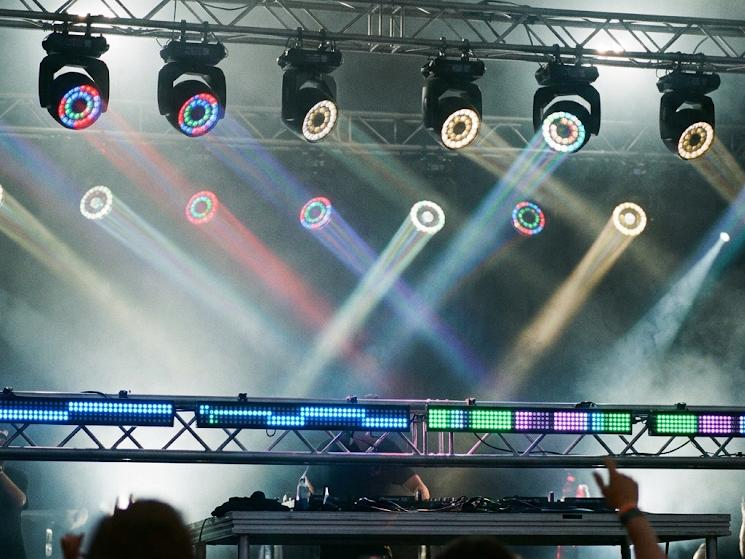
Moving head lights can make a disco ball setup feel more contemporary. They introduce movement around the mirror ball, create changing beam patterns, and help connect the ceiling effect with the wider dance floor or stage.
In many setups, it is better to establish the mirror ball’s reflection pattern first and then introduce moving beams around it. If several powerful fixtures continually cross the same area, the reflections can lose their visual importance.
Different moving head types produce different results. Beam fixtures are designed for concentrated shafts of light, while spot and wash fixtures provide other combinations of projection, coverage, and color. Select the type that supports the desired effect and venue layout.
For larger installations, moving head lights can provide the additional movement needed to create a layered lighting design without requiring the mirror ball to carry the entire visual effect.
Strobe Lights for Selected High-Energy Moments
Strobe lighting can add impact during a music drop or a short peak in a performance. However, running a strobe continuously may compete with the mirror ball’s moving reflections and make the overall scene feel visually crowded.
Use strobe effects selectively and make sure the operator can control their intensity and timing. Rapid flashing can trigger adverse reactions in photosensitive individuals, so consider audience safety, applicable requirements, and venue policies before using these effects.
How to Position Lights Around a Disco Ball
Even suitable fixtures can produce disappointing results when they are positioned poorly. Before adding more equipment, check the angle of the main light, the distance to the mirror ball, the surrounding brightness, and the positions from which the audience will view the effect.
1. Choose a Clear Position for the Mirror Ball
Place the ball where it can be seen from the main viewing areas. In a DJ setup, this may be above or near the dance floor rather than directly in front of the performer. In a wedding venue, the position should complement the room layout and avoid obstructing important sightlines.
Check the ceiling structure and mounting requirements before installation. Use a suitable motor and mounting hardware rated for the equipment, and follow the manufacturer’s instructions for suspended loads and safety attachments.
2. Aim the Main Light at the Reflective Surface
Start with one focused light source. Adjust its position until the beam reaches the mirror ball and creates visible reflections over the intended area.
Do not assume that a more powerful fixture will automatically produce a better result. Beam width, distance, focus, output, and the angle of incidence all affect the reflected pattern. Test the setup from the audience area rather than judging it only from the lighting position.
3. Control Ambient Light
Excessive ambient brightness can reduce the contrast of the reflected points. If the room is already filled with strong white light, the mirror ball may not stand out even when the main beam is correctly positioned.
Dim unnecessary background lighting when appropriate, then add color gradually. The objective is not to make every part of the venue dark, but to create enough contrast for the mirror ball to remain visible within the overall design.
4. Add Supporting Fixtures One Group at a Time
Once the main reflection effect is working, introduce the supporting lights in stages:
- Set the mirror ball and its focused light.
- Add LED PAR lights to establish the background color.
- Introduce moving head lights to create motion around the main effect.
- Add other effects only when they improve the composition or support a specific moment in the show.
Test each group separately before running the complete scene. This makes it easier to identify which fixture is improving the result and which one may be creating unwanted glare or visual clutter.
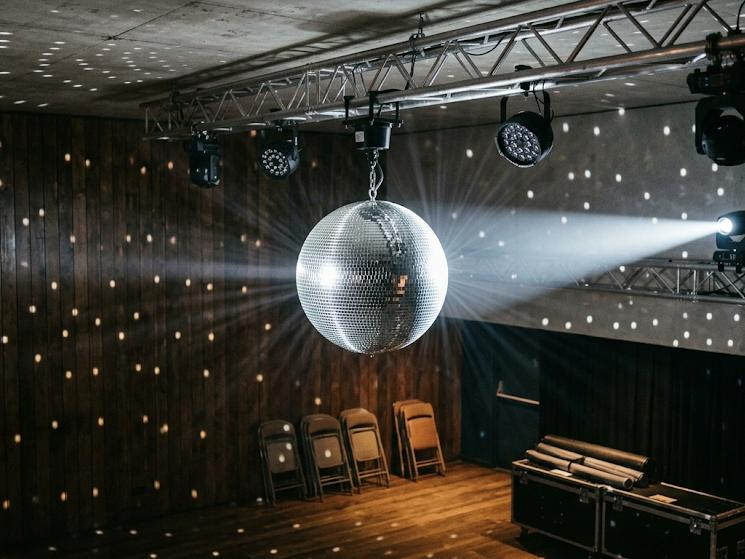
3 Disco Ball Lighting Setups for Different Venues
A compact DJ booth does not need the same lighting system as a nightclub or a large event stage. The following setups are starting points, not fixed equipment lists. Adjust fixture quantities, output, and placement according to the actual room dimensions and desired coverage.
Setup 1: Small DJ Booth or Lounge
For a small venue, simplicity is usually the most practical approach. Start with one mirror ball, a suitable motor, and one focused light source. Add a small number of LED PAR fixtures if the walls or booth need background color.
Keep the main reflection pattern visible and avoid filling the limited space with too many competing effects. A consistent color palette and a clear focal point can make a compact setup feel more deliberate.
Recommended approach:
- Use a focused light to illuminate the mirror ball.
- Place PAR lights to provide subtle color around the booth or dance floor.
- Keep additional moving effects restrained unless the venue needs more visual movement.
This configuration suits small bars, lounges, private parties, and compact mobile DJ systems where equipment space and setup time are limited.
Setup 2: Wedding Reception or Mobile DJ Dance Floor
Wedding and mobile DJ setups often need to work across different room layouts. The lighting may need to look elegant during dinner and more energetic when the dance floor opens.
Begin with the mirror ball and focused illumination, then add controlled background color using LED PAR lights. If one beam does not provide the desired coverage, test an additional suitable fixture from a different position. More fixtures are not always necessary; the right placement may solve the problem.
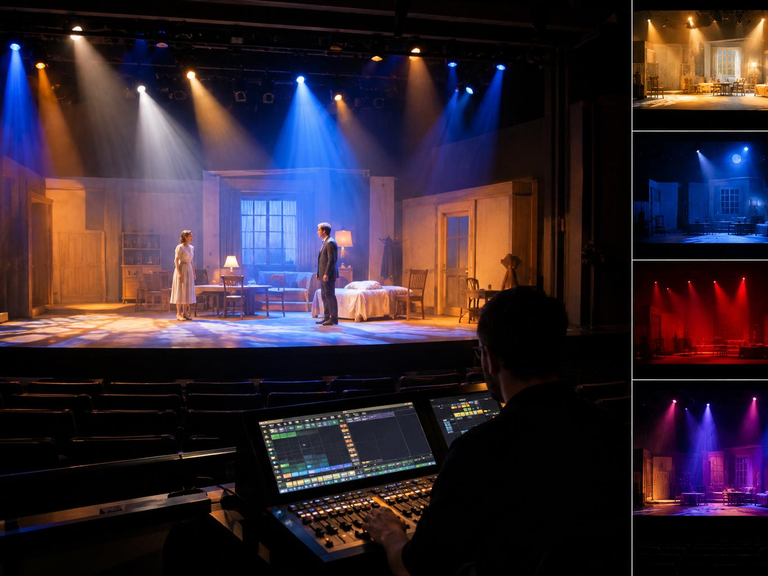
Prepare different lighting scenes for guest arrival, dinner, speeches, the first dance, and open dancing. Keep movement and intensity restrained during formal moments, then introduce stronger colors and dynamic effects when the event calls for them.
Recommended approach:
- Prioritize a clean mirror ball effect and balanced background color.
- Plan lighting scenes around the event schedule.
- Check that fixtures do not interfere with photographers, videographers, speakers, or guests’ sightlines.
This approach is useful for wedding DJs, event planners, and rental companies that need flexible equipment for different venues.
Setup 3: Nightclub or Large Dance Floor
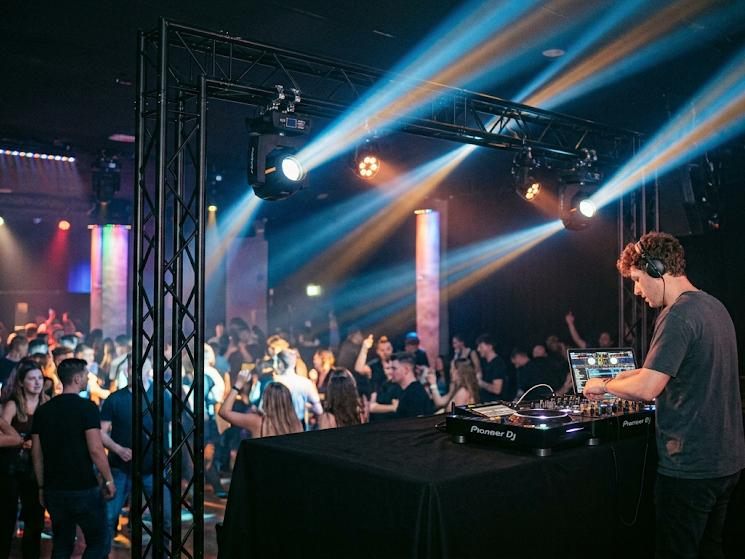
A nightclub can support a more layered design, but each fixture should still have a defined role. Use the mirror ball to create reflected texture, moving head lights to add motion, and PAR fixtures to provide color across the background or surrounding surfaces.
LED light bars can also help define the booth or stage edges. Strobe effects may be introduced at selected musical peaks, provided their use is appropriate for the audience and venue.
Recommended approach:
- Keep the mirror ball and its main illumination visually distinct.
- Use moving heads to frame the space rather than continuously overpowering the reflection pattern.
- Apply background color in controlled layers.
- Program transitions so that the lighting evolves with the performance instead of changing everything simultaneously.
For permanent installations, consider cable routing, mounting access, maintenance, control infrastructure, and replacement requirements during the planning stage. These details are particularly important when the venue operates frequently.
Common Disco Ball Lighting Mistakes
Using a Beam That Is Too Wide
A wide beam may illuminate a large area, but it may not create the concentrated reflections required for a distinct mirror ball effect. Test the available fixture at the actual operating distance and select a beam suitable for the reflective surface.
Making the Entire Room Too Bright
Strong ambient light can reduce the contrast of the reflected points. Instead of increasing the output of the main fixture immediately, try adjusting background intensity and the balance between the different lighting layers.
Running Every Fixture at Full Intensity
More light does not always mean a better visual result. When moving beams, washes, and strobes compete for attention, the mirror ball may become difficult to distinguish. Assign different roles to each fixture group and use effects selectively.
Ignoring the Audience’s View
A lighting position that works from behind the DJ booth may produce glare or poor coverage elsewhere. Walk around the venue during testing and check the effect from the dance floor, the entrance, and other important viewing positions.
Forgetting Installation and Operational Safety
Ensure that the mirror ball, motor, and supporting fixtures are installed using equipment suitable for their loads and mounting locations. Secure cables, maintain safe access around the rig, and follow electrical and venue requirements. For outdoor or exposed locations, use equipment only in conditions permitted by its specified protection rating.
What Should Buyers Consider When Choosing Supporting Stage Lights?
For DJs, rental companies, event production businesses, and distributors, the right equipment should match the types of venues and events they serve. A fixture that works well in a small lounge may not provide the coverage or control required for a large nightclub.
- Beam characteristics: Check the beam angle, output, focus, and intended working distance.
- Color performance: Consider available colors, mixing capability, dimming, and consistency across fixtures.
- Control options: Decide whether automatic modes are sufficient or whether the setup requires coordinated control and programmable scenes.
- Installation requirements: Review mounting options, fixture weight, cable routing, power needs, and access for maintenance.
- Operating environment: Confirm the intended indoor or outdoor use and applicable protection requirements.
- Long-term support: For commercial installations, review warranty terms, service access, spare parts, and product availability for future orders.
If the setup includes several fixture types, planning their control together can make transitions more consistent. Read our guide to DMX lighting control to understand how compatible fixtures can be coordinated within a lighting system.
For distributors and businesses developing their own stage lighting range, it is also worth discussing the intended application, technical specifications, order quantities, and customization requirements with the manufacturer before confirming a purchase.
Frequently Asked Questions
What is the best light for a disco ball?
A focused spotlight or suitable pin spot is often a good starting point because it directs light onto the mirror ball and helps produce clear reflections. The final choice depends on the ball’s size, the fixture’s output and beam characteristics, the distance, and the desired coverage.
Can moving head lights be used to light a disco ball?
Yes, provided the selected fixture can produce a suitable beam at the required distance and can be positioned safely. Moving heads are also useful for creating additional movement around the mirror ball. In many setups, a dedicated focused light provides the main reflection effect while moving heads act as supporting fixtures.
Do I need PAR lights for a disco ball setup?
No. A basic setup can work with a mirror ball, its motor, and a suitable focused light. PAR lights are optional supporting fixtures that can add color to walls, backdrops, and the surrounding space when a fuller lighting design is needed.
How many lights do I need for a disco ball?
There is no universal number. A small lounge may need only one focused light source, while a larger dance floor may benefit from additional illumination and supporting fixtures. Determine the required coverage and test the positions before deciding how many fixtures to install.
Should the disco ball rotate continuously?
Continuous rotation creates moving reflections, but the operating approach depends on the event and desired atmosphere. Slower movement may suit a relaxed setting, while faster movement can feel more energetic. Check the motor’s specifications and use a suitable product designed for the ball’s size and weight.
Final Thoughts
A successful disco ball lighting setup depends on coordination rather than fixture quantity. Start with a suitable focused light and establish a clear reflection pattern. Add LED PAR lights for background color, use moving head lights to create motion around the effect, and reserve stronger effects for moments when they genuinely improve the scene.
For DJs, event production teams, and lighting equipment buyers, the most useful setup is one that suits the venue, can be operated consistently, and can be adapted to different event requirements. Test the lighting from the audience’s perspective, check the installation details, and make adjustments before adding more equipment.
With the right balance of focused illumination, background color, and controlled movement, a mirror ball can become a distinctive part of a modern stage lighting design.