Professional High Quality Stage Lighting Manufacturer


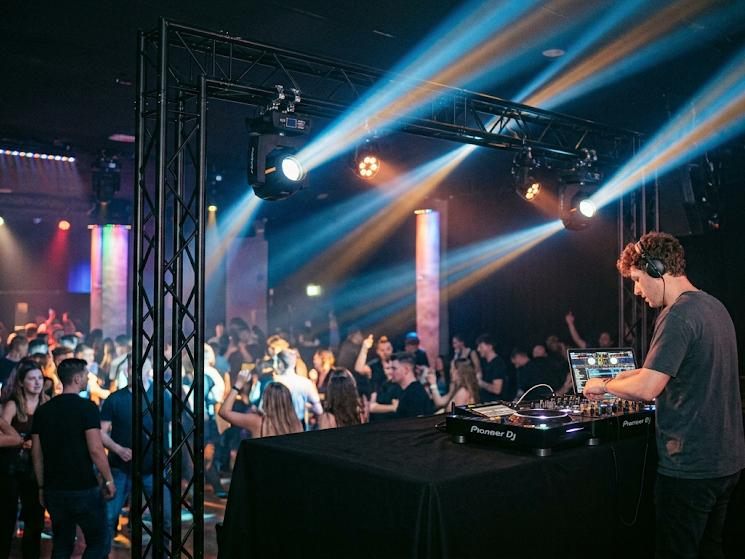
Good DJ lighting is not simply about adding more fixtures or making the dance floor as bright as possible. It is about creating the right atmosphere, directing attention to the DJ booth, and giving each part of the event its own visual character. A small mobile DJ setup may need portable fixtures and quick installation, while a nightclub or event production company may require coordinated movement, layered effects, and DMX control.
The most practical DJ stage lighting ideas start with three layers: background color, focused visual effects, and movement. Once these layers work together, you can build different looks for wedding receptions, club nights, private parties, and larger live events without filling the venue with unnecessary equipment.
For DJs, rental companies, event production teams, and lighting equipment buyers, the following setups offer a starting point for planning a rig that looks professional and remains practical to install, operate, and expand.
1. Build a Balanced DJ Booth with Moving Head Lights
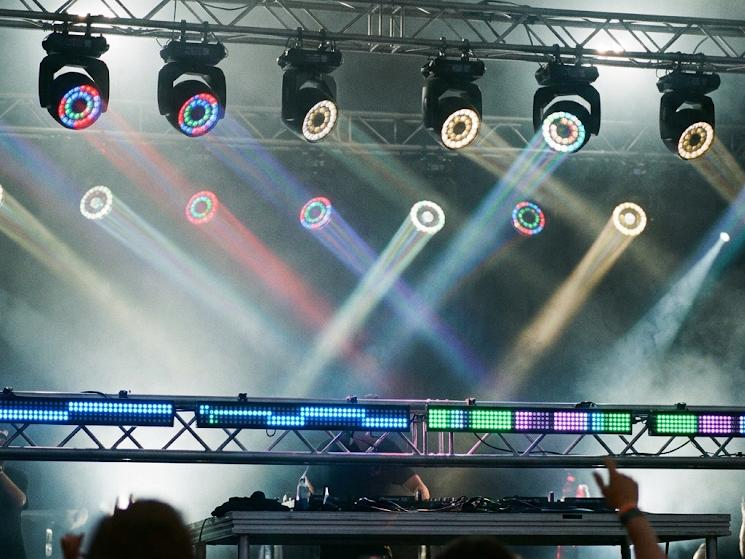
The DJ booth is often the visual center of a party. If the area behind the DJ is dark and the rest of the room is brightly decorated, the performance can feel disconnected from the event. Moving head lights help solve this problem by adding directional beams, movement, and changing visual patterns around the booth.
How to arrange the lights
- Place a pair of moving head fixtures behind or to the sides of the DJ booth.
- Raise the fixtures on a suitable stand or truss when the venue layout allows it.
- Angle beams upward or across the performance area rather than keeping every beam at the same height.
- Use slower movement during introductions and build-ups, then increase movement during high-energy sections.
For compact mobile DJ rigs, two coordinated fixtures can create a clear focal point without taking up too much floor space. Larger installations can use additional fixtures to create symmetrical patterns or cover separate zones of the dance floor.
When comparing moving head lights for DJ stages, consider the effect you need rather than focusing on wattage alone. Beam fixtures create narrow, defined shafts of light, while spot and wash models support different combinations of projection, color coverage, and movement. The venue’s ceiling height, throw distance, and desired effect should guide the choice.
Best for: Nightclubs, DJ booths, dance floors, live music venues, and rental setups that need dynamic effects.
2. Use LED PAR Lights to Create a Colorful Background
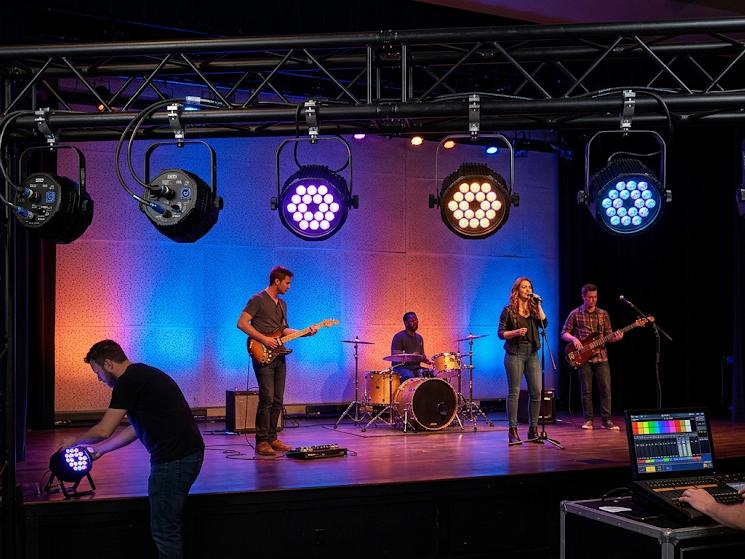
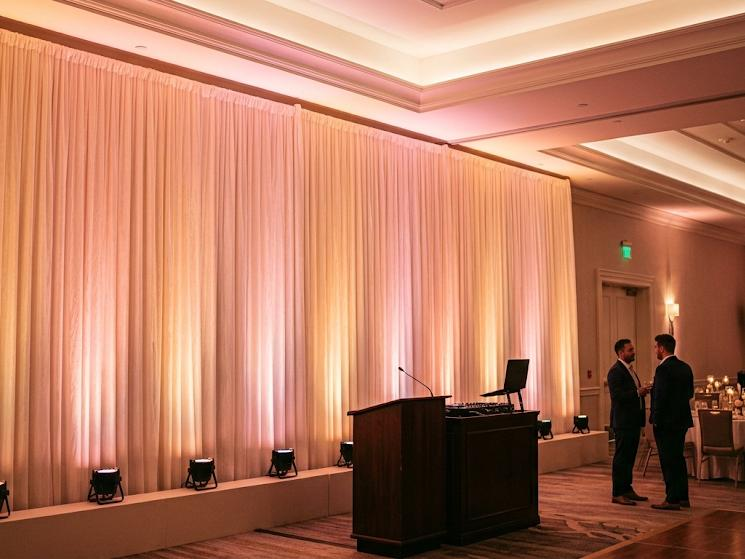
Moving beams attract attention, but they do not always provide enough broad color coverage for a room. LED PAR lights are useful for filling this gap. They can color a stage backdrop, illuminate drapes, add uplighting around a venue, or establish a consistent color scheme before the main performance begins.
Simple placement ideas
- Place PAR lights at the base of a backdrop to create an upward wash.
- Position fixtures along a wall to break up large areas of empty space.
- Use matching colors on both sides of the DJ booth for a more balanced appearance.
- For wedding receptions, use softer colors during dinner and stronger saturation when the dance floor opens.
Color consistency matters more than the number of colors used. For example, blue and violet can create a cool nightclub atmosphere, while amber, warm white, and soft pink can work well for weddings and formal events. A restrained palette also makes it easier to coordinate lighting with stage decoration, brand colors, or event photography.
For buyers comparing LED PAR Can lights, check the available color mixing, dimming range, beam spread, control options, and mounting flexibility. If the fixtures will be used for repeated events, reliable operation and convenient setup can be just as important as the visual output.
Best for: Wedding DJs, banquet halls, mobile entertainers, event decorators, and venues that need flexible ambient color.
3. Add LED Light Bars for a More Modern DJ Booth
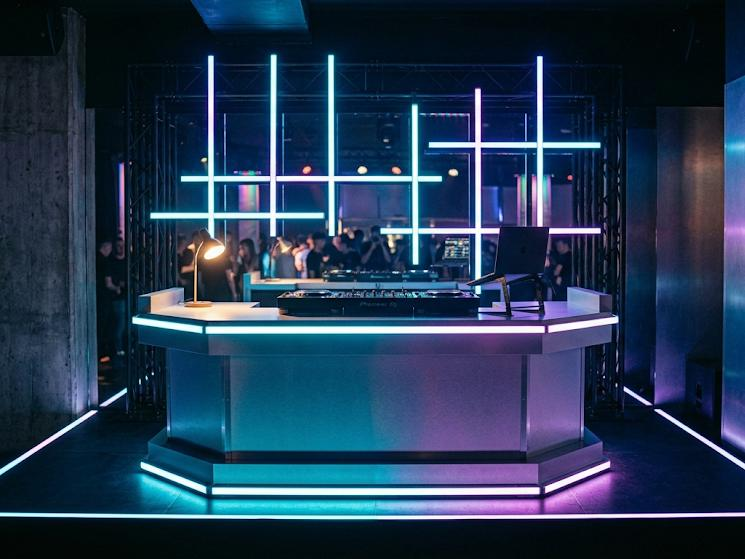
A DJ booth can look flat when all the lighting is concentrated in a single row behind the performer. LED light bars help introduce horizontal lines, vertical accents, and visual depth. They can outline the booth, follow the edges of a stage, or form a geometric background that looks distinctive in photos and videos.
Three ways to use LED bars
- Outline the booth: Place bars along the front or sides of the booth to make its shape more visible.
- Create a backdrop: Arrange several bars vertically or horizontally behind the DJ.
- Extend the stage visually: Place matching bars near the stage edges to connect the booth with the wider performance area.
For a clean look, choose a layout before programming the effects. A symmetrical arrangement usually works well for formal events and corporate functions. Asymmetrical arrangements can feel more energetic and contemporary, particularly in clubs or electronic music environments.
LED bars can also work with PAR lights and moving heads. PAR lights provide broad color, bars define the stage structure, and moving heads add motion. Each fixture has a clear role, so the overall setup feels coordinated rather than crowded.
When planning this type of installation, confirm the available mounting points, cable routes, power requirements, and control compatibility. For rental companies, consider whether the bars can be packed, transported, and installed efficiently across different venue layouts.
Best for: Modern DJ booths, music bars, electronic music events, branded activations, and stages designed for video content.
4. Use Strobe Effects for Music Drops and High-Energy Moments
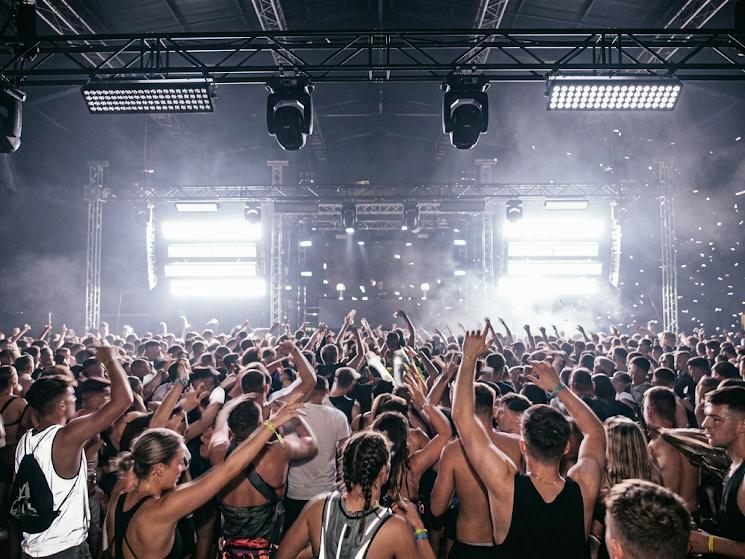
Strobe lighting can add impact during a music drop, a transition, or a short peak in a DJ set. However, keeping the strobe active throughout the entire performance can make the show tiring and reduce the effect of each highlight.
How to use strobes more effectively
- Reserve stronger strobe effects for selected musical moments.
- Use slower or less intense lighting during transitions and announcements.
- Coordinate strobe cues with moving head effects instead of activating every fixture at once.
- Make sure the lighting operator can quickly reduce or disable the effect when needed.
For event professionals, controllability is an important part of fixture selection. Adjustable flash rate, dimming, operating modes, and DMX control can help integrate strobe effects into a planned show. The right configuration depends on the event, venue, audience, and operator’s experience.
Strobe lighting also requires care. Rapid flashing can trigger adverse reactions in photosensitive individuals, so follow applicable venue requirements, provide appropriate warnings where required, and avoid assuming that a short effect is automatically safe for every audience.
Best for: EDM events, club nights, energetic dance sets, and selected high-impact moments in live performances.
5. Create a Wedding DJ Lighting Setup with Multiple Scenes
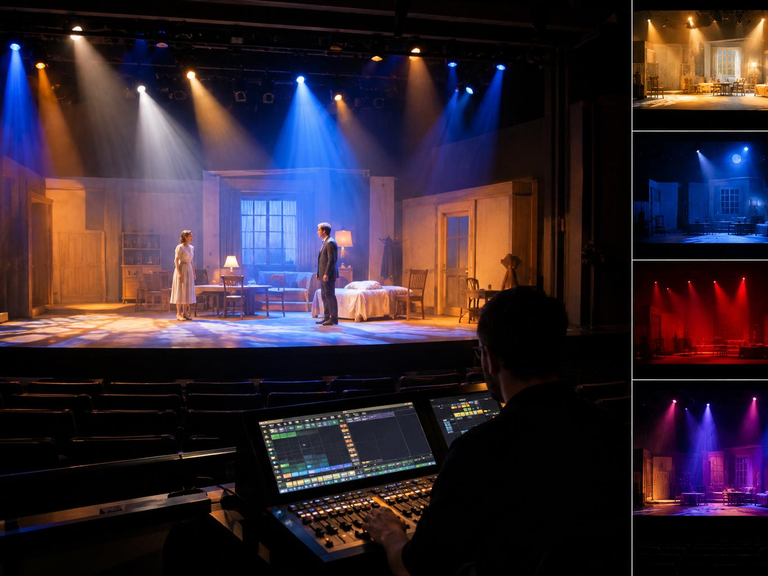
Wedding lighting needs to adapt as the event changes. The look that works during guest arrival may be too bright or energetic for dinner, while the dance floor may need more movement and stronger color later in the evening. A flexible setup should support these transitions without requiring the operator to rebuild the rig.
Suggested fixture combination
- LED PAR lights for room uplighting and the main backdrop.
- A pair of moving head fixtures for the DJ booth and dance floor.
- Optional LED bars to outline the booth or add a decorative background.
- A focused white-light fixture when the event requires clear illumination of a speaker or a specific area.
Plan the lighting by event stage
| Event stage | Lighting approach | Primary goal |
| Guest arrival | Soft color washes and restrained movement | Create a welcoming atmosphere |
| Dinner and speeches | Steady colors with reduced intensity | Keep guests and speakers visible |
| First dance | Coordinated colors and gentle movement | Focus attention on the couple |
| Open dance floor | More movement, saturated colors, selected effects | Increase energy without overwhelming the room |
Before choosing the equipment, confirm whether the venue has restrictions on haze, suspended fixtures, power distribution, or lighting positions. These details can affect which effects are practical and where the fixtures can be installed.
For wedding planners and rental companies, scene flexibility is often more useful than a large number of complicated effects. A small set of well-prepared looks can make the lighting feel intentional throughout the event.
Best for: Wedding DJs, wedding venues, banquet halls, and event rental companies handling different event formats.
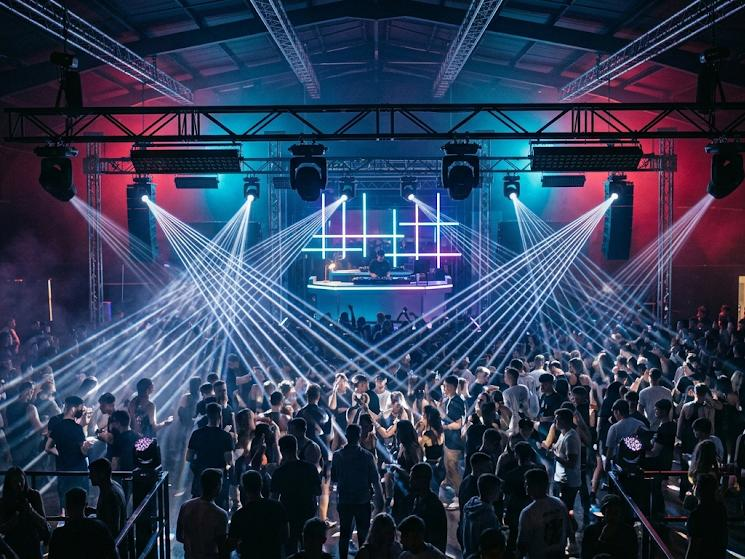
6. Design a Club DJ Lighting Setup with Layers and Depth
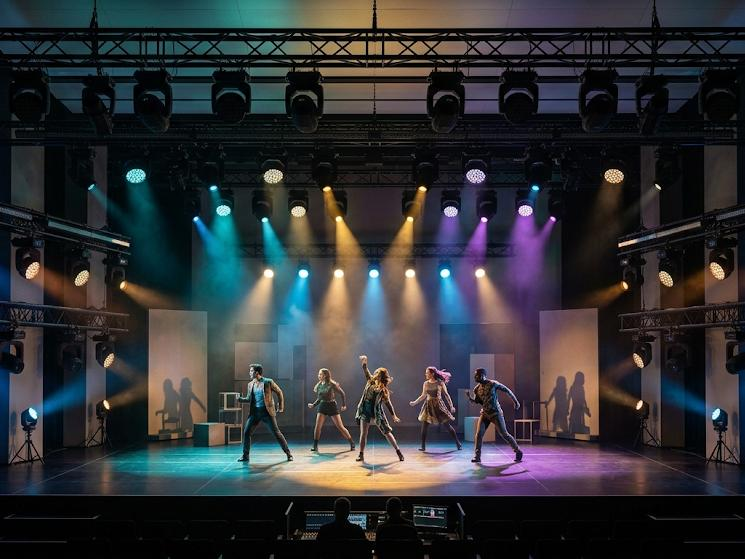
A nightclub needs more than a brightly lit DJ booth. The lighting should connect the performer, stage structure, and audience into one visual environment. The most effective way to achieve this is to divide the venue into zones and give each zone a distinct lighting function.
Build the rig in layers
- Background layer: Use wash lighting or PAR fixtures to establish the room’s main color.
- Movement layer: Use moving heads to create changing beams and patterns above or around the dance floor.
- Structural layer: Use LED bars or other suitable fixtures to emphasize the booth, truss, and stage edges.
- Accent layer: Add strobes or other compatible effects for selected moments rather than using them continuously.
Positioning is just as important as fixture quantity. If every light is mounted directly behind the DJ and aimed toward the center, the room may still look flat. Side positions, different fixture heights, and carefully directed beams can create a stronger sense of depth.
Before finalizing the layout, check the view from several audience positions. Confirm that the DJ remains visible, beams do not create persistent glare, and the effects reach the intended area. A layout that looks impressive from the booth may not work as well from the back of the venue.
For clubs and production companies, also consider service access, heat management, mounting hardware, control infrastructure, and replacement planning. These operational details affect the long-term value of the installation, especially when the venue runs events frequently.
Best for: Nightclubs, music bars, electronic music venues, and permanent entertainment installations.
7. Build a Portable DJ Lighting Rig for Mobile Events
Mobile DJs face a different challenge from permanent venues. The equipment needs to fit in a vehicle, install quickly, adapt to different room sizes, and operate reliably with limited setup time. A portable rig should therefore prioritize versatility and efficient deployment.
A practical starting configuration
- Two moving head fixtures for movement and visual focus.
- Several LED PAR fixtures for backdrop color and room coverage.
- Optional LED bars if the booth needs a stronger visual outline.
- A suitable control method that matches the operator’s experience and the complexity of the rig.
The exact fixture count depends on venue size, ceiling height, audience layout, and the type of event. A compact arrangement can be enough for a private party, while a larger ballroom may require separate lighting zones to cover the booth, walls, and dance floor.
For outdoor events, check the fixture’s actual ingress protection rating and the conditions specified by the manufacturer. An indoor-rated fixture should not be assumed suitable for exposure to rain or other outdoor hazards. Weather protection, safe power distribution, stable mounting, and cable management should all be part of the setup plan.
Portability should also be evaluated beyond the fixture’s physical size. Look at transport cases, connectors, setup time, power requirements, and whether the lighting can be configured consistently from one event to the next. For rental businesses, a repeatable setup can reduce labor and make it easier to train staff.
Best for: Mobile DJs, small event companies, party rental businesses, and operators working across multiple venues.
How to Choose the Right DJ Lighting Combination
Before purchasing equipment, define what the lighting needs to accomplish. A fixture that looks impressive in a product demonstration may not solve the main problem at your venue. Use the following questions to narrow the selection.
| Selection factor | What to check | Why it matters |
| Venue size | Room dimensions, ceiling height, and throw distance | Helps determine coverage and fixture positioning |
| Visual effect | Wide wash, sharp beam, projected pattern, or movement | Matches the fixture to its intended role |
| Installation | Floor stands, truss mounting, transport, and cable routes | Reduces setup difficulties and installation risks |
| Control | Sound-active, automatic programs, or DMX operation | Determines how much control the operator has over the show |
| Operating environment | Indoor or outdoor use and required protection rating | Helps avoid using unsuitable equipment in exposed conditions |
| Maintenance | Service access, spare parts, warranty, and technical support | Supports long-term operation and rental fleet management |
For professional applications, DMX control is worth considering when you need repeatable scenes, coordinated movement, and more precise timing. If you are planning a multi-fixture rig, review how a DMX controller works before deciding how to organize the control system.
Common DJ Lighting Mistakes to Avoid
Using too many effects at the same time
When every fixture changes color, moves, and flashes simultaneously, the audience may struggle to focus on anything. Assign a role to each fixture group and leave some elements steady while others create movement.
Ignoring the background
A bright DJ booth surrounded by a dark, empty background can make the stage look unfinished. Add controlled color coverage or structural accents where they improve the overall composition.
Choosing fixtures without checking the venue
Beam width, mounting height, and throw distance all affect the final result. Check the actual room before deciding that a particular fixture or quantity will provide sufficient coverage.
Relying entirely on automatic sound-active modes
Sound-active operation can be convenient for basic parties, but it may not produce the transitions needed for speeches, first dances, announcements, or carefully timed music cues. Prepare manual scenes or DMX cues when the event calls for more control.
Overlooking installation and operating safety
Use appropriate mounting hardware and safety cables for suspended equipment, keep power connections within their rated limits, and route cables to reduce trip hazards. Follow fixture instructions and venue requirements. Any lighting effect should be operated with consideration for the audience and surrounding environment.
DJ Stage Lighting for Equipment Buyers and Rental Companies
For distributors, event production companies, and rental businesses, a useful DJ lighting range should cover different customer requirements rather than depend on a single fixture type. A balanced portfolio may include PAR fixtures for broad color, moving heads for dynamic effects, and LED bars for stage accents. The right mix depends on the customers you serve, the venues they work in, and their typical budgets.
When comparing manufacturers, evaluate more than the product photos. Review technical specifications, control compatibility, available documentation, product consistency, warranty terms, spare-part availability, and the manufacturer’s ability to support repeat orders. If you supply different markets, also confirm the electrical specifications and compliance documentation required for your destination countries.
For businesses developing their own lighting range, private-label products, or customized configurations, it is worth discussing the intended application with the manufacturer before finalizing the specification. Tealshine provides stage lighting products for professional applications, and buyers can explore its OEM and ODM stage lighting manufacturing services when evaluating options for product customization and supply cooperation.
A clear purchasing brief should identify the target market, preferred fixture types, required effects, control method, operating environment, expected order quantity, and any branding or packaging requirements. This makes technical discussions more focused and helps both parties assess whether a proposed configuration fits the actual use case.
Frequently Asked Questions
What lights are best for a DJ stage?
For many DJ stages, a practical starting point is a combination of LED PAR lights for color coverage and moving head lights for movement. LED bars can add structure to the booth, while strobes or other effects can be included when the event requires them. The final combination depends on the venue, budget, and intended atmosphere.
How many lights does a DJ need?
There is no fixed number that suits every setup. A small private event may work with a compact group of fixtures, while a nightclub or large event may need separate coverage for the booth, backdrop, and dance floor. Start by identifying the areas that need lighting, then choose the fixture types and quantities based on the room layout.
What is the difference between PAR lights and moving head lights?
PAR lights are commonly used to provide broad, relatively steady color coverage. Moving head lights add motorized pan and tilt movement, with effects depending on the specific fixture. They serve different purposes and are often more useful together than as direct substitutes for one another.
Are LED DJ lights suitable for weddings and corporate events?
Yes. LED stage lighting can support a range of event styles, from soft ambient color during dinner to more dynamic effects for dancing. The key is selecting suitable fixtures and programming scenes that match the event schedule, room conditions, and desired atmosphere.
Should DJ lights be controlled by DMX?
DMX is useful when the operator needs coordinated control over multiple fixtures, repeatable scenes, or precisely timed changes. Automatic and sound-active modes may be sufficient for simpler setups, but more complex productions generally benefit from a planned control approach.
Final Thoughts
The strongest DJ lighting setup is not necessarily the one with the most fixtures. It is the one in which every light has a purpose. Use PAR lights to establish the color environment, moving heads to add movement, LED bars to shape the booth and stage, and effects such as strobes selectively to emphasize important moments.
Start with the venue and event requirements, plan the fixture positions, and check the control and installation details before adding more equipment. For DJs, rental companies, and event production teams, this approach creates a lighting setup that looks more cohesive, is easier to operate, and can be adapted for different types of events.