Professional High Quality Stage Lighting Manufacturer


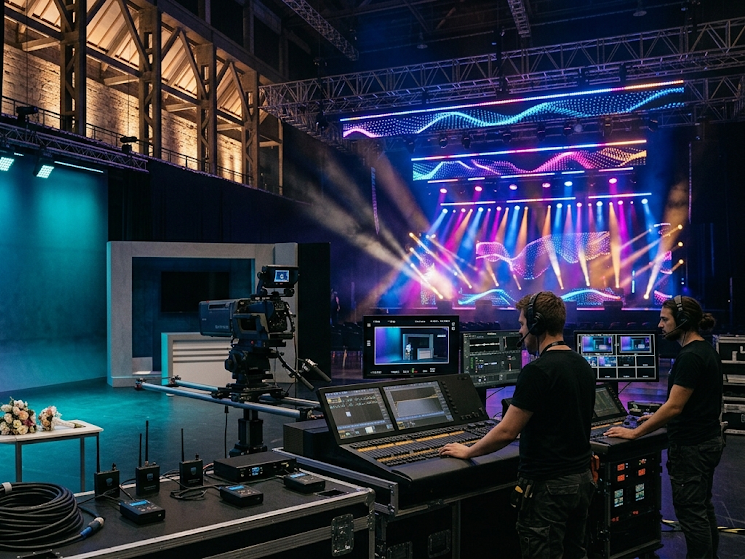
Background LED lighting has become an important design layer in modern stage, event, and architectural production. When an audience walks into a venue, the first thing they notice is not always the performer. It is often the space around them: the soft glow of a cyclorama, the linear bars tracing the edge of a set, or the saturated color wash that makes the entire background feel alive. That is background LED lighting, and it helps establish the visual tone before the main action begins.
Table of Contents
As an LED stage lighting manufacturer in Guangzhou, Tealshine develops fixtures used to build these lighting layers, including LED wall wash lights, LED light bars, PAR can lights, moving head lights, LED strobe lights, and battery-powered LED lights. This guide explains how to choose background lighting for stage productions, events, venues and other professional applications.
What Is Background LED Lighting in Professional Production?
In professional production, background lighting refers to the illumination of the visual plane behind the main action area. This can be a painted backdrop, a cyclorama wall, the surround of a video screen, a tower of truss, a scenic element, or an architectural surface. Its purpose is not primarily to light a performer or product, but to create visual context, add depth, separate layers of a scene and reinforce the intended mood.
This is why the term background LED lighting overlaps with phrases such as stage background lighting, LED backdrop lighting, backdrop lighting and background wash lighting. The fixture may change from one project to another, but the design problem is similar: provide controlled illumination behind the main subject without creating unwanted hotspots, spill or distracting contrast.
LED technology has made background lighting more flexible than traditional tungsten battens and gel-based systems. Modern LED fixtures can provide smooth color mixing, lower power consumption, long operating life and programmable dimming. Their compact form also makes them practical in scenic gaps, behind set pieces and along truss structures.
Background LED Lighting vs. Front Lighting
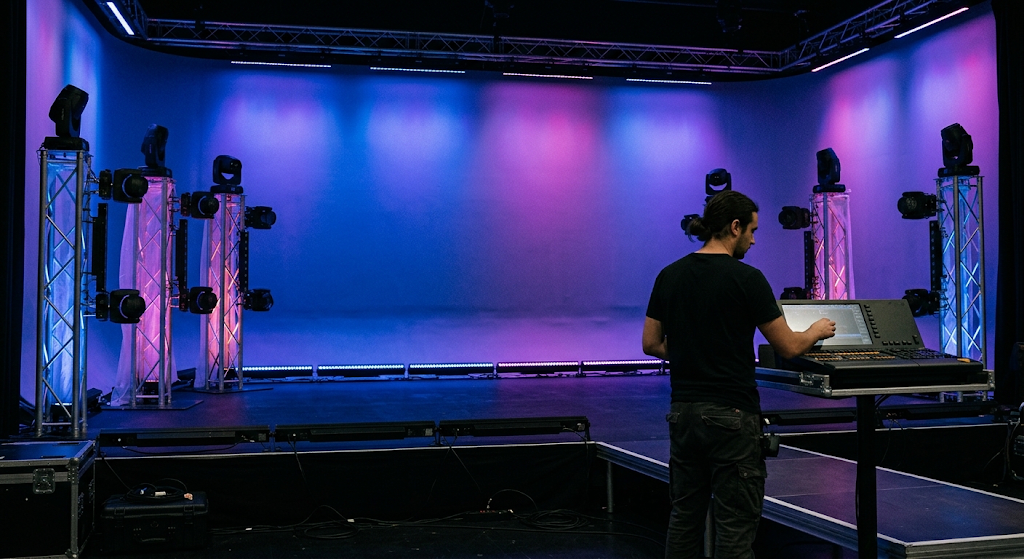
Background lighting and front lighting solve different problems. Front light is normally concerned with visibility, facial exposure and accurate illumination of the main subject. Background light is concerned with the space behind that subject. Treating them as the same layer can make a stage look flat because the background becomes as bright and visually dominant as the performer.
A well-balanced stage background may use a broad wash on a cyclorama, linear accents along the set and controlled moving effects for depth. In a camera-facing environment, the background also has to be considered in relation to exposure, skin tones and flicker. For this reason, background LED lighting is not simply a matter of choosing the brightest fixture available.
Core Fixture Types for Background LED Lighting
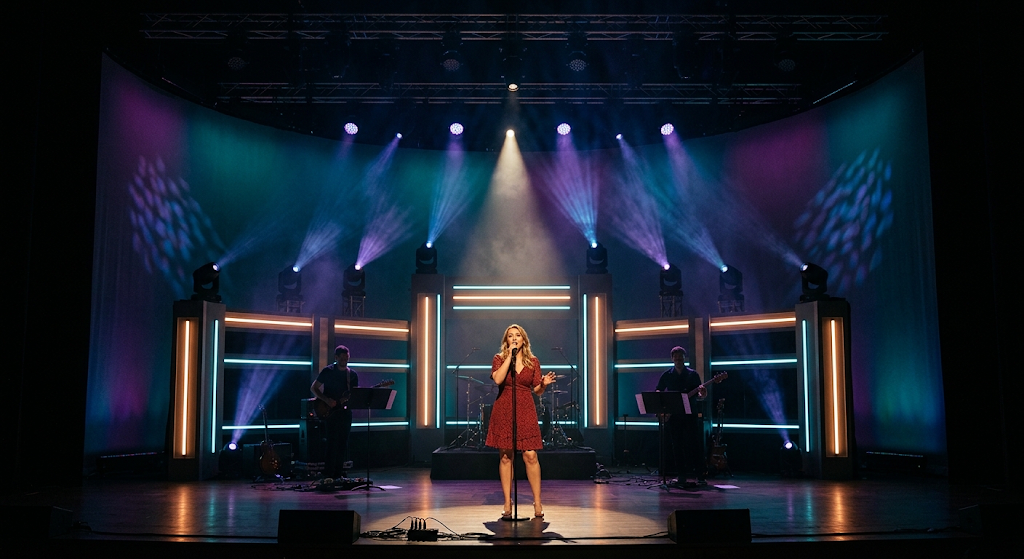
Selecting the right fixture starts with identifying what the background needs to do. Is the goal an even wash, a linear accent, a moving effect, a rhythmic flash, or temporary lighting where cable runs are difficult? Different fixture families are built for different roles.
| Fixture Type | Typical Background Role | Key Parameters |
| LED Wall Wash Lights | Even illumination of walls, backdrops and cycloramas | Beam angle, color engine, coverage, IP rating |
| LED Light Bars | Linear accents, border outlines and pixel-mapped scenery | Length, LED count, pixel density, DMX channels |
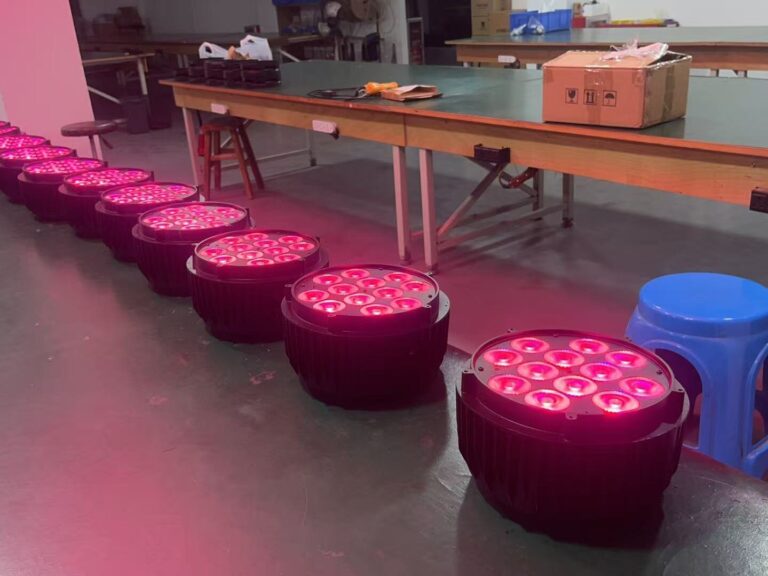
| PAR Can Lights | Broad color washes and saturated background fill | Beam spread, LED configuration, power, housing rating |
| Moving Head Lights | Dynamic beams, washes and effects across the background | Pan/tilt, beam type, speed, zoom, effects |
| LED Strobe Lights | Rhythmic flashes and dramatic accents | Flash rate, output intensity, sync modes |
| Battery-Powered LED Lights | Temporary or outdoor background lighting where cabling is difficult | Runtime, charge time, IP rating, wireless control |
For a fixed, even background wash, LED wall wash lights are often a natural starting point because they are designed around broad surface coverage. For long stage edges, truss lines or linear scenic elements, LED light bars can provide continuous coverage with fewer fixture positions. PAR cans are useful for general color wash, while moving heads add repositionable coverage and aerial effects.
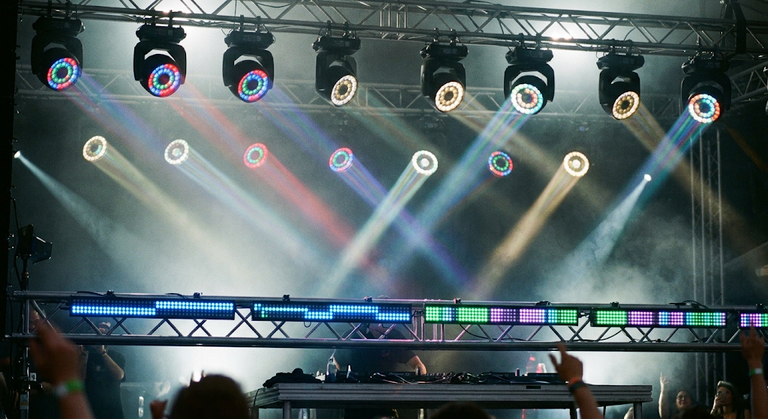
Most professional background lighting designs combine several fixture families. A concert may use wall wash fixtures on the back truss, light bars to outline the set, moving heads for dynamic effects and strobes for peak moments. The key is matching each fixture’s optics and control behavior to the background’s dimensions, throw distance and visual role.
How to Choose Background LED Lighting
The right background lighting fixture depends more on the surface and the required effect than on wattage alone. Before selecting a model, evaluate the following factors.
1. Beam Angle and Coverage
Beam angle determines how much of the background a fixture can cover from a given distance. Wider beams are useful for close-range washes and large surfaces, while narrower beams can concentrate output over longer throws. The goal is to create overlap between fixtures without producing obvious bright spots.
2. Throw Distance and Fixture Position
A fixture that works well two or three meters from a backdrop may not produce the same visual result from ten meters away. Consider the distance from the fixture to the surface, the height of the mounting position and the required coverage width before comparing lumen or wattage figures.
3. Color Quality and Color Mixing
Color quality matters when the background sits close to performers, scenic materials or products. RGBW and RGBL systems can create broader color palettes than simple RGB fixtures, while a well-designed optical system helps maintain more consistent color across multiple units.
4. Dimming and Flicker-Free Performance
Background lighting often remains on for long periods and may be captured by professional cameras. Smooth dimming and stable LED driving are therefore important. Poorly controlled LED output can produce visible steps during fades or flicker in recorded footage.
5. Indoor or Outdoor Protection
Indoor stage and event installations may use IP20 fixtures, while outdoor stages, building facades and exposed event areas require an appropriate IP rating. Weather protection should be considered together with heat management because sealed housings can change how a fixture handles sustained output.
6. Power and Data Logistics
Cable routing can influence fixture selection as much as optical performance. Permanent installations can usually accommodate dedicated power and data runs, while temporary event installations may benefit from battery-powered fixtures or simplified wireless control. Always consider the number of fixtures, cable length, power distribution and DMX topology before finalizing the system.
Background LED Lighting for Different Applications
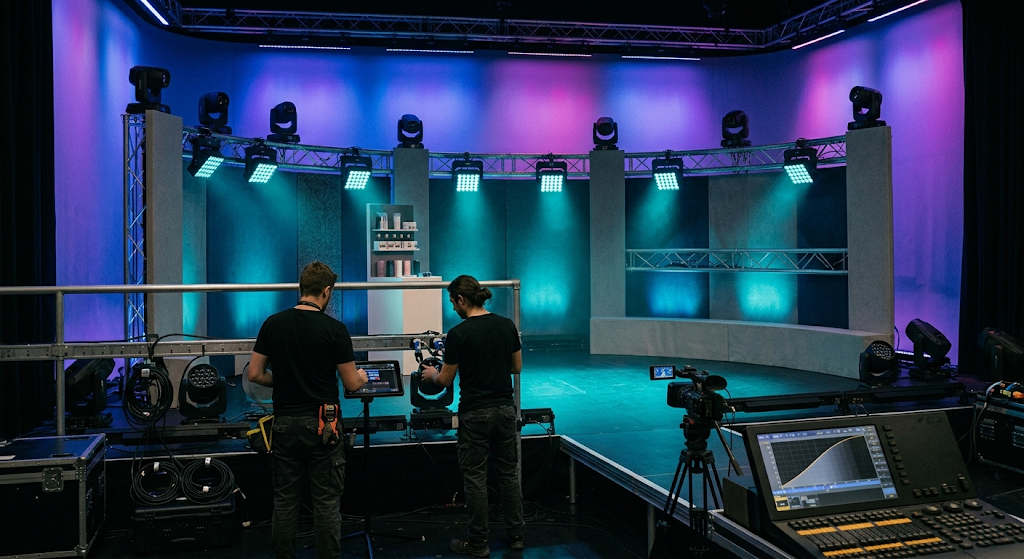
The same lighting fixture can behave very differently depending on the application. The visual target, camera requirements, venue size and installation conditions should all be considered.
Concerts and Live Events
Concert background lighting often combines saturated washes with dynamic effects. LED wall wash lights and light bars can establish the base color across a stage, while moving heads and strobes add movement and intensity during musical transitions. Pixel-controlled linear fixtures can also create animated patterns across a backdrop or truss.
Theater and Cyclorama Lighting
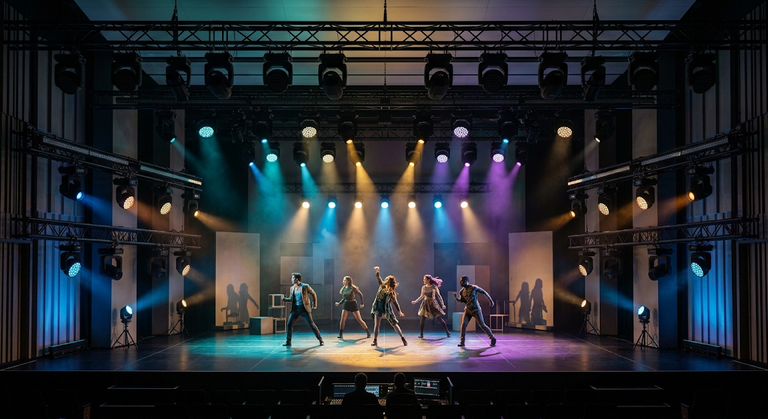
Theater background lighting usually prioritizes smooth transitions, consistent color and controlled dimming. A cyclorama needs even coverage rather than concentrated hotspots, so fixture placement and beam overlap are particularly important. Quiet operation and flicker-free performance can also matter in productions that use sensitive microphones or cameras.
Broadcast and Studio Background Lighting
Broadcast environments place additional demands on LED background lighting. Flicker, color consistency and exposure control become critical because cameras capture details that audiences may not notice in person. Fixtures should be evaluated at the actual camera frame rates and shutter settings used by the production.
Weddings, Corporate Events and Temporary Venues
Event lighting often needs to be installed and removed quickly. Battery-powered LED lights can simplify perimeter and backdrop lighting where extension cables are inconvenient or restricted. For larger temporary stages, a combination of PAR cans, light bars and moving heads can create a layered background without requiring a large number of fixture types.
Outdoor and Architectural Background Lighting
Outdoor background lighting may involve building facades, temporary event structures, scenic walls or large architectural surfaces. Weather resistance, mounting position, beam angle and heat management become important alongside color output. For exposed installations, the fixture’s IP rating should be checked against the actual environment rather than assumed from the product category.
Control and DMX Protocol Considerations
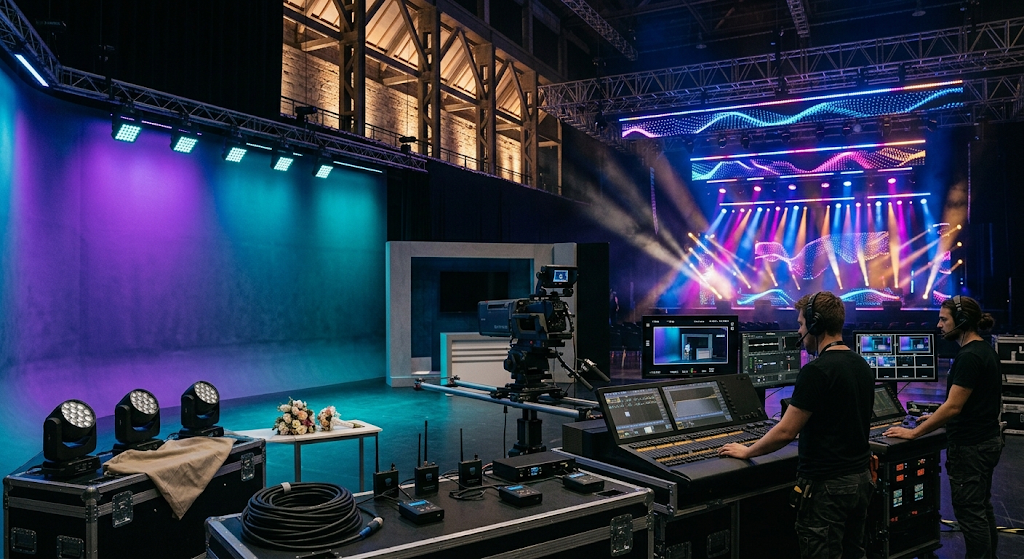
Background LED lighting rarely operates as a collection of standalone fixtures. It normally forms part of a control ecosystem in which a lighting console, media server or building system controls color, intensity, effects and timing. DMX512 remains a common control protocol, while RDM can add remote configuration and monitoring.
Not all DMX implementations behave the same way. Channel mapping, response time, signal-loss behavior and fixture profiles affect how quickly a rental crew can integrate a new fixture into an existing show. If you need a deeper explanation of the control side, see our DMX controller guide for a practical introduction to DMX lighting control.
For OEM and private-label projects, firmware and DMX behavior can also be part of the product specification. Tealshine provides software and DMX protocol customization, including custom channel mappings and fixture-library integration.
Choosing the Right Manufacturing Partner for Background LED Lighting
Distributors, rental companies and project contractors evaluate background LED lighting differently. A manufacturer that understands these differences can add value beyond the fixture itself.
For Distributors and Private-Label Brands
Distributors need a coherent product range, stable supply, private-label packaging, compliance documentation and technical information that supports their local market. A manufacturer with multiple fixture categories can also reduce the need to coordinate specifications across several factories.
For Rental Companies
Rental companies usually prioritize durability, repeatable color and brightness, serviceability, spare parts and consistent behavior across an inventory. Firmware upgradeability and reliable DMX profiles can be just as important as headline output specifications.
For Project Contractors and Lighting Designers
Project contractors may require custom optics, specific power configurations, weather-resistant housings or software behavior that matches a tender specification. They also need documentation for commissioning and handover. For these projects, an OEM/ODM stage lighting manufacturer can be evaluated not only on product price, but also on engineering depth, customization capability and production support.
Frequently Asked Questions About Background LED Lighting
What is background LED lighting?
Background LED lighting is the use of LED fixtures to illuminate the visual area behind the main subject or performance area, including backdrops, cycloramas, scenic structures, walls and architectural surfaces.
What lights are best for stage background lighting?
There is no single best fixture. LED wall wash lights and PAR cans are useful for broad coverage, LED light bars work well for linear elements, and moving heads are useful when the background needs dynamic movement.
What is the difference between backdrop lighting and background lighting?
The terms are often used interchangeably. Backdrop lighting usually refers specifically to a scenic or visual surface behind the performers, while background lighting can also include architectural surfaces, truss and other elements behind the main action.
Do I need DMX for background LED lighting?
DMX is not required for every basic installation, but it becomes valuable when multiple fixtures need synchronized color, dimming, movement or effects. Professional stage and event systems commonly use DMX-based control.
Can background LED lighting be used outdoors?
Yes, provided the fixture is designed and rated for the environment. Outdoor projects should consider IP protection, temperature, moisture, mounting, power distribution and cable protection.
Conclusion
Background LED lighting is not simply a decorative layer. It shapes how audiences perceive a performance, how cameras capture a scene and how a venue feels as people enter it. Choosing the right system requires attention to beam angle, coverage, color quality, dimming, flicker-free performance, environmental protection, power and control compatibility.
For a professional project, start with the visual role of the background, then match the fixture type and specifications to the actual throw distance, surface, venue and control system. A combination of wall wash lights, light bars, PAR cans, moving heads and battery-powered fixtures can often provide more useful coverage than relying on one fixture type alone.
Tealshine manufactures a range of professional LED stage lighting products and provides OEM/ODM customization for distributors, rental companies and project contractors. The company’s current product range includes PAR can lights, moving heads, LED strobe lights, LED wall wash lights, battery-powered lights and LED light bars.