Professional High Quality Stage Lighting Manufacturer


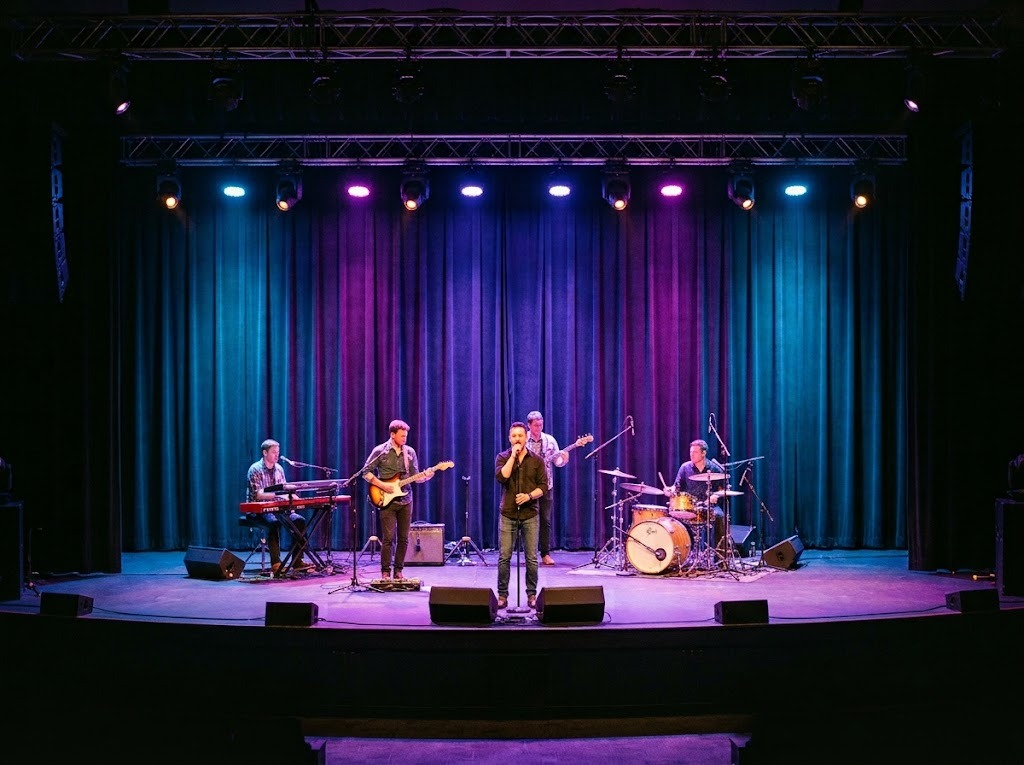
Table of Contents
A wash light is a stage lighting fixture designed to spread light across a relatively wide area rather than concentrate it into a narrow beam or a sharply defined spot. In stage productions, wash lighting helps illuminate performers, add color to backdrops, establish the mood of a scene, and create consistent coverage across the performance area.
For concerts, theaters, DJ events, weddings, and live productions, the right wash light can make a stage look more balanced and professional. However, not every wash fixture works in the same way. LED PAR lights, wash moving heads, wall wash fixtures, and LED light bars can all produce wash effects, but they serve different purposes.
This guide explains what a wash light is, how stage wash lighting works, where different types of wash fixtures are used, and what buyers should consider when choosing equipment for a lighting project.
What Is a Wash Light?
A wash light is a lighting fixture that produces broad, relatively even illumination over a target area. Depending on its design, it may cover a section of a stage, a group of performers, a backdrop, or a large wall.
Unlike a narrow beam fixture, which is designed to create concentrated shafts of light, a wash light prioritizes coverage. The goal is to distribute light across a surface or performance area without making the audience focus on a single small point.
Wash lights are commonly used to:
- Illuminate performers across a wide stage area.
- Add color to curtains, backdrops, and scenic elements.
- Create a consistent lighting base for concerts and live performances.
- Change the atmosphere of a venue between scenes or musical sections.
- Support front, side, and backlighting in a complete stage lighting design.
The term describes the light output and its intended purpose, rather than one specific fixture shape. A fixed LED PAR light can provide a stage wash, while a moving head designed with wash optics can produce a similar effect with motorized movement. A dedicated wall wash fixture, meanwhile, is designed to distribute light across architectural or scenic surfaces.
In simple terms: A wash light covers an area, wash lighting is the technique of using that broad coverage, and stage wash lighting applies the technique to a performance space or stage environment.
What Is Wash Lighting and How Does It Work?
Wash lighting is the practice of illuminating a broad area with light that is sufficiently distributed to create a continuous visual effect. Instead of highlighting only one performer or producing a narrow shaft through the air, it helps establish the overall appearance of the stage.
A wash lighting setup may use one fixture for a small performance area or several fixtures positioned at different angles for a larger production. When multiple fixtures are used, their coverage is planned to overlap where necessary, reducing unwanted dark gaps and uneven patches.
1. Light Output and Beam Angle
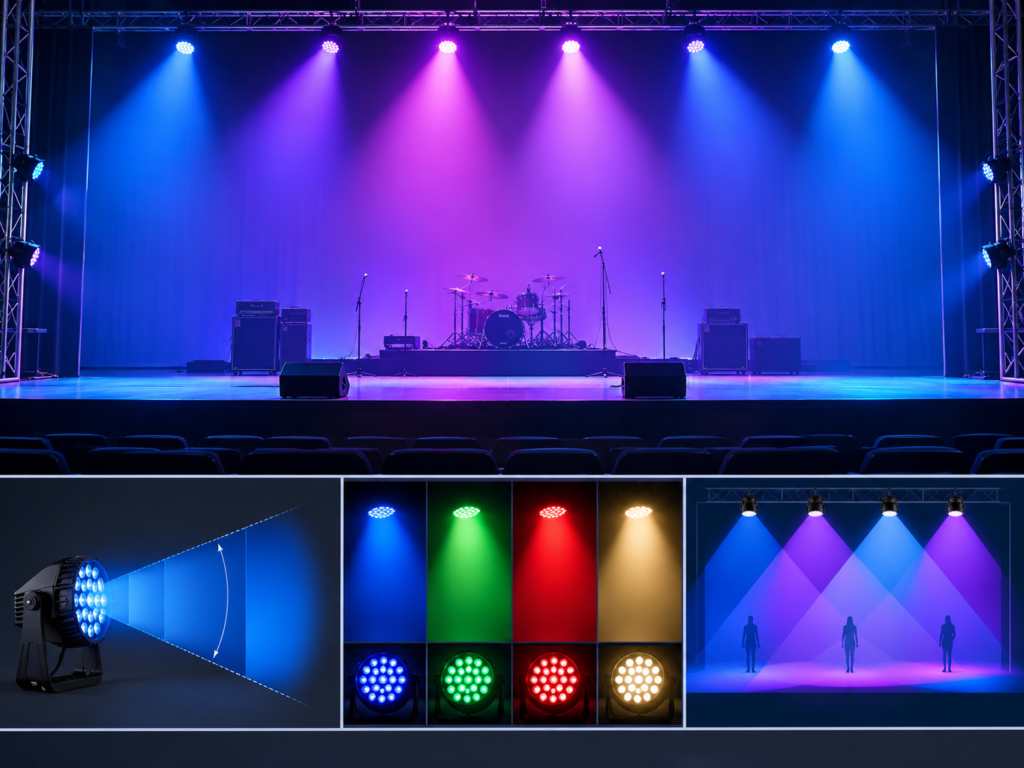
The beam angle determines how widely light spreads from the fixture. A wider beam generally covers a larger area at a given distance, while a narrower beam concentrates more light into a smaller area.
For example, a fixture aimed at a backdrop from a short distance may only need a moderate output and a relatively wide beam. The same fixture used to illuminate performers from a distant truss position may need a different beam angle or higher output to achieve the required coverage.
Beam angle alone does not determine performance. Actual coverage also depends on fixture output, mounting distance, lens design, aiming angle, and the reflectivity of the target surface.
2. Color Mixing and Brightness Control
Many LED wash fixtures allow operators to adjust color and brightness to suit different scenes. Depending on the LED configuration, the fixture may offer RGB, RGBW, or other color-mixing options.
Color mixing makes it possible to move from a saturated blue concert look to a warmer stage atmosphere without changing physical filters. Dimming and color transitions can also be programmed to follow music, scene changes, or presentation cues.
For productions where performers’ faces and costumes must remain visually clear, buyers should consider color quality as well as brightness. A vivid color effect is not necessarily the best choice for every part of a performance.
3. Fixture Position and Coverage Overlap
Even a capable wash light can produce an unsatisfactory result if it is positioned incorrectly. A fixture mounted too close to a wall may create bright patches, while fixtures placed too far apart may leave dark areas between their beams.
For stage wash lighting, operators should consider the width and depth of the performance area, the height of the rig, the distance to the target, and the desired level of uniformity. Several fixtures aimed from complementary angles can often produce a more balanced result than a single fixture attempting to cover the entire stage.
Types of LED Wash Lights for Stage
There is no single fixture type that suits every wash lighting application. The right choice depends on whether the priority is general stage coverage, dynamic movement, architectural illumination, or a continuous linear effect.
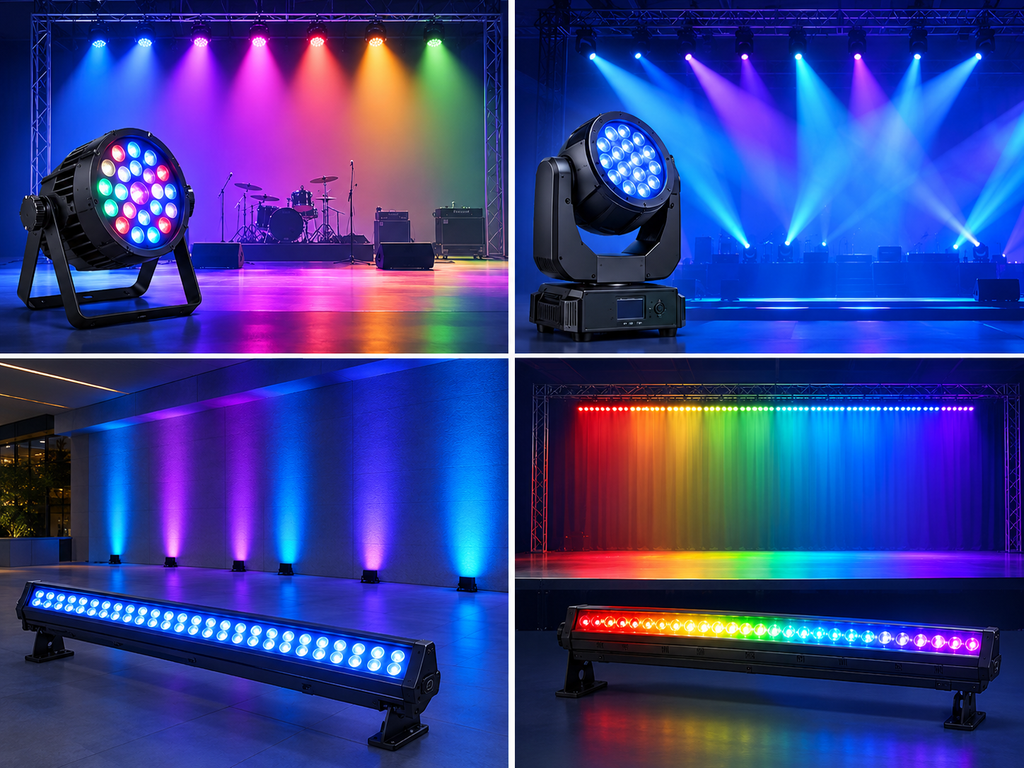
LED PAR Lights
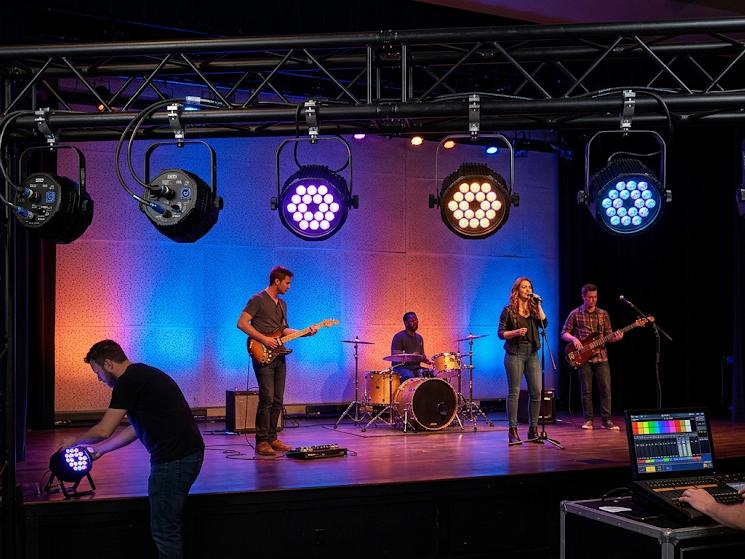
LED PAR lights are a common option for fixed-position stage wash lighting. They can illuminate performers, color a backdrop, or provide a base layer of illumination across a performance area.
Because a fixed PAR fixture stays in its selected position, it can provide predictable coverage throughout a show. Multiple fixtures can be arranged across a truss or stage edge to create a broader wash.
When comparing LED PAR lights, check the beam angle, output, color-mixing system, dimming performance, and mounting options. These factors affect whether a fixture is better suited to a small DJ booth, a theater stage, or a larger live event.
Explore Tealshine LED PAR Can Lights for fixed-position lighting applications.
Wash Moving Head Lights
A wash moving head combines broad light coverage with motorized pan and tilt movement. This allows the operator to reposition the wash during a performance instead of relying entirely on fixed fixture positions.
Wash moving heads are useful when a lighting design needs to move color across the stage, follow changing performance areas, or create dynamic transitions between scenes. Some models also provide adjustable zoom, allowing the operator to change the spread of the light within the fixture’s design limits.
However, not every moving head is a wash fixture. Beam models prioritize concentrated shafts of light, while spot models are designed for more defined projections and effects. Buyers should confirm the fixture’s actual optical type instead of choosing solely by the term “moving head.”
See Tealshine Moving Head Lights to explore options for dynamic stage lighting.
LED Wall Wash Lights
LED wall wash lights are designed to illuminate broad surfaces such as stage backdrops, curtains, scenic walls, and architectural features. Their purpose is to create a relatively continuous field of light across a surface rather than a series of isolated bright spots.
Wall washing requires careful attention to fixture spacing and aiming. If adjacent fixtures do not overlap appropriately, the illuminated surface may show visible bands, bright areas, or dark gaps. The correct arrangement depends on the fixture’s beam distribution, mounting distance, and the dimensions of the surface.
For projects that prioritize background or architectural coverage, consider LED Wall Wash Lights alongside general-purpose stage wash fixtures.
LED Light Bars
LED light bars distribute light along an elongated fixture body. They are useful when the lighting design calls for linear coverage along a stage edge, truss, DJ booth, or scenic element.
Depending on the model, a light bar may provide a consistent color across its length or support more detailed effects through individually controlled sections. Linear fixtures can complement PAR lights and moving heads when a production needs a continuous line of color rather than separate circular pools of light.
For larger projects, consider how the light bar’s length, beam spread, control options, and mounting method fit the overall lighting design.
Where Is Stage Wash Lighting Used?
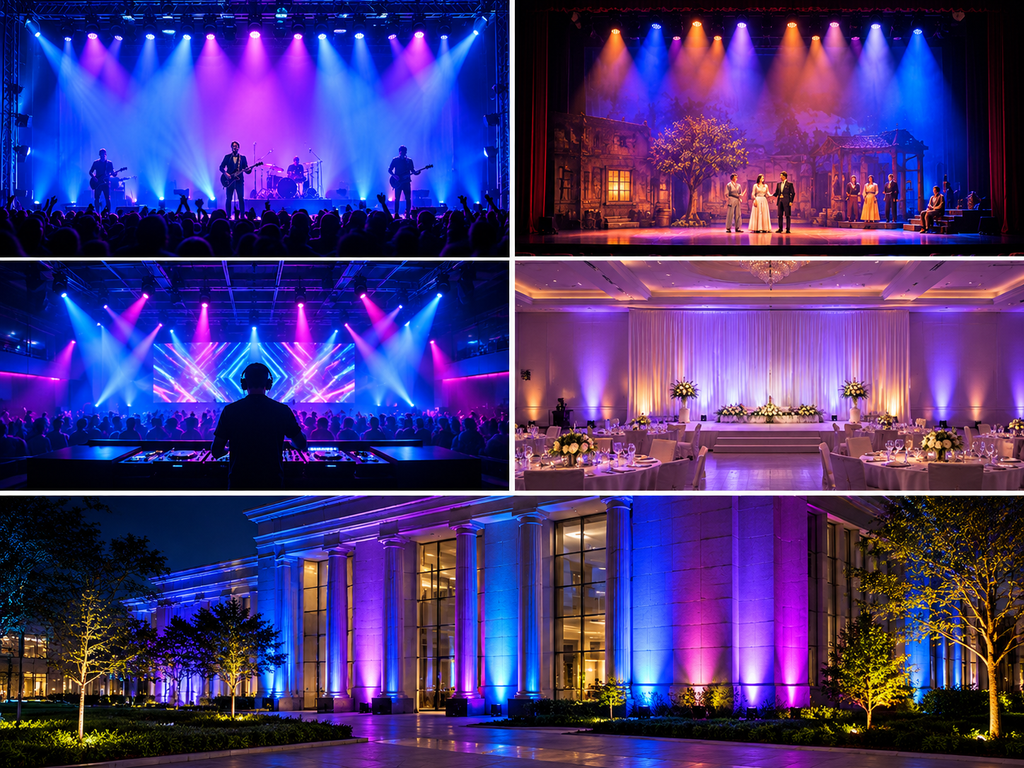
Stage wash lighting is used in many environments because broad illumination can support both practical visibility and creative lighting design. The fixture arrangement, output, and color choices should be matched to the requirements of each venue.
Concerts and Live Music
Concert lighting often uses wash fixtures to establish the main color and brightness of the stage. A broad wash can illuminate multiple performers, support changes in musical mood, and provide a consistent visual base for moving beams or special effects.
Fixed wash fixtures can maintain reliable coverage, while wash moving heads add movement during transitions and high-energy sections. The balance depends on the production scale and how much control the lighting operator needs.
Theaters and Performing Arts
In theater, wash lighting helps illuminate acting areas and establish the atmosphere of a scene. Different color temperatures and color combinations can suggest changes in time, location, or mood without requiring a complete scenery change.
Consistency and control are particularly important. Abrupt brightness changes or uneven coverage can distract the audience, so fixture selection should account for smooth dimming, color quality, positioning, and the needs of the production.
DJ Booths, Clubs, and Nightlife Venues
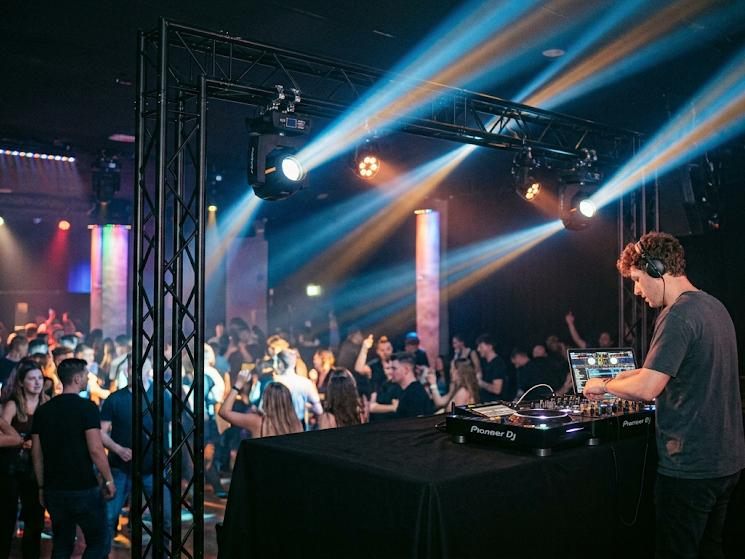
DJ environments often combine wash lighting with moving effects, strobes, and other fixtures. A wash provides a broad layer of color across the booth, performers, or background, while more concentrated effects add movement and contrast.
In a compact venue, the available mounting height and throw distance can be limited. Buyers should check whether the fixture can cover the intended area without producing excessive brightness in the audience’s line of sight.
Weddings and Corporate Events
Wash lights are frequently used to color backdrops, illuminate presentation areas, and establish a visual theme across event spaces. For weddings, a soft and consistent wash may support the stage or reception backdrop. For corporate events, it can help reinforce brand colors and make a presentation area stand out.
Battery-powered fixtures may be worth considering where cables would create installation challenges or where the venue restricts cable runs. Runtime, charging requirements, control options, and placement should be checked before specifying battery-powered equipment for a full event.
Architectural and Backdrop Lighting
Wash lighting can also highlight columns, walls, scenic structures, and other large surfaces. In these applications, the quality of coverage is often more important than movement.
Outdoor installations require additional attention to environmental protection. Always verify the fixture’s IP rating and the manufacturer’s instructions for the actual installation conditions rather than assuming that every LED wash fixture is suitable for outdoor use.
Wash Light vs. Beam Light vs. Spot Light
Wash, beam, and spot lights serve different purposes. Understanding the distinction helps buyers choose fixtures that match the desired effect instead of expecting one type of light to handle every task.
| Fixture Type | Main Purpose | Typical Applications |
| Wash Light | Broad area illumination and color coverage | Stage wash, performer coverage, backdrops |
| Beam Light | Narrow, concentrated shafts of light | Aerial effects, concert accents, dramatic movement |
| Spot Light | More defined illumination of a selected area or object | Highlighting performers, objects, or projected patterns |
A wash fixture is generally the better starting point when the objective is broad, even coverage. A beam fixture is more suitable when visible shafts of light are part of the design, particularly when atmospheric haze is available. A spot fixture is useful when the lighting operator needs a more defined area or pattern.
Some moving head fixtures combine functions or provide adjustable optics, but buyers should confirm the available modes and their practical performance. A hybrid fixture may offer flexibility, but it should not automatically be assumed to perform as well as a dedicated fixture in every application.
How to Choose the Right Wash Lights for Stage
For buyers, rental companies, distributors, and project contractors, selecting a wash light involves more than comparing wattage or the number of LEDs. The fixture needs to match the required coverage, installation conditions, control system, and operating schedule.
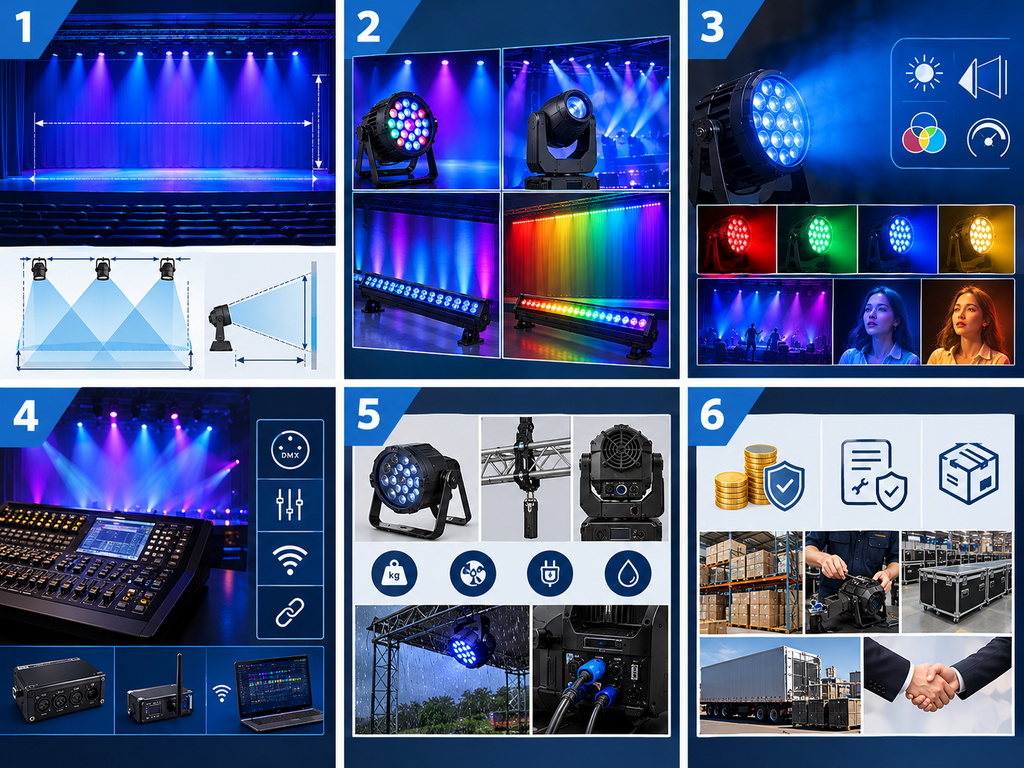
1. Define the Coverage Area
Start by measuring the stage, backdrop, or wall that needs illumination. Record its width and height, along with the approximate distance between the fixture positions and the target surface.
These measurements help determine the required beam spread and fixture count. A large stage may need several fixtures from different positions, while a compact booth may be adequately covered by a smaller arrangement.
2. Match the Fixture to the Application
For fixed stage coverage, LED PAR lights may be a practical choice. For moving color and dynamic transitions, a wash moving head may be more suitable. For long backdrops or architectural surfaces, dedicated wall wash fixtures or linear LED bars may provide a better distribution of light.
Choosing the correct fixture category first can prevent unnecessary spending on functions that the project does not need.
3. Check Brightness, Beam Angle, and Color Performance
Compare the fixture’s photometric data where available, rather than relying on wattage alone. Electrical power consumption does not directly tell you how much usable light reaches the target area.
Ask for relevant output measurements, beam-angle information, color-mixing details, and dimming performance. For applications where accurate color appearance matters, request appropriate color-quality data and, when possible, evaluate the fixture in a representative environment.
4. Confirm Control and Compatibility
If the installation uses DMX control, confirm the supported protocol, channel modes, addressing requirements, and compatibility with the control system. Wireless control, pixel effects, or other features should be verified against the specific model rather than assumed from the product category.
For an introduction to lighting control, read our guide to DMX controllers and how they work.
5. Consider Installation and Operating Conditions
Check the fixture dimensions, weight, mounting method, cooling requirements, power connections, and service access. For rental applications, transport durability and ease of maintenance may also affect long-term operating costs.
For outdoor or exposed installations, verify the required environmental rating and follow the manufacturer’s installation guidance. A fixture designed for indoor use should not be treated as weatherproof simply because it uses LEDs.
6. Evaluate the Total Cost of Ownership
For bulk purchases, the unit price is only one part of the decision. Buyers should also consider warranty terms, spare-parts availability, service requirements, expected operating hours, packaging, shipping, and the cost of integrating the fixtures into an existing rig.
Distributors and project contractors may also need consistent product specifications, private-label options, or customized configurations. In these cases, confirm production capacity, quality-control procedures, documentation, and after-sales support before placing a large order.
Common Stage Wash Lighting Mistakes
Even suitable equipment can produce poor results if the lighting layout is not planned carefully. The following issues are worth checking during installation and testing.
Using Too Few Fixtures for the Required Area
A single fixture may not provide consistent coverage across a wide stage or backdrop. Adding fixtures at suitable positions can improve uniformity, provided their beam spreads and output levels are planned together.
Ignoring Bright Spots and Dark Gaps
Uneven illumination is especially noticeable on plain backdrops and architectural walls. Test the actual surface and adjust fixture spacing, angles, and intensity to reduce visible differences between illuminated areas.
Choosing by Wattage Alone
Two fixtures with similar power consumption may produce different output, beam distributions, and color performance. Compare the relevant specifications and consider the distance and area the fixture must cover.
Using Color Without Considering Performer Visibility
Strongly saturated colors can create atmosphere but may not be ideal for every performance area. If facial expression, costume detail, or presentation visibility is important, balance colored wash lighting with suitable front lighting.
Expecting Every Moving Head to Produce a Wash
Moving head describes a fixture’s movement mechanism, not necessarily its optical output. Confirm whether the model is designed for wash, beam, spot, or hybrid operation before making a purchase decision.
Frequently Asked Questions About Wash Lights
What is a wash light used for?
A wash light is used to illuminate a broad area, such as a stage, group of performers, backdrop, or wall. It can provide general coverage, add color, and help establish the atmosphere of a performance or event.
What is the difference between a wash light and a wash moving head?
A wash light is a broad category of fixture or lighting output. A wash moving head is a specific type of fixture that combines broad wash output with motorized pan and tilt. Fixed LED PAR lights can also produce wash lighting without moving during a show.
Are LED wash lights suitable for stage use?
Yes. LED wash fixtures are widely used for stage and event lighting. Depending on the model, they can provide color mixing, dimming, and control options for different applications. Buyers should compare output, beam angle, color performance, control compatibility, and installation requirements.
How many wash lights do I need for a stage?
The required number depends on the stage dimensions, fixture output, mounting distance, beam angle, and desired uniformity. Measure the target area and review the fixture’s coverage information before deciding on the number and placement of lights. A practical layout should be tested at the actual installation distance.
Can wash lights be used without a DMX controller?
Some wash lights can operate through onboard controls, automatic programs, or sound-activated modes. A DMX controller is useful when multiple fixtures need coordinated color changes, dimming, movement, or programmed cues. Available control options vary by model.
What is the difference between a wash light and a wall wash light?
A general wash light may be used to illuminate performers or a broad stage area. A wall wash light is designed primarily to distribute light across a wall, backdrop, or other large surface. Wall wash applications place particular importance on even coverage and minimizing visible bright and dark bands.
What should buyers check before ordering LED wash lights in bulk?
Buyers should confirm fixture specifications, output data, beam angle, color-mixing options, control modes, power requirements, mounting details, environmental ratings, warranty terms, spare-parts support, and production lead time. Distributors and project contractors should also confirm whether product customization and private-label services are available when required.
Choose Wash Lighting for Your Project
The right wash lighting setup depends on what needs to be illuminated, how evenly the light must be distributed, and whether the production requires fixed coverage or dynamic movement. LED PAR lights, wash moving heads, wall wash fixtures, and LED light bars each offer different ways to build a practical lighting system.
For distributors, rental companies, venue operators, and project contractors, selecting fixtures around the actual application can help avoid coverage problems and unnecessary equipment costs.
Tealshine manufactures professional LED stage lighting products for concerts, theaters, DJ events, and other entertainment applications. Buyers evaluating fixtures for a new installation or bulk purchase can compare the product range and contact the team to discuss project requirements, product specifications, and available OEM/ODM options.