Professional High Quality Stage Lighting Manufacturer

What are the Three Basic Elements of Stage Lighting?
Table of Contents
What is the Three Basic Elements of Stage Lighting?
The basic elements of stage light are color tone, color intensity, and light position.Below are the details of these three elements.
What is Color Tone?
What is Color Tone?
Color Tone: Conveying Emotions and Imbuing the Stage with Emotional Warmth
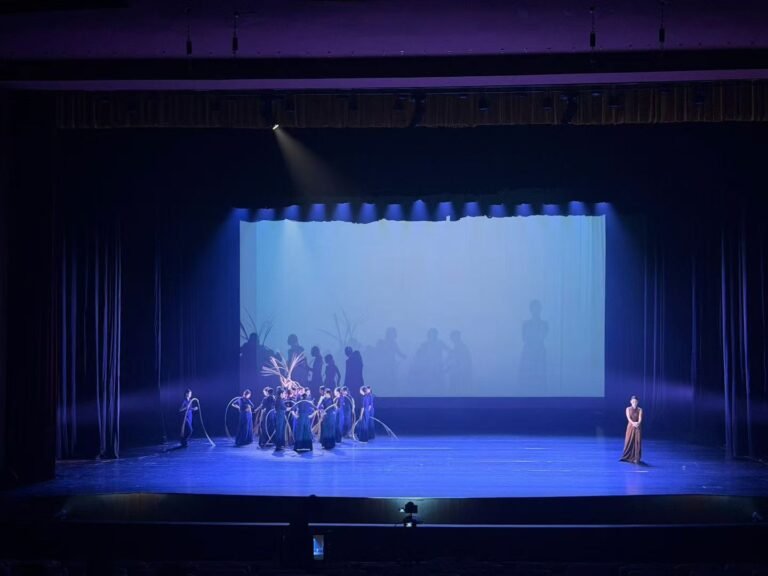
Color tone is the most captivating element of stage lighting and the most directly perceived lighting characteristic by the audience. It’s not simply a matter of piling up colors, but rather using light of different color temperatures, hues, and saturations to convey specific emotions, create unique atmospheres, and even replace dialogue and actions to express a character’s inner feelings. In the professional stage lighting field, light color is mainly divided into white light and colored light systems. The combination and application of these two is the first step in lighting design.
The core standard for measuring white light is color temperature, measured in Kelvin (K). This is the most basic and crucial light color parameter in lighting design. Light with a color temperature below 3300K is warm white light; light with a color temperature between 3300K and 5300K is neutral white light; and light with a color temperature above 5300K is cool white light, leaning towards bluish-white or pale blue tones.
The use of color tone is more artistic, covering various hues such as red, orange, yellow, green, cyan, blue, and purple. Each color has a fixed emotional connotation, and the superposition and gradation of different colors can produce richer visual effects.
What is Color Intensity?
Light Intensity: Controlling the Rhythm of Light and Shadow, Shaping Stage Spatial Layers
Light intensity refers to the strength of light, specifically the brightness and darkness of the stage lighting. Professionally measured by illuminance, it’s a key element in defining the primary and secondary elements of the stage, shaping spatial layers, and controlling the performance rhythm. The core function of light intensity is to focus the audience’s attention on the central performance area through contrast between light and shadow, while simultaneously differentiating the foreground, middle ground, and background, creating a three-dimensional sense of space on a flat stage and preventing the overall stage presentation from being bland and unfocused.
The core of stage lighting intensity design lies in the contrast and rhythmic control of light and shadow, rather than maintaining constant brightness throughout the performance. During the performance, the lighting technician adjusts the brightness and angle of the lights to flexibly switch between strong light, weak light, low light, and complete darkness; each light intensity has a specific functional purpose. Strong lighting is typically used in core performance areas, highlight moments of character performance, and climaxes of the stage. It instantly grabs the audience’s attention, emphasizing the main character or key performance elements. For example, strong lighting is used to focus on a singer’s solo performance in a concert, key lines in a play, or solo segments in a dance, reinforcing the performance’s central role. Weak lighting is mostly used to support performance areas, transition between scenes, and build up character emotions. The soft, non-glaring light ensures the audience can clearly see the stage movements without overshadowing the core areas, thus setting the stage for subsequent plot developments. Low-light and complete darkness are special applications of stage lighting. Low-light is suitable for creating a tranquil, oppressive, or mysterious atmosphere, such as in a solitary nighttime scene or to build suspense. Complete darkness is not a break in the lighting but rather part of the lighting design, used for scene transitions, plot twists, and emotional pauses. It allows the audience to quickly transition from the previous scene to the next performance’s emotion, while also creating visual suspense and enhancing the dramatic tension of the stage.
The layering of light intensity is also reflected in the combination of key and fill lights. The main stage light, used for basic stage lighting, maintains a relatively stable intensity to ensure overall stage brightness. Auxiliary lights, such as side lights, backlights, and decorative lights, have their intensity adjusted flexibly according to needs, typically weaker than the main light, serving to outline figures and enrich stage details. If the intensity difference between the main and auxiliary lights is too small, the stage will appear flat and lack depth; if the difference is too large, it will create harsh lighting and visual discomfort. Furthermore, the rhythm of light intensity changes must closely match the performance rhythm. For slow, lyrical passages, the light intensity changes are slow and gentle, often using gradual dimming; for fast-paced, tense passages and fast-paced dance sequences, the light intensity changes are crisp and clean, using rapid alternations of light and dark to enhance the stage’s dynamism and tension.
Many novice lighting designers fall into the misconception that “the brighter the better,” believing that ample stage lighting equates to a high-quality design. This is not the case. Excessive strong light can cause visual fatigue for the audience and also obscure the details and emotions on stage. The truly professional use of light intensity is to “brighten when it should be bright and dark when it should be dark,” so that the rhythm of light and dark matches the emotional rhythm of the performance. The intensity of light is used to divide the stage space and highlight the key points of the performance, so that the stage has both visual focus and subtle layering.
What is Light Position?
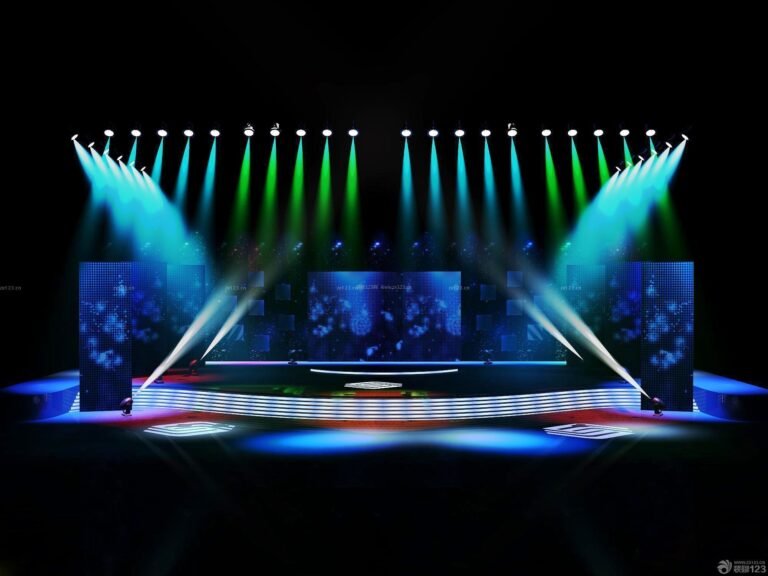
Lighting position refers to the projection location and angle of the lights. It is the physical basis of stage lighting, determining the coverage area, shadow patterns, and the effect on the performers. Different lighting positions have different functional roles. A reasonable arrangement of lighting positions is essential to construct a complete stage visual framework, allowing the light to truly serve the performance. Professional stage lighting positions are mainly divided into six categories: front lighting, side lighting, backlighting, top lighting, ground lighting, and flowing lighting. Each category is irreplaceable.
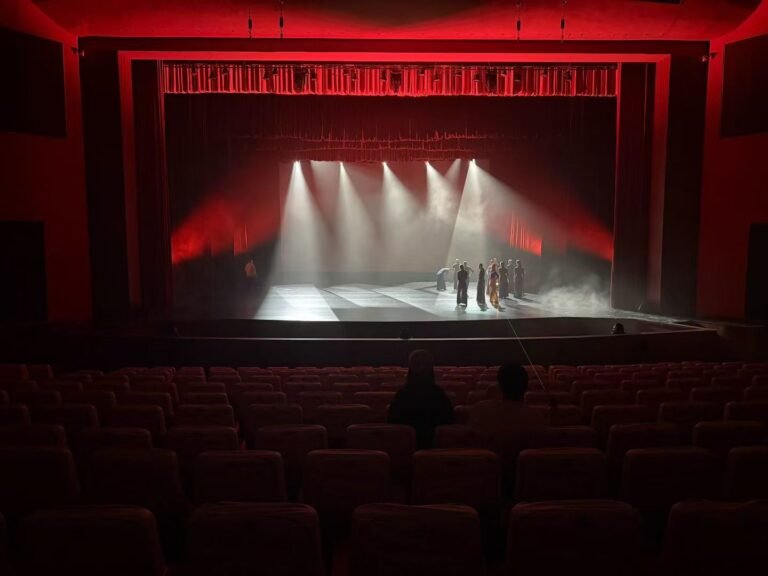
Front lighting is the most basic lighting position on a stage. It is usually installed above the audience seating area or above the stage proscenium. The light is projected onto the performance area from the front. The core function of front lighting is basic illumination, evenly illuminating the foreground of the stage and the actors’ faces, ensuring that the audience can clearly see the actors’ expressions, movements, and costume details. It is the “main light source” of the stage lighting. Front lighting requires soft and even light, avoiding excessive glare. Neutral or warm white light is often chosen for its color temperature to ensure effective illumination without creating harsh shadows on the actors’ faces.
Side lighting is installed on the side bridges or side walls of the stage, projecting light obliquely onto the stage from both sides. The main function of side lighting is to outline the contours of figures and objects, enhance the three-dimensionality of the stage image, and compensate for the flatness of front lighting. In performances primarily featuring physical movements, such as dance and opera, side lighting clearly highlights the actors’ body lines, making the movements more dynamic; it can also be used to enhance the sense of space on both sides of the stage, making the stage image fuller.
Backlighting, also known as “rim lighting,” is installed behind the stage, behind the top, or behind the ground, projecting light from behind the actors or from behind the stage. The core function of backlighting is to outline the full contours of the actors, separating them from the stage background and preventing them from blending into the background and creating a more distinct stage layering. Especially in scenes with bright, richly colored stage backgrounds, backlighting can instantly highlight the main subject, enhance the transparency of the stage image, and create a dreamy, hazy special lighting effect, often used in lyrical dances and concert performances.
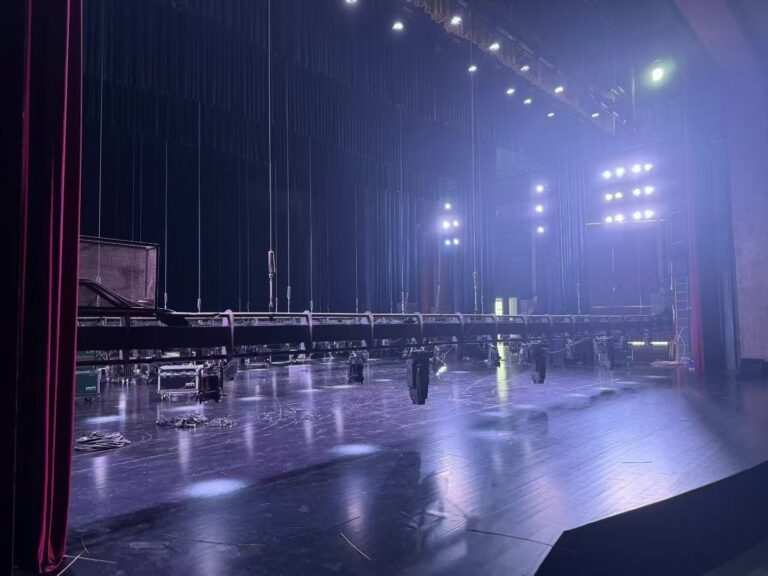
Top lights are installed on rigging at the top of the stage, projecting light vertically downwards. They are divided into front top lights, center top lights, and rear top lights. Top lights are mainly used for overall stage lighting of the mid-scenes and background, covering a large area of the stage. They can be combined with different colored lights to create the overall stage atmosphere, and can also provide supplementary lighting for the actors’ upper bodies, making the light and shadow on the figures more complete.
Ground lights are installed at the front edge of the stage floor and in front of the cyclorama, projecting light upwards. They are mainly used to illuminate the stage cyclorama and create background lighting effects, such as simulating natural scenes like the sky, sunset, and starry sky. Through changes in color and light intensity, they make the stage background more visually impactful and enrich the spatial conception of the stage.
Moving lights are portable lighting positions. The lights are installed on movable brackets and can be flexibly arranged around the stage. They are mainly used to supplement local lighting, spotlight performances, and lighting embellishments for special scenes, meeting the flexible and ever-changing lighting needs of stage performances. They are an important supplement to fixed lighting positions.
The layout of led stage lighting positions is not arbitrary; it must be rationally planned according to the stage size, performance style, and plot requirements, following the principles of “main light as supplementary, complementary lighting, clear layering, and comprehensive coverage.” Each lighting position must coordinate with the others to avoid light conflicts, overlapping shadows, and chaos. Front lighting ensures basic illumination, side and backlighting creates depth, top and ground lighting creates atmosphere, and flowing light flexibly supplements the lighting, ultimately forming a three-dimensional, complete, and performance-appropriate lighting layout.