Professional High Quality Stage Lighting Manufacturer


Table of Contents
Stage lighting colors do more than make a performance look attractive. They help establish the atmosphere, guide audience attention, emphasize important moments, and support the story or music on stage. A deep red wash can create tension or energy, while soft blue lighting may suggest nighttime, calm, or isolation. Pink and purple tones can bring a more expressive, romantic, or contemporary visual style to a performance.
However, there is no universal rule that assigns one emotion to every color. The meaning of a lighting color depends on its shade, brightness, position, surrounding colors, and the context of the performance. The same red stage lighting can communicate danger in a theatrical scene and excitement during a concert.
For lighting designers, event production teams, and venue operators, understanding how colors work together is just as important as knowing what individual colors can represent. This guide explores common stage lighting colors, their visual effects, practical applications, and useful color combinations for concerts, theater productions, and live events.
1. What Do Stage Lighting Colors Mean?
Stage lighting colors are used to communicate visual information and influence how an audience experiences a performance. Designers select colors according to the mood, location, music, characters, and overall visual direction of a production.
Some common associations include:
| Stage Color | Common Associations | Typical Applications |
| Red | Passion, energy, danger, power | Concerts, dramatic scenes, high-energy performances |
| Blue | Calm, sadness, night, mystery | Ballads, nighttime scenes, atmospheric backgrounds |
| Green | Nature, growth, fantasy, unease | Nature scenes, themed performances, special effects |
| Pink | Romance, creativity, playfulness | Pop concerts, dance, fashion shows |
| Purple | Luxury, mystery, imagination | Concerts, theatrical scenes, fantasy themes |
| Amber | Warmth, comfort, nostalgia | Acoustic performances, interiors, sunset effects |
| White | Clarity, focus, realism | Spotlighting, performer visibility, presentations |
These associations are useful starting points, not fixed definitions. Cultural background, audience expectations, music, costumes, scenery, and the overall production concept can all change how a particular color is interpreted.
2. What Does Red Stage Lighting Mean?
Red stage lighting is often associated with passion, power, excitement, danger, and strong emotions. Because red attracts attention, it is frequently used when a production needs to create a dramatic visual moment or increase the intensity of a performance.
Red Stage Lighting for Concerts
In concert lighting, red is commonly used during energetic musical sections, powerful choruses, and dramatic transitions. A red wash across the background can make the stage feel more intense, while red moving head beams can create dynamic patterns above the performers.
For rock concerts and electronic music events, red can also be combined with white flashes or blue backlighting to create stronger visual contrast.
Red Lighting in Theater Productions
In theatrical lighting, red can represent anger, danger, conflict, romance, or emotional tension. A darker crimson may create a sense of weight or unease, while a brighter scarlet can produce a more energetic and attention-grabbing appearance.
However, highly saturated red light can make facial expressions, costume textures, and makeup details difficult to distinguish. When performers need to remain clearly visible, designers can use a separate neutral or warm key light alongside the red background or side lighting.
When Should You Use Red Stage Lights?
- To emphasize powerful musical moments or concert finales.
- To create tension, conflict, or danger in dramatic scenes.
- To establish a warm or intense visual atmosphere.
- To add contrast against blue, cyan, or neutral lighting.

3. What Does Blue Stage Lighting Mean?
Blue stage lighting can suggest calmness, sadness, nighttime, distance, mystery, or a cool atmosphere. It is a versatile choice for both theater and live music because different shades of blue can create very different visual impressions.
Blue Lighting for Atmospheric Scenes
In theater, blue is often used to represent nighttime, moonlight, quiet surroundings, or emotional distance. A pale blue wash can create a gentle cool tone, while deep blue can make a stage feel darker and more dramatic.
Blue is also useful for separating performers from a warm-colored background. For example, a warm front light combined with blue backlighting can create visual depth without requiring multiple saturated colors across the entire stage.
Blue Stage Lighting for Concerts
Concert lighting designers often use blue during slower songs, instrumental sections, or atmospheric musical passages. It can establish a consistent visual background while moving fixtures add subtle motion and direction.
Deep blue may appear less bright than other saturated colors at the same fixture setting. Designers should therefore test the actual output and check whether performers and important stage details remain visible.
Practical Applications of Blue Stage Lights
- Creating nighttime and moonlight effects.
- Supporting emotional or reflective musical performances.
- Adding cool contrast to warm front lighting.
- Creating atmospheric backgrounds for concerts and presentations.
4. What Does Green Stage Lighting Mean?
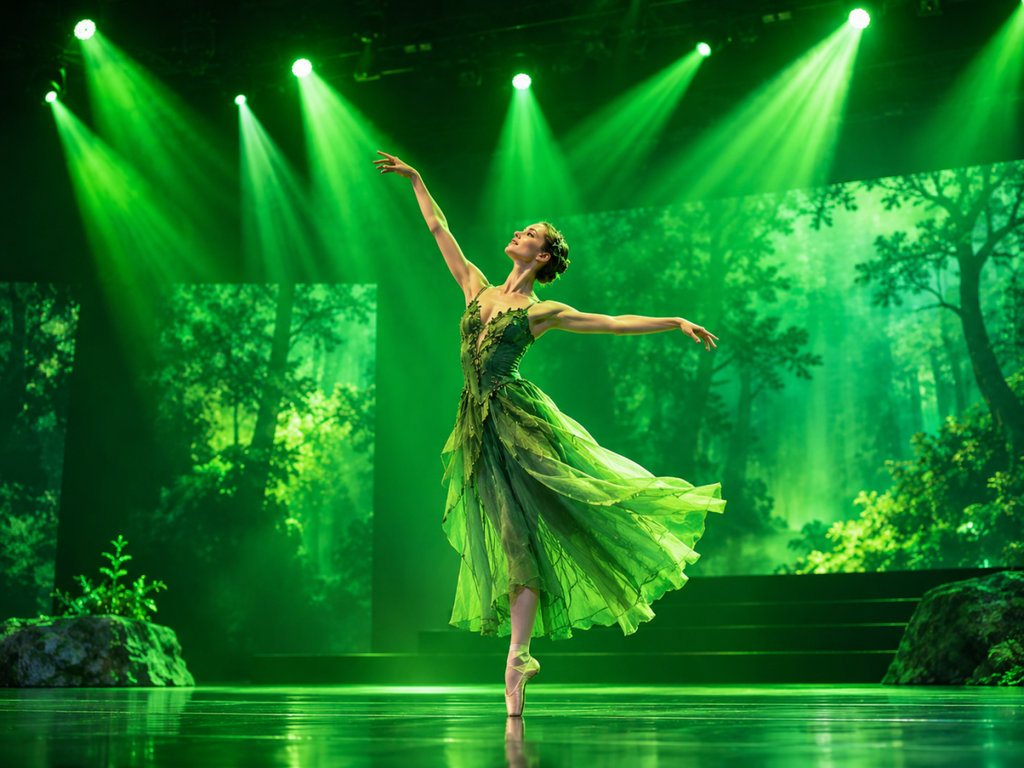
Green stage lighting is commonly associated with nature, growth, freshness, and environmental themes. Depending on its shade and intensity, it can also create an unusual, mysterious, or unsettling visual atmosphere.
Green Lighting for Nature and Fantasy Scenes
Green is useful for productions that feature forests, gardens, outdoor environments, or fantasy settings. A softer foliage green can create a natural-looking background, while a stronger lime or neon green produces a more stylized effect.
In science fiction and themed performances, intense green lighting can also suggest technology, artificial environments, or an unfamiliar atmosphere.
Green Stage Lighting for Concerts and Events
Green LED lights can add variety to concert lighting designs, especially when combined with blue, cyan, or white effects. They are also useful for coloring backdrops, scenic surfaces, and selected architectural features.
Designers should be careful when using saturated green directly on performers. Skin tones, makeup, and costume colors may appear very different under green illumination. Keeping a separate neutral key light can help preserve facial visibility.
When Is Green a Good Choice?
- Nature-themed performances and environmental productions.
- Fantasy, science fiction, and theatrical special effects.
- Concert backgrounds that need a cool color palette.
- Visual contrast with red, amber, or neutral white lighting.
5. What Does Pink Stage Lighting Mean?
Pink stage lighting is often associated with romance, creativity, playfulness, and expressive visual styles. It can create a softer atmosphere than deep red while still providing a noticeable color effect.
Pink Lighting for Pop Concerts and Dance Performances
Pink is frequently used in pop concerts, dance performances, fashion shows, and entertainment events. It can give a stage a more colorful and contemporary appearance, especially when combined with purple, blue, or white lighting.
Soft pink can support romantic or elegant scenes, while brighter magenta and hot pink create stronger visual energy. The distinction between pink, magenta, and purple is useful when planning a consistent lighting palette.
Pink Lighting for Stage Backgrounds
LED PAR lights, wash moving heads, and LED bars can all be used to introduce pink tones into a stage design. Broad wash coverage works well for large backgrounds, while linear LED fixtures can create more structured accents around a DJ booth or performance area.
When using pink as the main stage color, consider adding neutral white or a contrasting cool color to maintain separation between performers and the background.
Practical Uses of Pink Stage Lighting
- Pop concerts and contemporary music events.
- Dance performances and fashion shows.
- Romantic or celebratory scenes.
- Brand events that use pink as part of their visual identity.
6. Other Important Stage Lighting Colors
Red, blue, green, and pink are popular choices, but a complete stage lighting palette often includes amber, purple, and white. These colors help designers create more balanced scenes and support different lighting functions.
Purple Stage Lighting
Purple can suggest mystery, imagination, luxury, romance, or fantasy. Lavender and lighter violet tones often create a softer appearance, while deep purple and bright magenta provide stronger visual contrast.
Purple is commonly used in concerts, dance performances, fashion shows, and theatrical productions. It can also work well as backlighting when performers need to stand out against a darker background.
Amber and Warm Stage Lighting
Amber and warm white tones are useful for creating welcoming, natural, or nostalgic environments. They can suggest sunlight, candlelight, warm interiors, and sunset scenes.
In theater, warmer lighting can help maintain a natural appearance for performers. In concerts, amber can balance cooler blue or purple lighting and add visual warmth to the stage.
White Stage Lighting
White light plays an important role in performer visibility and visual clarity. It can be used for followspots, key lighting, presentations, and moments when the audience needs to focus on a particular performer or object.
Warm white, neutral white, and cool white create different results. The appropriate choice depends on the desired atmosphere, fixture characteristics, skin tones, costumes, and camera requirements.
UV Effects and Fluorescent Materials
UV effect lighting is different from ordinary visible stage colors. It can make compatible fluorescent materials appear to glow, creating special effects for themed events, dance performances, and fantasy productions.
The result depends on the materials used, the fixture’s UV output, placement, and surrounding ambient light. UV equipment should always be selected and operated according to its manufacturer instructions and applicable exposure requirements.
7. Best Stage Light Color Combinations for Different Effects
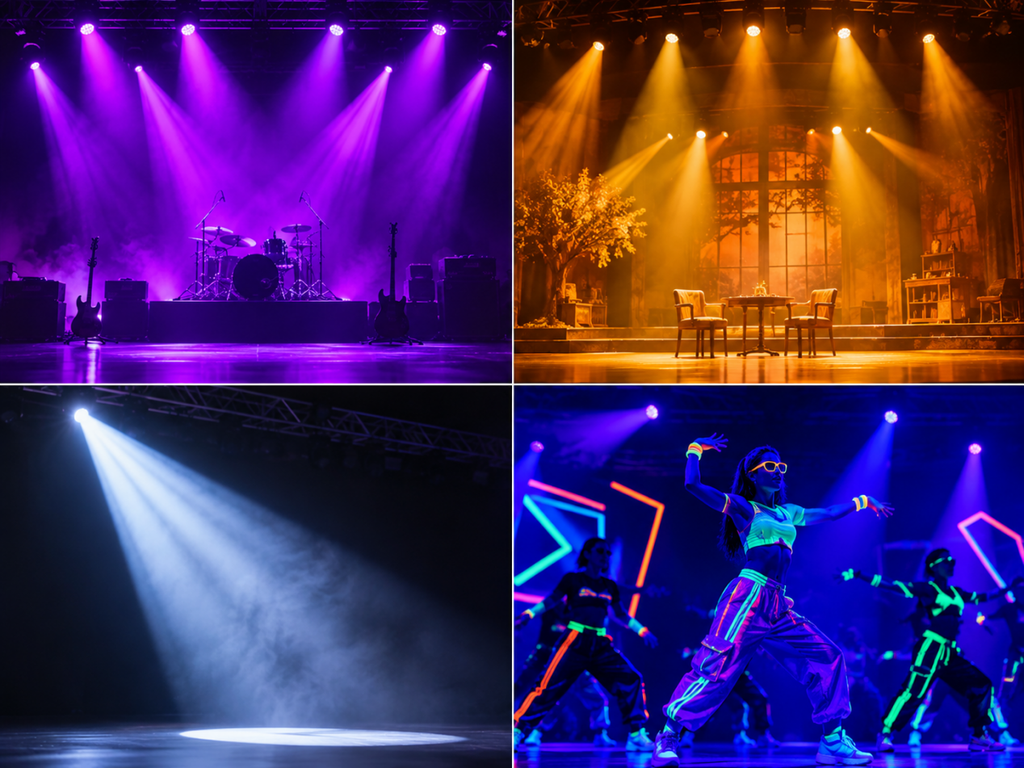
Individual colors establish a visual tone, but combinations create contrast, depth, and a more complete stage appearance. Instead of assigning every fixture a different color, start with a clear base color and introduce one or two additional colors for separation and emphasis.
| Color Combination | Visual Effect | Suggested Applications |
| Red + Blue | Strong contrast, tension, energy | Rock concerts, dramatic performances |
| Blue + Amber | Cool and warm contrast, depth | Theater, live music, presentations |
| Pink + Purple | Expressive, stylish, contemporary | Pop concerts, dance, fashion shows |
| Green + Blue | Cool, atmospheric, nature-inspired | Fantasy scenes, themed events |
| Red + Amber + Orange | Warmth, heat, celebration | Concert finales, energetic performances |
| Blue + White | Clean, cool, focused | Presentations, ballads, modern stage designs |
Red and Blue: Create Dramatic Contrast
Red and blue are a useful combination when a production needs two distinct visual areas. Red can provide a strong accent while blue establishes the background atmosphere. This combination works well for concerts, dramatic scenes, and performances that use contrasting visual themes.
Blue and Amber: Balance Warm and Cool Tones
Blue and amber create a clear contrast between cool and warm light. A blue background with amber illumination on the performer can create depth while helping the subject remain visually distinct.
Pink and Purple: Build a Contemporary Color Palette
Pink and purple work well for pop music, dance, fashion events, and entertainment productions. Different shades can be used across the background and performance area to create variation without introducing too many unrelated colors.
Green and Blue: Create an Atmospheric Environment
Green and blue can suggest water, nature, fantasy, or a cool futuristic environment. They are particularly useful for background lighting and scenic effects. If performers blend into the background, add a neutral white or contrasting edge light.
The best combination depends on the actual venue and production. Always test the selected colors on the performers, costumes, backdrop, and camera image before finalizing the lighting cues.
8. How to Choose the Right Stage Lighting Colors for Different Performances
Choosing stage colors should begin with the purpose of the performance. A theater production may need to communicate changes in time, location, and emotion, while a concert may prioritize energy, rhythm, and a recognizable visual identity.
Concert Lighting
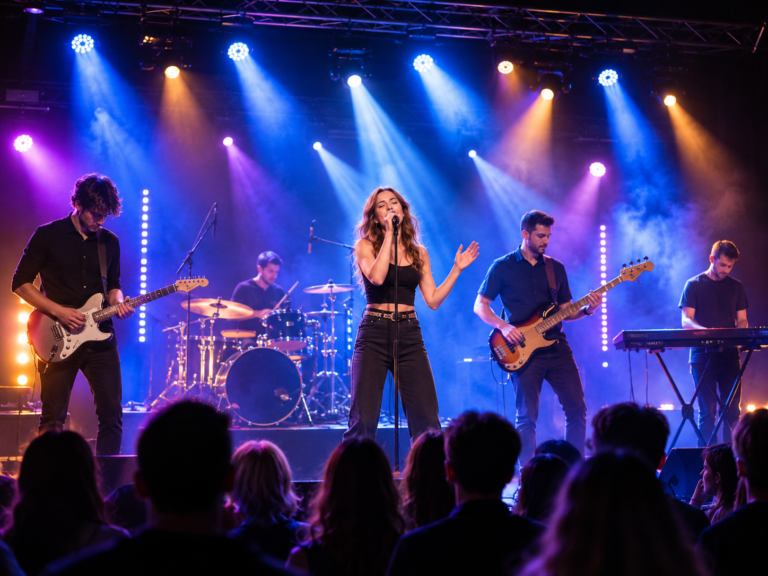
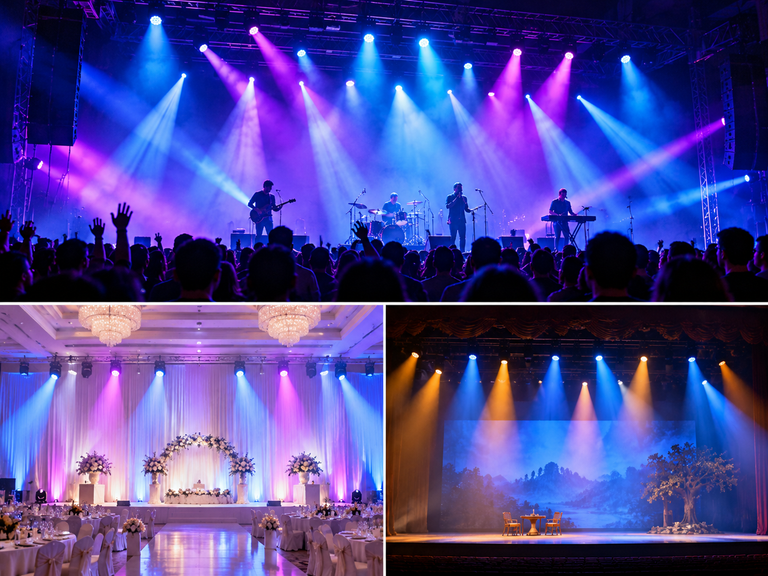
Concert lighting often uses bold colors and noticeable changes to support the music. Red, blue, purple, and magenta are common choices for creating a strong visual atmosphere. Moving head lights and LED wash fixtures can introduce changing colors and movement across the stage.
For slower songs, designers may reduce the speed of lighting changes and use blue, amber, or softer purple tones. During energetic sections, stronger color contrast and more dynamic effects can create greater impact.
Theater Lighting
Theatre lighting colors should support the story and help the audience understand the scene. Warm tones may represent comfortable interiors or sunlight, while blue can suggest nighttime or isolation. Red and green can be used for conflict, fantasy, or deliberately unnatural environments.
Color should not replace the basic requirements of performer visibility. Front, side, and backlighting need to work together so that faces, movement, costumes, and scenery remain readable.
For a broader look at stage lighting positions and design principles, see our theatrical lighting design guide.
DJ and Dance Events
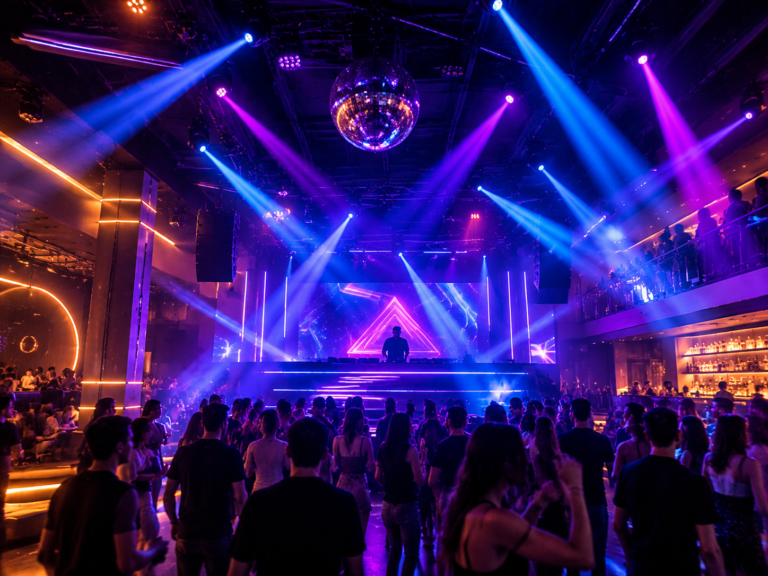
DJ performances often benefit from more frequent color changes and stronger visual effects. Pink, purple, blue, red, and green can be combined with moving beams, LED bars, and strobe effects to create a more energetic atmosphere.
Rather than running every color simultaneously, organize the lighting into scenes that respond to different parts of the music. This creates more noticeable transitions and prevents the stage from looking visually crowded.
Corporate Events and Presentations
Corporate events generally require a more controlled lighting approach. Brand colors can be used in the background, while neutral white light keeps speakers and presentation areas clearly visible.
When choosing colors for a branded event, check how the selected shades appear on screens, printed materials, stage surfaces, and camera footage. The same RGB values may look different across lighting fixtures and display systems.
9. What Affects the Appearance of Stage Lighting Colors?
Selecting a color on a lighting console does not guarantee that it will look exactly the same in every venue. Several practical factors influence the final result.
Brightness and Color Saturation
A pale blue and a deep blue may create completely different atmospheres even though they belong to the same color family. Increasing brightness does not always improve the result, particularly when a saturated color begins to obscure facial details or scenery.
Adjust both intensity and saturation according to the purpose of each lighting layer.
Fixture Position and Beam Direction
Front lighting, side lighting, backlighting, and overhead lighting affect how colors appear on performers and stage surfaces. A color used as a background wash may look very different when directed toward a performer’s face.
Using separate fixtures for front illumination and background color can make the overall design easier to control.
Stage Surfaces, Costumes, and Materials
Colored light interacts with the surfaces it illuminates. A white backdrop usually reflects colors differently from a black curtain, while colored costumes can absorb or reflect parts of the light spectrum.
For this reason, test the complete visual setup rather than judging a color only from a fixture display or lighting software preview.
Camera and Video Requirements
Live performances are often recorded or streamed. Highly saturated colors may cause some costume details or facial features to appear different on camera. Camera white balance, exposure, fixture output, and flicker performance can all affect the recorded image.
If the production includes video, check the lighting through the actual camera system during rehearsal.
Color Mixing and Fixture Capabilities
Different LED fixtures use different color-mixing configurations. RGB, RGBW, RGBA, and other multi-color LED systems can produce different ranges of colors and white-light characteristics.
When choosing equipment, check the fixture’s actual color-mixing functions, dimming behavior, control modes, and manufacturer specifications. For traditional fixtures, physical color gels may also be used where compatible with the fixture design and thermal requirements.
Learn more about filter-based color selection in our guide to stage light gels and their applications.
10. How to Create Better Stage Lighting Color Effects
A good lighting palette needs a clear structure. The following workflow can help lighting designers and production teams turn individual color choices into a coordinated visual design.
Step 1: Define the Mood of the Performance
Start by identifying the main atmosphere you want to create. Is the production energetic, romantic, dramatic, natural, futuristic, or formal? This decision helps narrow the color palette before programming begins.
Step 2: Choose a Main Color
Select one primary color to establish the overall visual tone. This may be a blue background for a nighttime scene, warm amber for an intimate performance, or red for a high-energy concert section.
Step 3: Add a Contrasting or Supporting Color
Use a second color to separate performers from the background or introduce visual variation. For example, combine a blue background with warm white front lighting, or use pink and purple across different parts of a concert stage.
Step 4: Assign Each Fixture a Clear Role
Use LED PAR lights or wash fixtures for broad color coverage, moving head lights for directional effects, and LED bars for linear background accents. Avoid assigning the same visual task to every fixture.
For different fixture options and their functions, see our guide to different types of stage lights.
Step 5: Program and Test Lighting Transitions
Prepare different scenes for the introduction, main performance, transitions, and finale. If the system uses DMX control, organize fixtures into suitable groups and test the programmed cues before the event.
Review the result from the audience area, check performer visibility, and make adjustments to color intensity, direction, and timing.
11. Frequently Asked Questions About Stage Lighting Colors
What are the most common stage lighting colors?
Common stage lighting colors include red, blue, green, pink, purple, amber, and white. Each color can support different moods and visual effects depending on its shade, intensity, position, and surrounding colors.
What does red stage lighting mean?
Red stage lighting can represent passion, danger, energy, power, anger, or celebration. In concerts, it often creates an intense atmosphere, while in theater it can support conflict, romance, or dramatic tension.
What does blue lighting mean on stage?
Blue lighting is commonly used to suggest nighttime, calmness, sadness, distance, or mystery. Pale blue can create a soft cool atmosphere, while deep blue produces a darker and more dramatic visual effect.
What stage lighting colors work well together?
Popular combinations include red and blue, blue and amber, pink and purple, and green and blue. The best combination depends on the production’s visual direction, performer visibility, scenery, and camera requirements.
What color stage lighting is best for concerts?
There is no single best color for every concert. Red, blue, purple, and magenta are common choices for energetic performances, while amber and warm white can support acoustic sets and slower musical sections. A combination of colors usually provides more flexibility than relying on one color throughout the show.
How do LED stage lights create different colors?
Many LED stage lights use combinations of colored LED emitters to mix different colors electronically. Depending on the fixture, systems such as RGB, RGBW, and RGBA can provide different color ranges and white-light options. The exact result depends on the fixture’s LED configuration and control capabilities.
Can the same stage lighting color create different emotions?
Yes. A color does not have one fixed emotional meaning. Red may represent danger in a theater scene but excitement during a concert. Music, story, brightness, saturation, timing, and cultural context all influence how the audience interprets it.
Create More Effective Stage Lighting with the Right Color Choices
Stage lighting colors are an important part of visual storytelling and live event production. Red can add intensity, blue can establish atmosphere, green can support nature-inspired or unusual scenes, and pink or purple can create expressive contemporary looks. When these colors are combined with a clear lighting structure, they can help transform an ordinary stage into a more engaging performance environment.
For professional lighting projects, color selection should always work alongside fixture performance, beam direction, brightness, control capabilities, and the requirements of the venue. Testing the complete setup before a performance is the best way to confirm that the selected palette works as intended.
At Tealshine, we manufacture LED stage lighting solutions for distributors, rental companies, event production teams, and professional venues. Our product range includes LED PAR lights, moving head lights, wash fixtures, LED bars, and other stage lighting equipment for different applications.
Whether you are sourcing fixtures for a concert, theater, DJ event, or a new lighting project, our team can help you explore suitable equipment and OEM/ODM options.
Contact Tealshine to discuss your stage lighting requirements and find the right fixtures for your next project.