Professional High Quality Stage Lighting Manufacturer


Table of Contents
Good nightclub lighting does more than illuminate a dance floor. It shapes the atmosphere, directs attention, supports the DJ’s performance, and helps create a visual identity that guests recognize. For nightclub owners, lighting designers, and entertainment venue operators, the challenge is choosing the right combination of fixtures and arranging them to work together.
A professional nightclub lighting system usually combines several layers: moving head lights for dynamic beams, LED PAR lights for color coverage, LED bars for architectural effects, and strobe lights for high-energy moments. DMX control brings these fixtures together, allowing the lighting operator to change the atmosphere as the music and event develop.
However, adding more lights does not automatically produce a better result. The most effective nightclub lighting design starts with the venue layout, identifies the purpose of each lighting area, and selects fixtures according to their actual functions.
This guide explores practical nightclub lighting ideas, equipment combinations, and setup considerations to help club owners and professional lighting teams build a more coordinated lighting environment.
1. What Makes Good Nightclub Lighting?
Effective club lighting balances atmosphere, visibility, movement, and visual impact. Each fixture should have a clear purpose rather than competing with every other light in the room.
Before selecting nightclub lights, consider four important design principles.
Create Different Lighting Layers
A nightclub should not rely on one type of lighting effect. A combination of ambient color, directional beams, background effects, and accent lighting creates depth and makes the space more visually interesting.
- Ambient lighting: Establishes the overall color and atmosphere of the venue.
- Wash lighting: Provides broad color coverage across walls, ceilings, and performance areas.
- Beam and spot effects: Creates visible movement and directs attention toward the DJ or dance floor.
- Accent lighting: Highlights architectural features, decorative structures, and specific areas.
Match Lighting Changes to Music
Lighting should respond to the energy of the performance. Slow color transitions and controlled movement work well during quieter sections, while faster movement, beam effects, and selected strobe sequences can emphasize major musical moments.
The goal is to create contrast. If every fixture runs at maximum brightness and speed throughout the night, individual effects become less noticeable.
Keep Different Areas Visually Connected
The dance floor, DJ booth, bar, and VIP areas may require different lighting treatments, but they should still feel like parts of the same venue. Consistent color palettes and coordinated transitions help maintain a recognizable club atmosphere.
Consider the Venue Before Choosing Fixtures
Ceiling height, room depth, mounting positions, reflective surfaces, and available power all affect the final result. A lighting design that works in a compact underground club may not provide sufficient coverage in a large entertainment venue.

2. Eight Nightclub Lighting Ideas for a More Dynamic Venue
Different lighting effects serve different purposes. The following ideas can be used individually or combined to create a professional club lighting system.
1. Use Moving Head Lights to Create Dynamic Beam Effects
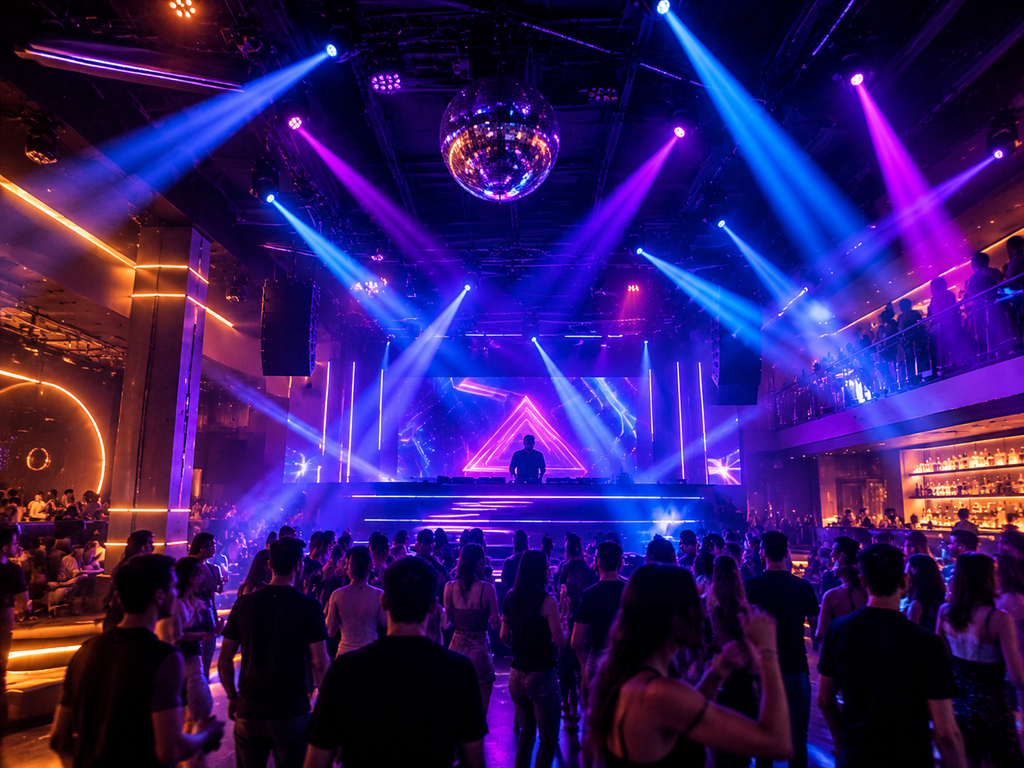
Moving head lights are among the most recognizable fixtures in modern nightclub lighting. Their motorized pan and tilt functions allow the beams to move across the ceiling, dance floor, DJ booth, and other designated areas.
Beam moving heads are useful for creating narrow aerial effects, while spot and wash models provide different options for patterns and broader coverage. The appropriate fixture depends on the desired beam characteristics, projection distance, and available installation positions.
For a stronger visual effect:
- Install moving heads at suitable positions above or around the dance floor.
- Use symmetrical beam movements to create coordinated patterns.
- Combine different movement speeds to avoid repetitive effects.
- Keep the DJ booth and main performance area as important visual focal points.
Moving heads are particularly useful for EDM events, DJ performances, and clubs that regularly change their music programming.
2. Add LED PAR Lights for Colorful Room Coverage
While moving heads create movement, LED PAR lights provide a stable foundation for nightclub lighting. They can wash walls, columns, stage backgrounds, and other architectural surfaces with coordinated colors.
For example, a club can use blue or purple washes to establish a cool atmosphere, then introduce warmer colors during different music sets. Multiple PAR fixtures can also be grouped to create consistent color coverage across the venue.
LED PAR lights are useful for:
- Coloring the walls and ceiling around the dance floor.
- Providing background lighting behind the DJ booth.
- Creating accent colors around columns and architectural features.
- Establishing softer lighting in lounge and VIP areas.
For venues that need both consistent color coverage and dynamic effects, combining PAR lights with moving heads is usually more practical than relying on either fixture type alone.
3. Use LED Light Bars to Build a Modern DJ Booth
The DJ booth is often the visual center of a nightclub. LED light bars can help turn this area into a recognizable feature rather than leaving it as a simple working station.
Install linear fixtures behind the DJ, along the booth structure, or around selected truss sections. Depending on the fixture and control functions, LED bars can produce continuous color lines, segmented effects, and synchronized lighting patterns.
Consider these applications:
- Horizontal LED bars behind the DJ to create a wide visual backdrop.
- Vertical arrangements to add height and structure.
- Pixel-controlled effects for coordinated color movement.
- Matching background colors with moving head and PAR lighting.
When designing a DJ booth, make sure decorative lighting does not obstruct the operator’s workspace or create unnecessary glare toward the DJ.
4. Introduce Strobe Lights for High-Energy Moments
Strobe lights produce rapid flashes that can emphasize music drops, transitions, and other selected moments during a performance. They are particularly common in electronic dance music environments where short bursts of intense light can add dramatic impact.
Instead of running strobes continuously, program them as a separate effect layer. This makes each sequence more noticeable and leaves room for other lighting effects between high-energy sections.
When planning strobe effects:
- Use adjustable flash rates and brightness where supported by the fixture.
- Coordinate strobe sequences with the music and other lighting cues.
- Avoid relying on continuous flashing as the main lighting effect.
- Consider photosensitive audience members and applicable venue safety requirements.
For more detailed fixture selection and application guidance, see our guide to club strobe lights and lighting effects.
5. Combine Wash Lighting with Haze for Greater Depth
Wash lighting and haze serve different functions, but they can complement each other in a nightclub environment. Wash fixtures provide broad color coverage, while controlled haze can make directional light beams more visible in the air.
For example, moving head beams can create crossing patterns above the dance floor, while wash fixtures maintain the overall color of the room. A suitable haze level helps reveal the beam paths without making the venue look excessively smoky.
Before using haze equipment, check the venue’s ventilation, fire detection arrangements, and operating requirements. Haze should be controlled according to the venue’s safety procedures rather than treated as an automatic part of every lighting scene.
6. Highlight Walls and Architectural Features
Nightclub lighting should not focus exclusively on the dance floor. Walls, columns, ceiling structures, and decorative installations can become part of the overall visual design.
LED wall wash lights and PAR fixtures are useful for coloring large surfaces, while LED bars can outline architectural features or create linear patterns. These effects help connect the main dance area with the rest of the venue.
For a more coordinated appearance, select a limited color palette and use different brightness levels across the room. This creates visual depth without making every surface equally bright.
7. Create a Separate Lighting Atmosphere for VIP Areas
VIP lounges and private seating areas usually have different requirements from the main dance floor. Instead of using constant high-intensity beams and fast movements, consider softer color washes and more controlled accent lighting.
LED PAR lights and suitable wall wash fixtures can provide a consistent atmosphere around seating areas, while selected accent fixtures highlight tables, decorative walls, or architectural details.
Keep these lighting zones independently controllable where possible. This allows the lighting operator to maintain a more relaxed atmosphere in the lounge while the dance floor uses more energetic effects.
8. Use DMX Programming to Coordinate the Entire System
Individual fixtures can create attractive effects, but a coordinated lighting system makes those effects work together. DMX control allows compatible moving heads, PAR lights, LED bars, and strobe fixtures to respond to programmed cues.
Rather than operating every light independently, organize fixtures into groups according to their functions. For example:
- Group 1: Main dance floor moving heads.
- Group 2: Wall and background wash lighting.
- Group 3: DJ booth LED bars.
- Group 4: Strobe and special effects.
- Group 5: VIP and ambient lighting.
This arrangement makes it easier to build different scenes, control the intensity of each lighting layer, and change the atmosphere throughout the night.
For a closer look at lighting control, read our guide to what a DMX controller does and how it controls stage lights.
3. Nightclub Lighting Design for Different Areas
A successful nightclub lighting design should account for the function of each area. Applying the same lighting treatment throughout the venue can make the space feel flat and reduce the impact of the main dance floor.
Dance Floor Lighting
The dance floor is usually the main focus of the lighting system. It needs enough visual movement to support the music while maintaining a clear distinction between background coverage and special effects.
A practical combination may include:
- Moving head beam fixtures for aerial effects.
- LED PAR or wash fixtures for general color coverage.
- Strobe lights for selected high-energy moments.
- Haze equipment where permitted and appropriate for the venue.
Fixture positions should be planned so that beams create visible patterns without continuously shining directly into guests’ eyes.
DJ Booth Lighting
The DJ booth should remain visually prominent without making the operator difficult to see. LED bars, selected moving heads, and background wash lighting can create a strong visual frame around the performance area.
Keep the booth lighting as a separate control group so its effects can continue during music transitions or lower-energy sections without requiring the entire room to change.
Bar and Entrance Lighting
Bars and entrances benefit from more controlled lighting. LED PAR lights, wall washers, and linear fixtures can highlight surfaces, signage, and architectural features without competing with the main dance floor.
Use the same core color palette as the main venue, but consider lower intensity and slower transitions in these areas.
VIP Lounge Lighting
VIP areas generally need a more comfortable visual environment. Soft color washes, wall lighting, and carefully positioned accent fixtures can create a distinct atmosphere while keeping the lounge connected to the overall nightclub design.
Independent dimming and scene control are useful when the venue needs to switch between private events, lounge service, and regular club operations.
4. Nightclub Lighting Setup Ideas by Venue Size
The number and type of fixtures required depend on the venue’s dimensions, ceiling height, installation positions, and desired effects. The following examples are starting points for planning, not fixed equipment specifications.
Small Nightclub or Compact DJ Venue
Smaller venues usually benefit from a simple system with clearly defined lighting roles. Too many fixtures can make the room visually crowded and difficult to control.
A practical starting configuration could include:
- 2 moving head fixtures for movement and beam effects.
- 4 LED PAR lights for basic color coverage.
- 1 LED light bar behind the DJ booth.
- 1 suitable DMX controller or compatible control solution.
This setup provides a foundation for color, movement, and background effects. Additional fixtures can be introduced as the venue expands its lighting requirements.
Medium-Sized Dance Club
A medium-sized club may have a larger dance floor, a dedicated DJ booth, and separate seating or bar areas. The lighting system should therefore provide more independent control zones.
A possible configuration includes:
- 4–6 moving head fixtures for the dance floor and DJ area.
- 6–8 LED PAR or wash fixtures for background and wall coverage.
- 2–4 LED light bars for booth and structural effects.
- 1–2 strobe fixtures for selected music cues.
- DMX control for grouping fixtures and programming scenes.
For this type of venue, it is useful to separate the main dance floor effects from the ambient lighting around the bar and lounge.
Large Nightclub or Entertainment Venue
Larger venues often require a more comprehensive system with multiple truss positions, longer projection distances, and independent lighting zones.
The lighting design may combine:
- Multiple beam and spot moving heads for long-distance effects.
- Wash moving heads and LED PAR fixtures for broader coverage.
- LED bars or linear fixtures for large-scale background effects.
- Strobe fixtures for high-impact show sequences.
- A professional lighting console or control system for complex programming.
At this scale, fixture quantity should be determined through venue measurements and lighting tests. Ceiling height, throw distance, beam angle, power distribution, rigging capacity, and maintenance access all influence the final equipment plan.
Quick Comparison of Nightclub Lighting Setups
| Venue Type | Main Lighting Needs | Suggested Fixture Groups |
| Small club | Basic movement and color | Moving heads, PAR lights, LED bars |
| Medium club | Multiple lighting zones | Moving heads, PAR or wash lights, strobes, LED bars |
| Large nightclub | Long-distance effects and coordinated control | Beam and wash moving heads, PAR lights, LED bars, strobes, professional control |
5. How to Program Nightclub Lighting for Different Music Styles
Different music styles create different expectations for lighting. A system that works well for an EDM performance may feel too aggressive for a lounge-oriented event. Programming should therefore reflect the music, audience, and atmosphere of the venue.
EDM and Electronic Dance Music
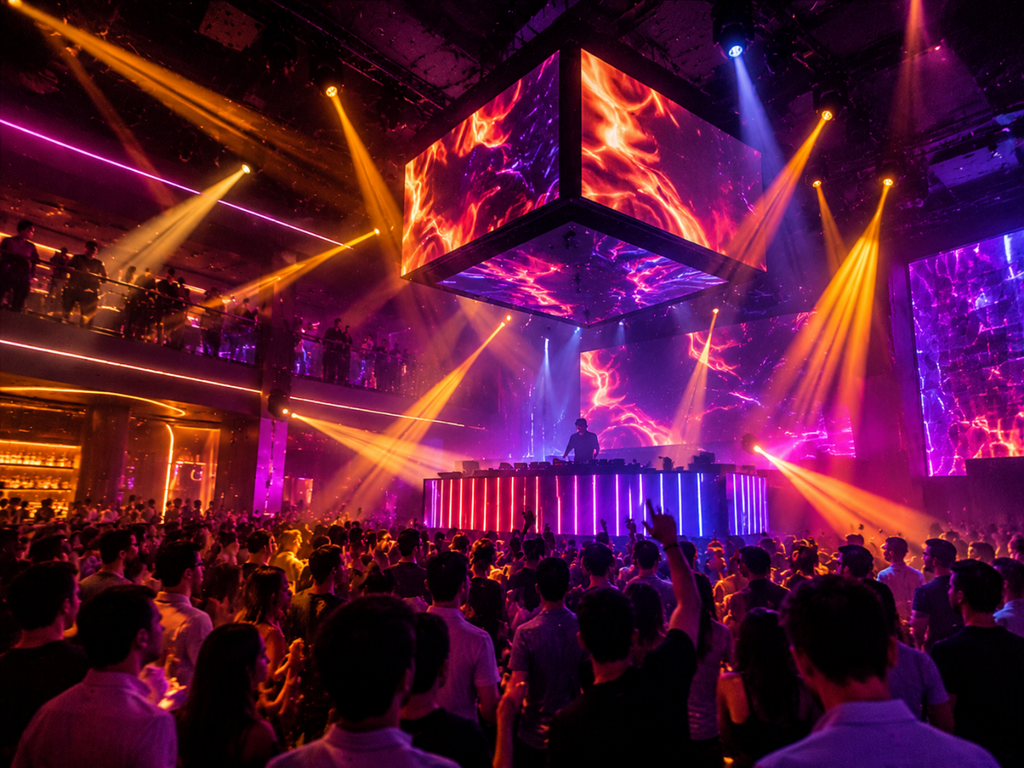
EDM performances often use strong beam movements, saturated colors, and carefully timed effects. Moving heads can create crossing patterns above the dance floor, while LED bars and strobes add visual accents during selected drops.
Build contrast between the buildup, drop, and breakdown rather than using the same high-energy scene throughout the set.
House and Techno
House and techno events can benefit from repetitive but controlled lighting patterns. Slow movement, consistent color palettes, and gradual changes can support the rhythm without overwhelming the music.
Moving heads and background LED fixtures can be programmed with longer transitions, while more intense effects are reserved for selected moments.
Hip-Hop and R&B Events
Hip-hop and R&B performances often benefit from a combination of strong visual accents and controlled background lighting. LED bars around the DJ booth, colored washes, and selected spot effects can create a distinctive stage environment.
Keep the main performance area visually clear so that the DJ and performers remain the center of attention.
Retro and Themed Club Nights
Retro events can use warmer colors, slower movement, and decorative lighting to create a different atmosphere from a regular club night. LED PAR fixtures can establish the main color palette, while selected effect fixtures add movement and visual interest.
For themed events, the lighting system should be flexible enough to change scenes without requiring a complete physical rearrangement of the fixtures.
6. How to Choose Professional Club Lighting Equipment
For nightclub owners, rental companies, and lighting project contractors, choosing equipment involves more than comparing wattage or fixture prices. The right selection should match the venue’s lighting requirements, installation conditions, operating frequency, and control system.
Check the Fixture’s Actual Lighting Function
Start by identifying the effect you need. Beam fixtures, wash fixtures, spot fixtures, and PAR lights have different optical characteristics. A narrow beam is not a replacement for broad coverage, and a wash fixture is not designed to produce the same aerial effect as a dedicated beam light.
Compare beam angles, zoom ranges, output specifications, and the intended working distance before selecting a model.
Consider DMX Compatibility and Control Requirements
When purchasing several fixtures, check their DMX modes, channel requirements, supported functions, and compatibility with the existing control system. Different fixtures may use different channel layouts, so planning the DMX addresses and control groups in advance can reduce installation and programming problems.
Evaluate Cooling and Long-Term Operation
Nightclub lights may operate for extended periods during regular events. Check the fixture’s cooling design, operating temperature requirements, maintenance access, and manufacturer documentation.
For professional venues, reliability and serviceability matter because equipment downtime can affect scheduled events.
Check Installation and Environmental Requirements
Confirm fixture weight, mounting options, power requirements, connector types, and applicable protection ratings. Indoor fixtures should not be assumed suitable for outdoor installations or wet environments.
All overhead fixtures require appropriate mounting hardware and secondary safety measures according to the venue’s rigging procedures and local requirements.
Consider Customization for Larger Projects
For distributors, rental companies, and venue operators purchasing multiple fixtures, OEM/ODM customization may help meet specific project requirements. Relevant considerations can include LED configuration, optical characteristics, housing, control functions, branding, and packaging.
When requesting a quotation, provide the manufacturer with the intended application, estimated quantity, installation environment, and preferred control requirements. This makes it easier to evaluate whether a proposed fixture range matches the project.
7. Common Nightclub Lighting Design Mistakes to Avoid
Even when a venue uses professional lighting equipment, poor planning can reduce the overall effect. These are some common problems to consider during design and installation.
Using Too Many Effects at the Same Time
Activating every moving head, strobe, and color effect simultaneously can make the room visually confusing. Give each fixture group a clear role and use lighting scenes to create contrast between different parts of the performance.
Ignoring Background and Ambient Lighting
A dance floor filled with beams may still look visually incomplete if the surrounding walls, DJ booth, and architectural features remain dark. Background and wash lighting help connect the different parts of the venue.
Choosing Fixtures Based on Wattage Alone
Higher wattage does not automatically mean a better result. Optical design, beam angle, fixture type, projection distance, and installation position all influence how light appears in the venue.
Failing to Plan Control Groups
When all fixtures are programmed without a clear group structure, making adjustments during a live event can become unnecessarily difficult. Separate the main lighting functions and prepare scenes for different music sections.
Overlooking Maintenance and Installation
Nightclub lighting systems need routine inspection. Check power and signal connections, fixture mounting, cooling paths, cable conditions, and other maintenance requirements according to the manufacturer’s instructions and venue procedures.
Professional installation and operation should also account for electrical loads, rigging requirements, audience exposure, and local safety regulations.
8. Frequently Asked Questions About Nightclub Lighting
What lights are commonly used in nightclubs?
Common nightclub lighting equipment includes LED moving head lights, LED PAR lights, wash fixtures, LED light bars, strobe lights, and other effect fixtures. Many professional venues also use DMX control systems to coordinate the different lighting groups.
What is the best lighting for a nightclub dance floor?
A combination of moving head lights, LED PAR or wash fixtures, and selected strobe effects is a practical starting point. Moving heads create dynamic movement, wash fixtures provide color coverage, and strobes add short bursts of visual impact.
How do you make nightclub lights sync with music?
Nightclub lighting can respond to music through sound-active modes, compatible software, or a programmed lighting control system. DMX controllers can coordinate fixture movement, color, brightness, and effects according to programmed cues. The available functions depend on the fixtures and control equipment.
Are LED lights suitable for professional nightclub lighting?
Yes. LED stage lighting fixtures are widely used in clubs, DJ venues, and entertainment spaces. They are available in different configurations for wash coverage, moving beams, color effects, and strobe applications. The correct choice depends on the venue’s lighting requirements and the specifications of the fixture.
How many moving head lights does a nightclub need?
There is no fixed number for every nightclub. The required quantity depends on the dance floor size, ceiling height, mounting positions, throw distance, and desired beam coverage. A compact venue may need only a small number of fixtures, while a large club may require multiple positions and independent lighting zones.
What is the difference between club lighting and stage lighting?
Club lighting usually focuses on atmosphere, dance floor effects, DJ performances, and continuous changes in visual energy. Stage lighting may place greater emphasis on performer visibility, controlled coverage, and specific production cues. However, both applications use many of the same fixture types, including moving heads, PAR lights, wash fixtures, and strobes.
Build a Nightclub Lighting System with the Right Fixture Combination
A successful nightclub lighting design is not about installing as many lights as possible. It is about choosing fixtures that serve different purposes and coordinating them into a system that supports the venue’s atmosphere and performance requirements.
Moving head lights create movement and aerial effects, LED PAR lights establish the color environment, LED bars add structure to the DJ booth and background, and strobe fixtures provide high-energy accents. With suitable DMX programming, these lighting layers can work together to create different scenes throughout the night.
At Tealshine, we manufacture LED stage lighting products for distributors, rental companies, entertainment venues, and professional lighting projects. Our product range includes moving head lights, LED PAR can lights, LED strobe lights, LED light bars, and wall wash fixtures.
Whether you are upgrading an existing nightclub, sourcing lighting equipment for a new venue, or developing a product range for your market, our team can help you evaluate suitable fixture combinations and OEM/ODM options.
Contact Tealshine to discuss your nightclub lighting project and find suitable LED lighting solutions for your application.