Professional High Quality Stage Lighting Manufacturer


Table of Contents
Six fixtures spaced evenly along a 10-meter truss can still leave visible dark gaps in the wash — a common mistake in par can stage lighting setups that no spec sheet warns you about. Get the spacing and angle right, and a basic par can stage lights rig covers a full backdrop evenly without adding a single extra fixture. Get it wrong, and even expensive units leave a striped, uneven wash.
This guide covers the actual setup math — spacing, beam angle, and mounting height — not just which fixture to buy.
The Core Setup Math: Spacing, Angle, and Overlap
Coverage width at a given distance depends on beam angle, not fixture count. A narrower beam angle needs closer fixture spacing to avoid gaps; a wider angle covers more ground per fixture but blends less crisply at the edges.
As a planning rule, space fixtures so each one’s coverage overlaps its neighbor by roughly 10–20%. Too little overlap leaves a visible seam; too much wastes fixtures and washes out contrast between them.
| Beam Angle | Coverage Width at 3m | Coverage Width at 6m |
| 25° | ~1.3m | ~2.7m |
| 40° | ~2.2m | ~4.4m |
| 60° | ~3.5m | ~6.9m |
Figures above are trigonometric estimates for planning purposes (2 × distance × tan(angle ÷ 2)), not manufacturer-published specs — use them to rough out spacing, then confirm final placement on-site.
Total Output by Fixture Type
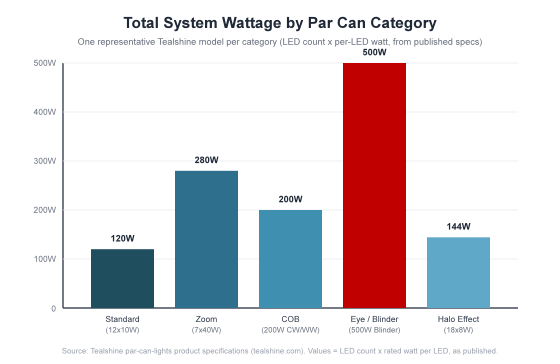
Beam angle decides spread; total wattage decides how far that spread stays visible. Across Tealshine’s par can range, output varies sharply by category — a zoom fixture built for throw distance carries more than double the wattage of a standard wash unit.
Where to Aim Each Fixture
- Backdrop wash — fixtures aimed at the rear wall or cyclorama, spaced for even overlap, set the base color for the whole stage.
- Downstage front light — angled from the house side toward performers, filling in shadows that overhead or backdrop light leaves on faces.
- Side wash — positioned stage left and right, adding depth and separating performers from the backdrop color visually.
Mounting Height and Truss Considerations
Mount backdrop wash fixtures at a consistent height across the full run — uneven mounting heights are one of the most common causes of a visibly uneven wash, even when spacing and angle are correct. For a standard 6-meter truss height, a 25°–40° beam angle typically covers a stage width without needing more than one row of fixtures.
Common Setup Mistakes
- Uneven mounting height — even a 30cm difference between fixtures creates a visible stripe in the wash.
- Under-spacing a wide-angle fixture — wastes fixtures and budget by over-overlapping coverage that was already even.
- Ignoring venue depth — a beam angle that covers a shallow stage well may leave the back of a deep stage under-lit.
Indoor Venues vs. Outdoor and Tented Stages
Indoor theaters and concert halls generally run IP20 fixtures without issue. Outdoor stages and tented events need IP65-rated units — confirm the rating before finalizing a rig for any venue without full weather protection. See our full breakdown of par can types and IP ratings for the complete range.
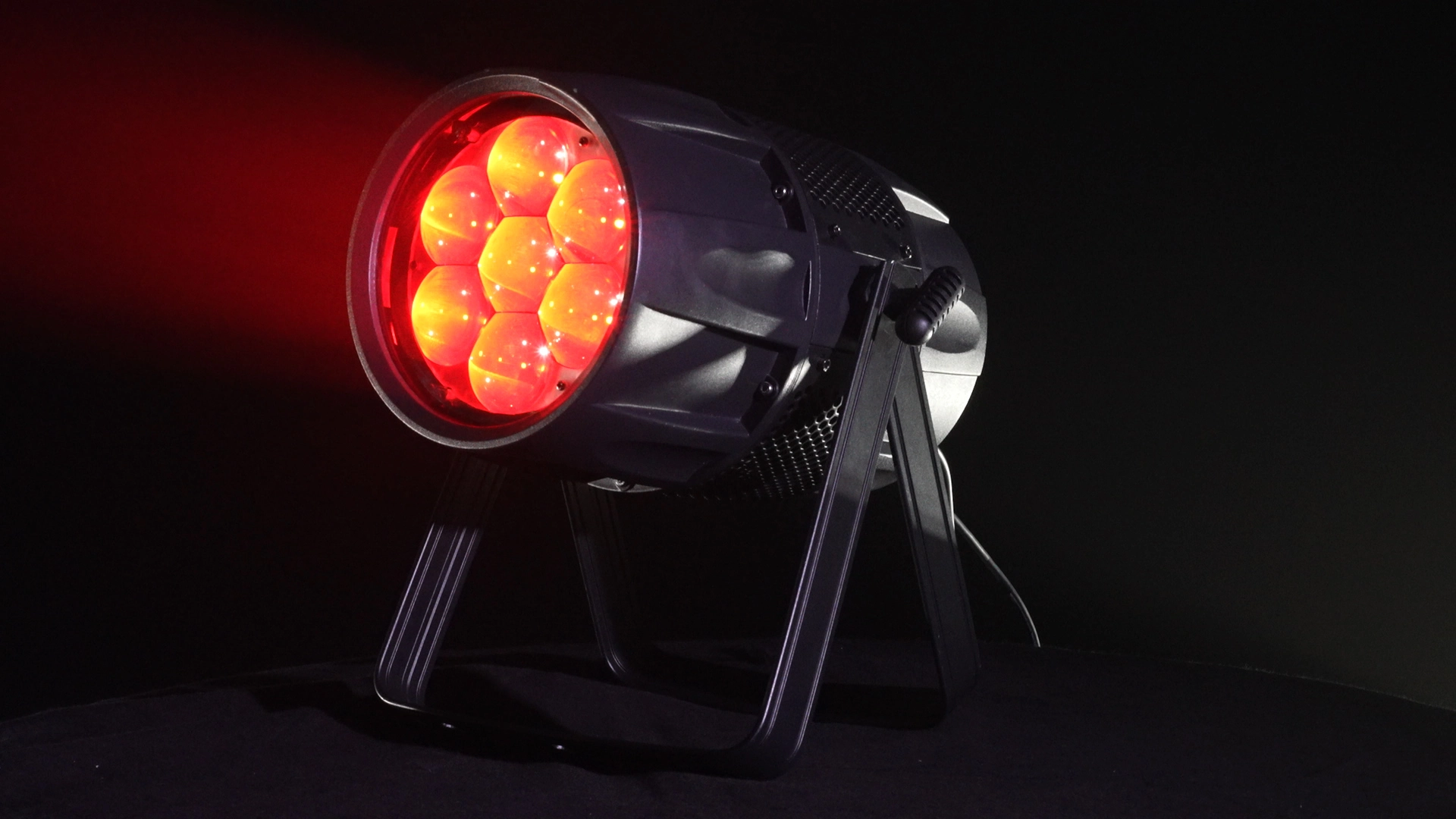
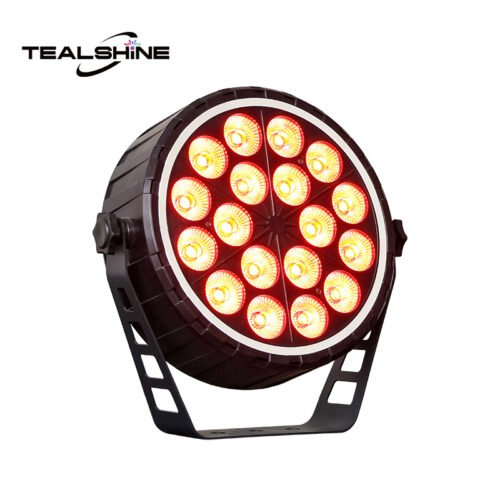
For high-output blinder or zoom fixtures suited to larger stages,Tealshine’s 7×40W par can zoom and 500W blinder eye cover the higher end of the range shown above.
Frequently Asked Questions
How far apart should par cans be spaced for even coverage?
It depends on beam angle and throw distance — as a starting point, aim for roughly 10–20% overlap between each fixture’s coverage area, then adjust on-site based on how the wash actually looks.
What beam angle works best for a standard theater backdrop?
25°–40° covers most stage widths from a typical 5–6 meter truss height without needing more than one row of fixtures.
Do I need different fixtures for indoor vs. outdoor par can stage lighting?
Yes, if the outdoor setup lacks full weather protection — confirm an IP65 rating for any fixture that will be exposed to rain, dust, or humidity for an extended period.
Final Thoughts
A clean par can stage lighting setup comes down to matching beam angle to throw distance and keeping mounting height consistent across the run — not the number of fixtures or their total wattage. Rough out spacing with the coverage table above, then confirm the actual wash on-site before locking in a final rig.
Browse Tealshine’s full par can lighting range to compare all 12 models by output and beam angle.