Professional High Quality Stage Lighting Manufacturer


Table of Contents
Search “par can bulbs” and most results assume a traditional fixture with a swappable lamp you can pull out and replace. Most modern LED par cans don’t work that way at all — the LED engine is sealed into the fixture, not sold as a separate par can light bulb you’d order to replace on your own. That single difference changes how buyers should think about maintenance, lifespan, and what “replacement” actually means for the fixture they own.
The Short Answer: Most LED Par Cans Don’t Use Replaceable Bulbs
A traditional PAR-64 fixture holds a single sealed-beam lamp that screws or clips into a socket — when it burns out, you buy a new lamp and swap it in minutes. An LED par can replaces that entire lamp-and-socket system with a fixed array of LED diodes wired directly to the fixture’s internal driver board. There’s no separate bulb to unscrew, because the light source and the fixture are built as one sealed unit.
How Traditional PAR-64 Bulbs Actually Worked
The traditional lamp — commonly called a PAR-64 — was a self-contained halogen bulb with its own built-in reflector and lens, sized 8 inches in diameter (the “64” refers to eighths of an inch). Buyers kept spares on hand because halogen lamps have a limited filament life, typically a few hundred hours, and burning one out mid-show meant a quick swap rather than a fixture replacement.
That serviceability was a genuine advantage of the old format: a $15–30 replacement lamp kept a fixture running indefinitely, and inventory management meant stocking spare bulbs, not spare fixtures. Rental companies running large halogen inventories commonly kept dozens of spare lamps on hand precisely because failure was routine and expected, not exceptional — a working assumption that doesn’t carry over cleanly to LED fixtures, where the equivalent spare-parts strategy looks completely different.
What “Bulb” Means on an LED Par Can
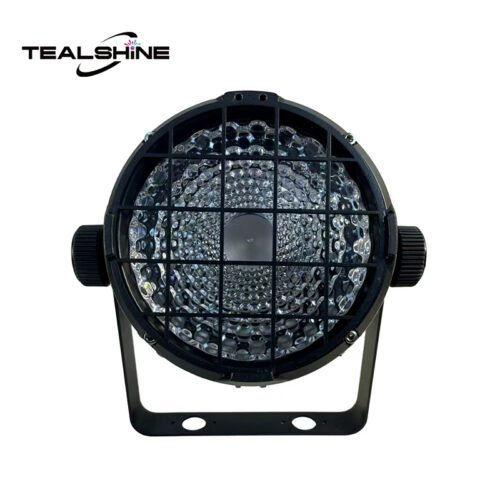
There’s no single component on an LED par can that functions like a traditional bulb. Instead, three parts work together: the LED diode array (the actual light source, wired directly to the circuit board), the driver — the electronics converting incoming power into the correct current for the LEDs — and the housing, which also serves as a heat sink drawing heat away from the diodes.
| Traditional PAR-64 | LED Par Can | |
| Light source | Removable sealed-beam halogen lamp | Fixed LED array wired to the circuit board |
| Typical life before failure | A few hundred hours | Commonly rated ~50,000 hours |
| What you replace when it fails | The lamp only (a few minutes, low cost) | Usually the fixture, or a driver/board repair |
| Spare parts to stock | Spare lamps | Spare fixtures (lamp swaps aren’t applicable) |
What Actually Fails on an LED Par Can (and What Can Be Serviced)
The LED diodes themselves rarely fail outright before the fixture is retired. What actually needs attention over a fixture’s working life is usually one of these:
- Driver board — the component most likely to fail before the LEDs do, since it handles the electrical conversion and takes the brunt of power fluctuations and heat cycling. A fixture that suddenly won’t power on, or flickers instead of running steady, points here before it points to the LEDs.
- Cooling fan (on fan-cooled models) — a mechanical wear part, unlike the sealed LED array itself. A failing fan often shows up as gradually reduced brightness as the fixture throttles output to manage heat, well before the fan stops entirely.
- Lens and housing seals — degrade with UV and weather exposure on outdoor-rated units well before the LED output does. A compromised seal lets moisture reach internal components long before it’s visible from outside the housing.
- Connectors and cabling — repeated coiling, transport, and load-in wear on power and DMX connectors is a common failure point that has nothing to do with the LED source at all, and is often the cheapest and fastest of these issues to fix.
Some manufacturers offer board-level repairs through authorized service rather than full fixture replacement — worth asking about directly if a fixture fails within a reasonable service life, rather than assuming the entire unit is disposable.
When You Might Still Need a Traditional PAR Bulb
If you’re maintaining older halogen inventory — inherited gear, a rental fleet that hasn’t fully converted, or fixtures purchased before LED became standard — traditional PAR-64 lamps are still manufactured and sold as standalone replacement bulbs. Confirm the wattage and beam spread (narrow, medium, or wide) match your existing fixture’s original specification before ordering, since swapping in a mismatched lamp changes both output and beam angle.
How Long an LED Par Can’s Light Source Actually Lasts
LED engines are commonly rated for roughly 50,000 hours of usable life before significant output decline — for a fixture run 3–4 hours per event, a few times a month, that translates to decades of service from the LED source itself. In practice, the driver board or housing seals typically need attention well before the diodes reach that figure, which is why a realistic fixture lifespan conversation should focus on the electronics and housing, not the LEDs.
The Cost Comparison Most Buyers Don’t Run
A halogen PAR-64 lamp typically runs $15–30 and lasts a few hundred hours — for a fixture used a few times a month, that’s a replacement lamp every year or two, indefinitely, for as long as the fixture housing itself keeps working. An LED par can carries a higher upfront price and no equivalent recurring lamp cost, but if the driver board fails outside a warranty window, repair or replacement can cost meaningfully more than a halogen lamp swap ever would.
Neither model is simply “cheaper” — halogen trades a lower upfront cost for a small recurring expense indefinitely, while LED trades that recurring cost for a larger, less frequent expense if something beyond the LEDs themselves eventually fails. For inventory run heavily and often, LED’s lower running cost and dramatically longer light-source life usually wins on total cost over several years.
Extending an LED Par Can’s Working Life
- Keep vents and heat sinks clear of dust — restricted airflow raises internal temperature, which accelerates driver board wear faster than anything else in normal use.
- Avoid running at maximum brightness continuously when it isn’t needed — lower output settings reduce heat load and generally extend driver life.
- Inspect connectors before each use — catching a worn cable or connector early is far cheaper than the fixture failure it eventually causes.
Frequently Asked Questions
Can I replace just the bulb in an LED par can?
Generally no — most LED par cans use a sealed, non-removable LED array rather than a socketed bulb. If the light output fails, the issue is more likely the driver board than the diodes themselves, and repair or replacement depends on the manufacturer’s service options.
Do LED par cans ever burn out like traditional bulbs?
LED diodes degrade gradually rather than failing suddenly the way a halogen filament does. A sudden total failure is more often a driver board or power supply issue than the LEDs themselves reaching end of life.
Where can I buy a traditional PAR-64 bulb if I still need one?
Traditional sealed-beam PAR-64 lamps are still manufactured and sold through stage lighting suppliers, typically specified by wattage and beam spread (narrow, medium, wide, or very wide) to match your existing fixture.
Is it worth repairing an LED par can, or should I just replace it?
It depends on which component failed. A driver board issue is often worth repairing, especially within a few years of purchase. If the housing, lens, or heat sink has degraded significantly — common on older outdoor-rated units — replacement is usually more cost-effective than repair.
Final Thoughts
The short version: if you’re shopping for par can bulbs expecting a simple swap-in replacement, most modern LED par cans won’t work that way — the light source is sealed into the fixture rather than sold as a separate component. Understanding that difference upfront changes how to budget for maintenance and what to actually ask a supplier when a fixture’s output starts to fade.
Browse Tealshine’s full LED par can range to compare sealed LED fixtures built for long service life without lamp replacement.