Professional High Quality Stage Lighting Manufacturer


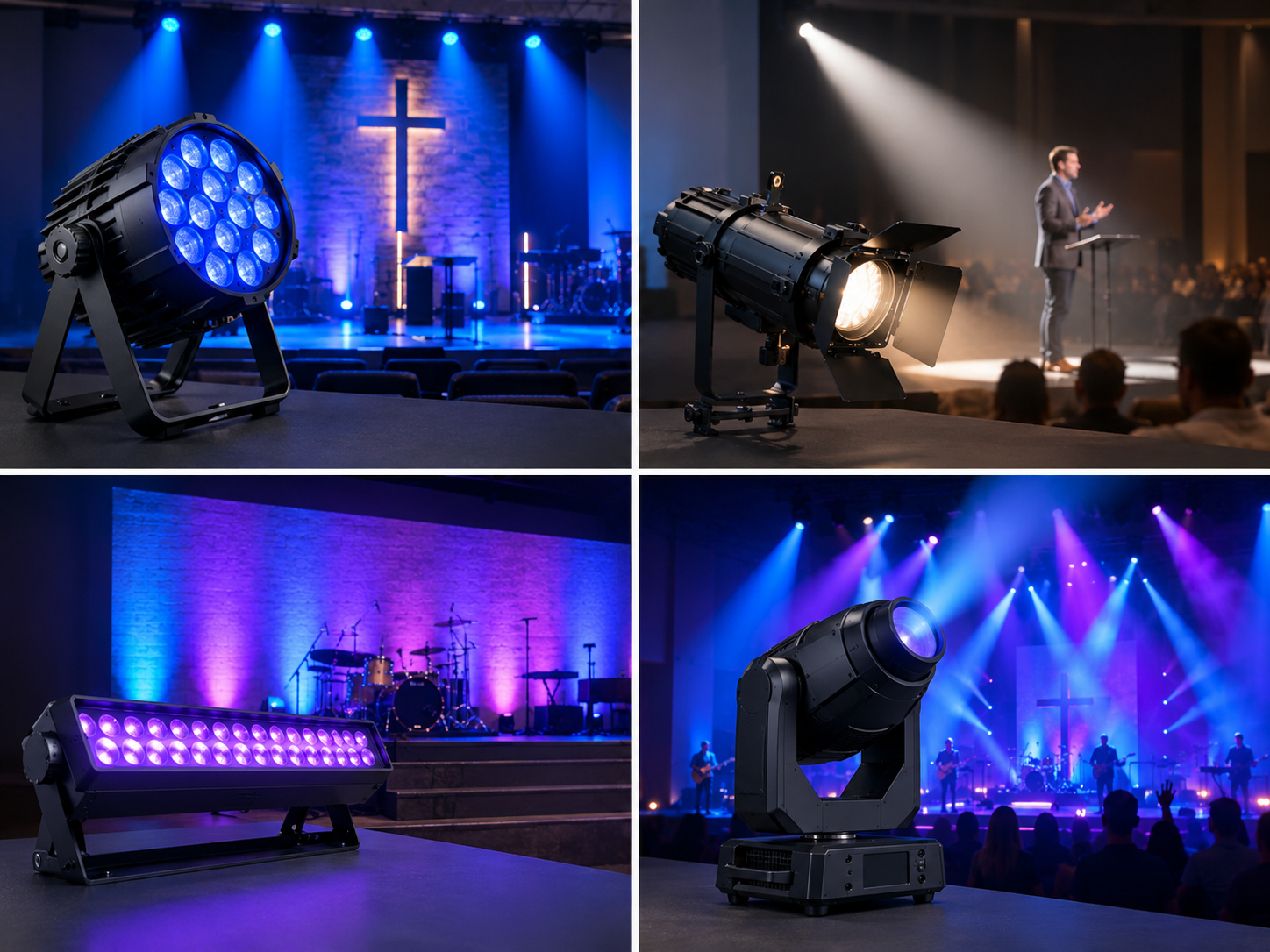
Table of Contents
Small church stage lighting does not need to be complicated or expensive. The most useful setup is one that makes pastors, speakers, musicians, and worship leaders easy to see while giving the stage enough depth and color for different parts of a service. For many churches, the best starting point is a balanced front-lighting system, a few LED PAR fixtures for background color, and a control method that volunteers can operate confidently.
The right small church stage lighting design depends on more than the number of fixtures. Stage width, ceiling height, mounting positions, livestream requirements, ambient light, and the type of worship service all affect the final result. A small room used mainly for sermons has different needs from a church with a full worship band, a projection screen, and weekly online broadcasts.
This guide explains how to plan church stage lighting in practical stages, choose suitable fixtures, avoid common purchasing mistakes, and build a system that can grow with the church’s needs.
1. Start with the Needs of Your Church Stage
Before comparing church stage lights, identify what the lighting system needs to accomplish. Buying fixtures before understanding the room can lead to uneven coverage, unnecessary effects, or equipment that is difficult to install and operate.
Measure the Stage and Ceiling Height
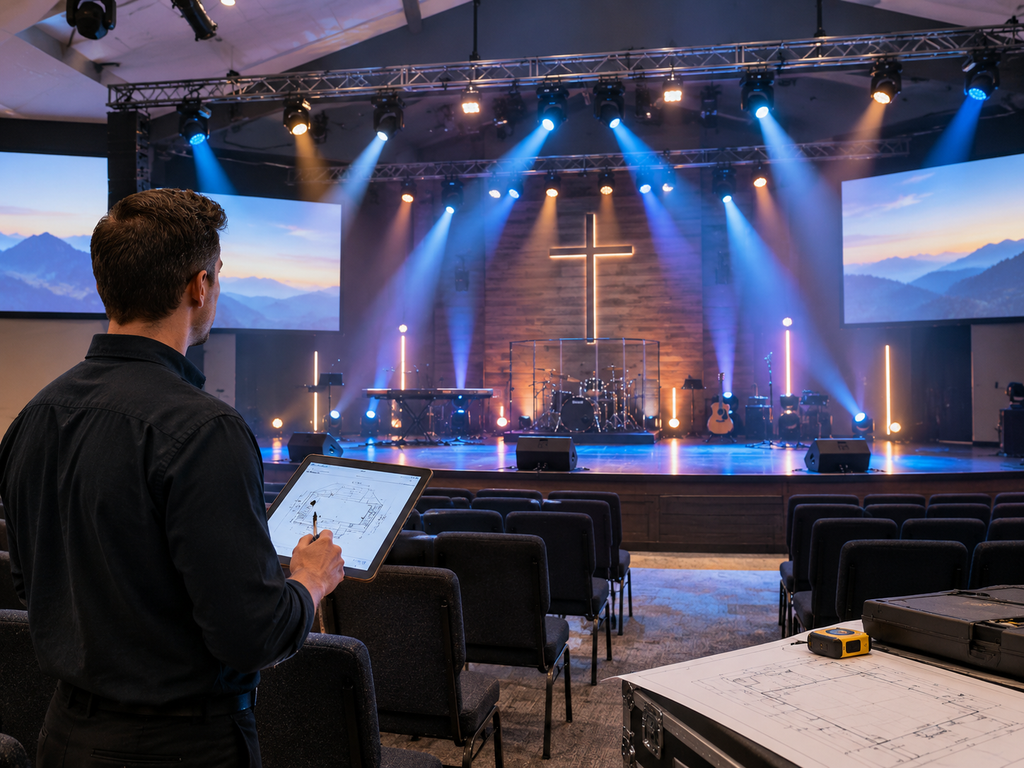
Record the width and depth of the stage, the height of the ceiling, and the distance between potential fixture positions and the performers. These measurements help determine the required beam spread and the number of lighting positions needed to cover the stage.
A wide stage may require several fixtures aimed at different zones to avoid bright areas in the center and dark areas near the sides. A shallow platform may need fewer fixtures, but the available mounting angles can still affect how evenly faces are illuminated.
Also identify existing ceiling beams, trusses, wall mounts, power outlets, and cable routes. If the church cannot install overhead equipment easily, floor stands or other approved mounting arrangements may be more practical. Any overhead installation should be assessed for structural capacity and appropriate safety hardware.
Decide What Happens on the Stage
List the main activities that take place during a typical service. These may include sermons, announcements, acoustic music, a full worship band, choir performances, seasonal productions, and livestream recording.
For a sermon-focused stage, clear and consistent illumination is usually the first priority. A worship band may need additional side lighting and colored background light. A church that records or streams services should also consider how the fixtures perform on camera, not just how they look to the audience.
This initial assessment creates a useful purchasing plan. It prevents the lighting budget from being spent on dramatic effects before the basic lighting requirements have been met.
2. Build the Lighting Design Around Three Layers
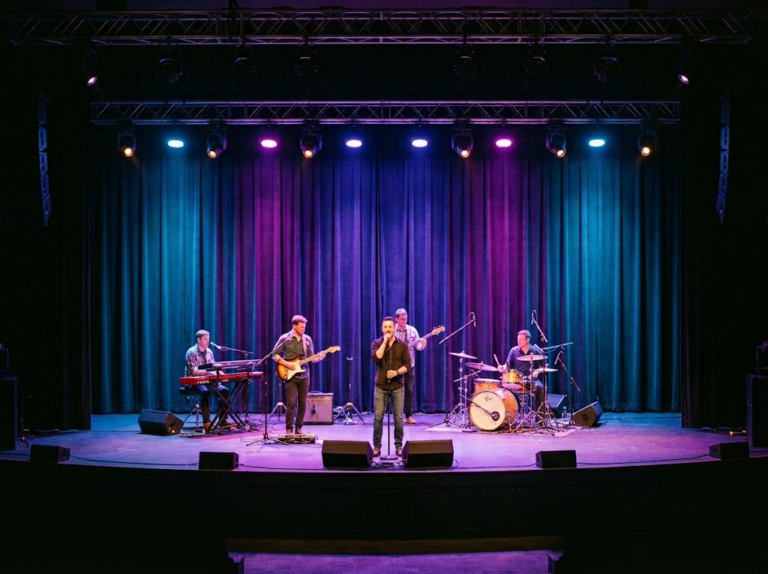
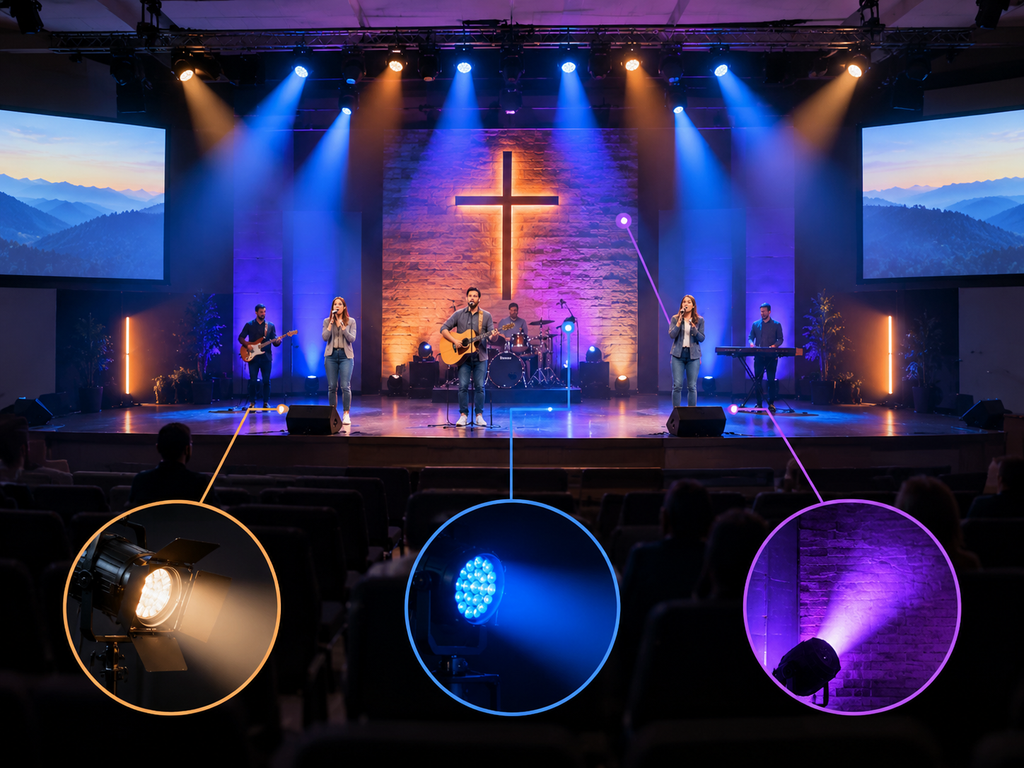
A practical church stage lighting solution can be organized into three layers: front lighting for visibility, fill or side lighting for balance, and background or backlighting for depth. Not every church needs three completely separate groups of fixtures, but thinking in layers makes it easier to identify gaps in the existing setup.
Front Lighting: Make Faces Clearly Visible
Front lighting illuminates the people facing the congregation. It helps the audience see facial expressions, follow a speaker, and recognize the people leading worship. It also provides the foundation for video recording and livestreaming.
Instead of pointing every fixture directly at the center of the stage, divide the performance area into practical lighting zones. Aim fixtures from complementary front angles where possible, then check whether the pastor, singers, and musicians receive reasonably even illumination when they move between positions.
Watch for strong shadows around the eyes, overly bright foreheads, and light spilling onto projection screens. If one person appears much brighter than another, the solution may be fixture positioning or intensity adjustment rather than purchasing a more powerful light.
Fill and Side Lighting: Improve Balance
Side lighting can help illuminate musicians and performers who move across the platform. Fill lighting can reduce excessive contrast when the front light alone leaves one side of a person or stage area too dark.
Small churches do not necessarily need a separate fixture for every lighting role. The goal is to identify where the current setup produces distracting shadows or inconsistent brightness and correct those problems with the fewest practical adjustments.
Backlighting and Background Color: Add Depth
Lighting from behind or above performers can separate them visually from a dark background. Colored light on a rear wall, curtain, or scenic element can also make the stage feel less flat without requiring complex moving effects.
LED PAR lights are often useful for this role because fixed fixtures can provide repeatable color coverage. Position and beam spread matter: a fixture that is too close to the wall may create a bright hotspot, while fixtures spaced too far apart may leave visible gaps.
For a small church, balanced front light and a controlled background wash are often a more useful starting point than filling the stage with moving beams.
3. Which Church Stage Lights Should You Choose?
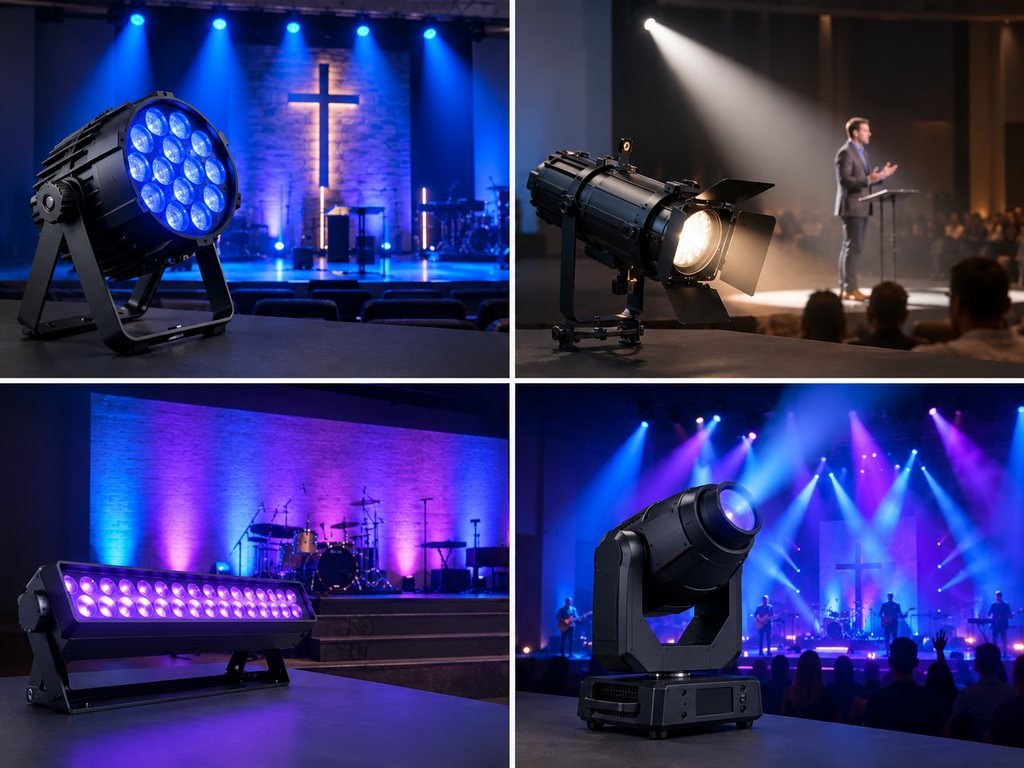
Different fixtures solve different lighting problems. The best choice depends on whether the church needs steady coverage, a focused highlight, a colored background, or movement during music. The following options can be considered separately or combined into one system.
LED PAR Lights for General Stage Coverage
LED PAR fixtures are a practical option for fixed-position lighting. Depending on their output, optics, and color configuration, they can illuminate sections of the stage, provide colored fill, or wash a background with consistent color.
When comparing LED lights for church use, check the beam angle, actual light output, color-mixing options, dimming behavior, cooling noise, control modes, and mounting requirements. LED wattage alone does not tell you how much usable light will reach a person standing several meters away.
For churches that need repeatable looks each week, fixed PAR fixtures can also simplify programming. Once the fixtures are aimed and focused, operators can save suitable intensity and color settings rather than repositioning lights before every service.
Spotlights for a Pastor, Speaker, or Solo Performer
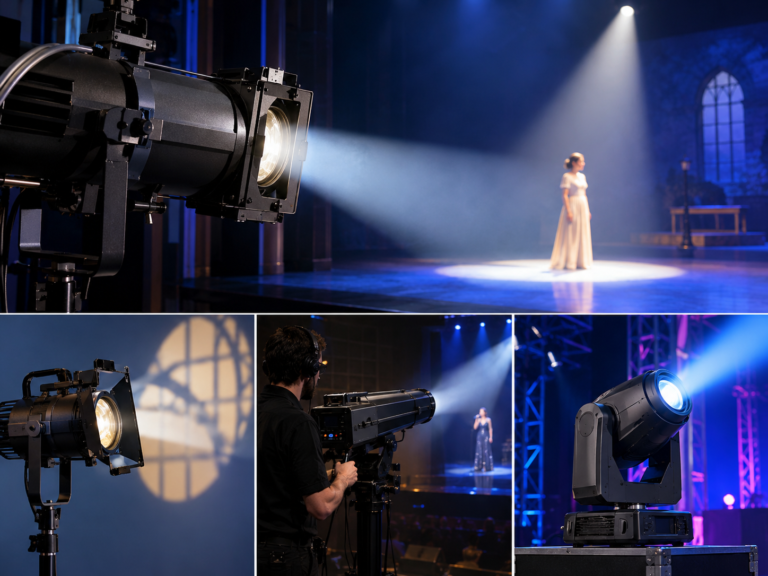
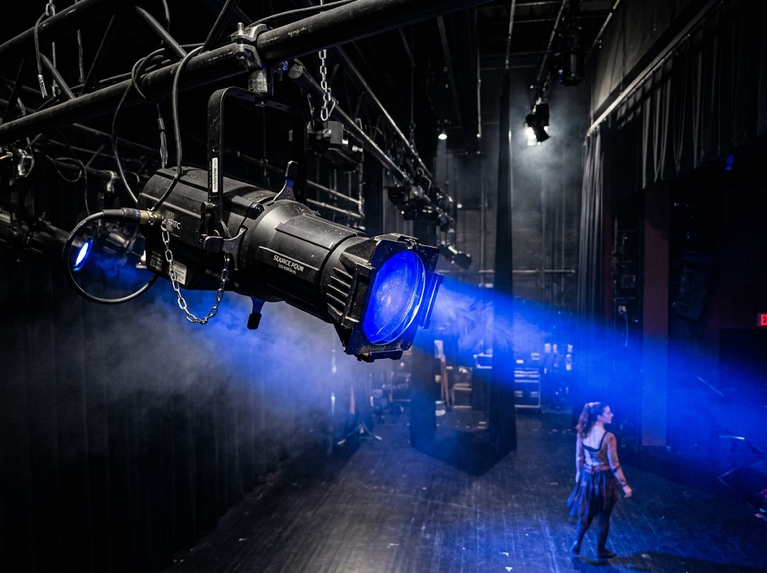
A spotlight for a church stage can be useful when one person needs to stand out from the rest of the platform. It may help focus attention on a speaker, solo singer, or a specific performance area.
However, a narrow spotlight should not automatically replace general front lighting. If the beam is too tight, a speaker may become bright while the surrounding musicians remain difficult to see. The beam angle and throw distance must match the target area.
Before choosing a spotlight, confirm whether the project needs a fixed focused beam, an adjustable beam, or a fixture that can change position during a service. These are different requirements and may call for different fixture designs.
Wash Lights for Backgrounds and Wider Areas
Wash lighting spreads light across a broader area rather than concentrating it into a narrow shaft. In a church, it can add color to a rear wall, illuminate a backdrop, or provide a broad layer of color across part of the stage.
A fixed wash fixture can be sufficient when the lighting position rarely changes. A moving-head wash may be worth considering when the church regularly changes stage layouts or wants to reposition the wash during music and special productions.
Choose based on coverage and control requirements, not simply on the number of LEDs. A fixture with a suitable beam spread and mounting distance may provide more useful coverage than a higher-wattage fixture with optics that do not fit the room.
Moving Head Lights for Dynamic Worship Sets
Moving head lights can change direction during a performance, allowing operators to create changing positions, color transitions, and selected effects. They may suit churches with a contemporary worship band, youth events, concerts, or seasonal productions that require more dynamic lighting.
They are not essential for every small church. A moving head adds mechanical movement, programming requirements, and additional decisions for the operator. If the main goal is simply to illuminate a pastor clearly, fixed front lighting should generally be addressed first.
When considering moving heads, check the fixture type carefully. Beam fixtures are designed for concentrated shafts and aerial effects, while wash fixtures spread light across a wider surface. One should not be assumed to perform the same job as the other.
4. How to Plan Small Church Lighting on a Limited Budget
A limited budget does not mean every fixture has to be the cheapest available option. A more useful approach is to prioritize the lighting functions that matter most, choose equipment that fits the room, and leave room in the budget for installation and control.
Stage One: Correct the Main Visibility Problems
Begin by checking whether the people on stage can be seen clearly from the back of the congregation. If faces are too dark, unevenly lit, or covered by strong shadows, prioritize the front-lighting positions and the fixtures responsible for them.
Before buying new equipment, test the existing lights at the actual mounting distance. Adjusting fixture angles, balancing intensity, and redirecting spill can sometimes improve the result without adding more fixtures.
Stage Two: Add Consistent Background Color
Once basic visibility is satisfactory, consider adding fixed LED PAR lights or suitable wash fixtures for the background. A controlled color layer can create separation between performers and scenery while keeping the overall lighting arrangement relatively simple.
Choose a small number of useful looks first. For example, the church might use a neutral look for sermons, a restrained background color for singing, and a separate setting for announcements. The exact colors and brightness levels should suit the room, camera setup, and preferences of the church.
Stage Three: Add Effects Only When They Solve a Real Need
Moving heads and other effect fixtures can add visual movement during music, but they should support the service rather than compete with speakers or the congregation’s attention. If the current system already covers faces and backgrounds well, dynamic fixtures can be considered as a later upgrade.
A phased approach also allows the church to learn how the existing fixtures are used before committing to more equipment. Actual usage is a better guide for future purchases than buying a large system all at once.
Remember the Costs Beyond the Fixtures
A lighting budget should include more than the fixture prices. Depending on the installation, additional costs may include:
- DMX and power cables, connectors, and suitable cable management.
- Mounting brackets, clamps, stands, and safety cables.
- Electrical work or changes to the existing power arrangement.
- Control hardware, programming, and compatibility checks.
- Installation labor, commissioning, and operator training.
- Replacement parts, warranty support, and future maintenance.
These costs vary by venue and location, so a universal budget figure can be misleading. Request a complete quotation that separates the fixtures from accessories, installation, and any additional services. This makes it easier to compare suppliers on the same basis.
5. Church Stage Lighting for Livestreaming and Video
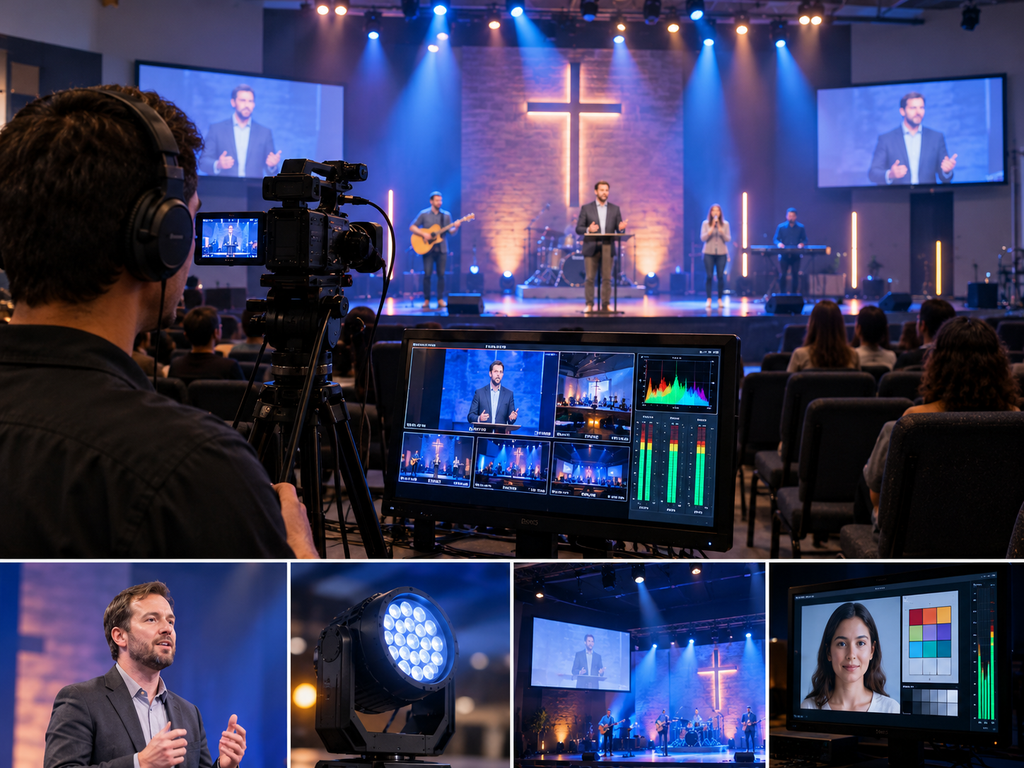
A lighting setup that looks acceptable to the congregation may not look the same on camera. Cameras respond to brightness, color temperature, contrast, flicker, and exposure settings. Churches that stream services should test their lighting using the cameras and recording settings they actually use.
Check Skin Tones and White Light Quality
For close-up shots of pastors and singers, natural-looking skin tones are important. Review the fixture’s color-rendering information where available, including its CRI rating, and assess the actual image under the intended camera settings.
A high CRI figure can be useful when comparing fixtures, but it should not be the only selection criterion. The fixture’s output, color consistency, dimming performance, and behavior in the complete lighting setup also affect the result.
Test for Flicker Before Buying in Quantity
Some LED fixtures may produce visible flicker or banding under certain camera frame rates, shutter settings, or dimming levels. This is not something that can be judged reliably from a product photograph.
When video quality matters, request a demonstration or test a sample fixture with the church’s camera setup. Check several brightness levels, especially the lower levels used during sermons or quieter parts of worship.
Balance the Stage with the Projection Screen
Bright stage lights can spill onto a projection screen and reduce the visibility of lyrics, scripture, or presentation slides. Review the light direction and intensity from the audience’s viewing position, and adjust the lighting zones to limit unwanted spill.
The aim is to make people visible without making the screen difficult to read. In smaller rooms, careful positioning can matter as much as the number of fixtures installed.
6. Keep the Lighting Control Simple for Volunteers
Many churches rely on volunteers rather than a full-time lighting technician. The control system should therefore be easy to learn, reliable during services, and capable of producing consistent results without complicated programming.
When Built-In Controls May Be Enough
A very simple setup with a few fixtures may be manageable using the fixtures’ built-in programs or basic controls, depending on the equipment and the required level of coordination. This can be appropriate when only a small number of lighting looks are needed.
However, built-in programs may offer limited control over individual fixtures and transitions. Confirm what each fixture can do independently before deciding that a separate controller is unnecessary.
When DMX Control Becomes Useful
DMX control is useful when several compatible fixtures need coordinated dimming, color changes, movement, or scene transitions. A controller can store repeatable lighting looks for sermons, worship music, announcements, and special events.
Before purchasing a controller, check the number of fixtures, their DMX channel modes, the required control functions, and the compatibility of the existing system. More advanced equipment is not automatically better if the volunteers only need a few dependable scenes.
Create a Few Reliable Lighting Scenes
Start with a small set of clearly named scenes rather than a large library of complex effects. For example, a church might create a sermon look, a worship look, an announcement look, and a special-event look.
Document the purpose of each scene and provide basic instructions for volunteers. A system that can be operated consistently by different team members is often more useful than one that depends on a single experienced operator.
7. Common Mistakes When Choosing Church Stage Lights
Buying Effect Lights Before Solving Visibility Problems
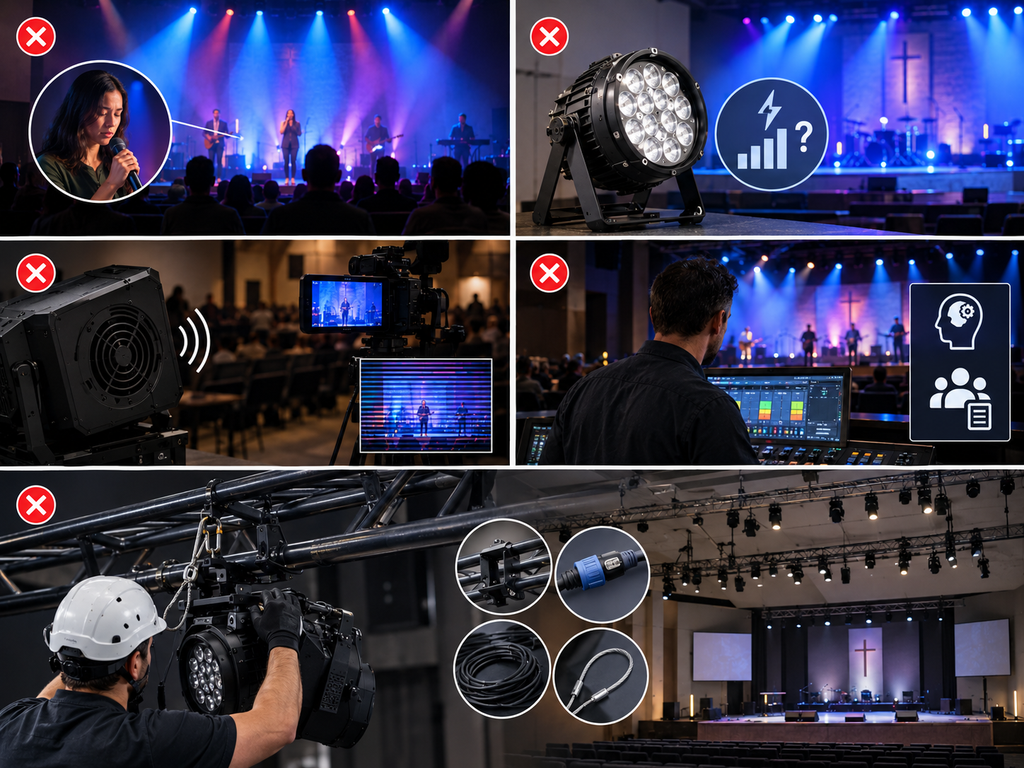
Moving beams and saturated colors can make a stage look dramatic, but they do not replace balanced front lighting. If faces remain dark, the first step should be to correct the basic illumination before adding more effects.
Choosing Fixtures by Wattage Alone
Wattage describes electrical power consumption or, depending on the product listing, a rated source value. It does not independently determine the illuminated area or the brightness reaching a target. Compare output information, optics, beam angle, mounting distance, and the actual job the fixture needs to perform.
Ignoring Fan Noise and Camera Performance
A fan that is acceptable in a concert venue may be noticeable in a quiet church during prayer, spoken announcements, or close microphone recordings. Ask about cooling and noise specifications where available, and test the fixture in a quiet environment if possible.
Similarly, do not assume that every LED fixture will behave well on camera. Test dimming and flicker performance before placing a large order for a livestream-focused installation.
Making the System Too Difficult to Operate
A lighting system with many fixture types and complicated controls can become difficult to maintain if the church has limited technical support. Choose equipment and control functions that match the team’s actual skills and available preparation time.
Forgetting Installation and Safety Requirements
Check the fixture weight, mounting options, power requirements, cable routing, and installation environment. Overhead fixtures must be installed with suitable mounting hardware and safety measures. Follow the manufacturer’s instructions and applicable local electrical and rigging requirements.
8. A Practical Church Stage Lighting Checklist
Before requesting quotations, prepare the following information. It helps lighting suppliers recommend equipment based on the actual venue rather than guessing from a product category alone.
- Stage width, depth, ceiling height, and fixture-to-stage distances.
- The main activities: sermons, singing, band performances, choir, or special productions.
- Whether the church records or livestreams services.
- The areas that need front light, fill light, and background coverage.
- Available mounting positions, power supply, and cable routes.
- Existing fixtures, controller models, and DMX channel requirements.
- The number of lighting scenes volunteers need to operate.
- Budget for fixtures, accessories, installation, and future expansion.
- Required warranty, spare parts, technical documentation, and support.
With this information, the supplier can evaluate fixture types, beam coverage, control compatibility, and the practical limits of the venue. It also makes quotations easier to compare because each supplier is responding to the same requirements.
9. Frequently Asked Questions About Church Stage Lighting
What lights are best for a small church stage?
Many small churches can start with suitable front lights and fixed LED PAR fixtures for background color or general stage coverage. The final selection depends on stage dimensions, mounting positions, desired brightness, camera requirements, and the type of service. Moving heads can be added when dynamic effects are genuinely needed.
How many lights does a small church stage need?
There is no fixed number that suits every church. The required quantity depends on stage width and depth, ceiling height, beam spread, fixture output, and how evenly the people on stage need to be illuminated. Measure the space and assess the existing lighting before deciding how many fixtures to purchase.
Are LED lights suitable for church use?
LED fixtures can be suitable for many church lighting applications because they offer a range of output levels, color options, and control methods. Compare the specific fixture’s output, color rendering, dimming performance, noise, power requirements, and service support rather than assuming that all LED products perform equally.
Does a small church need moving head lights?
Not necessarily. Fixed fixtures may be sufficient for churches that mainly need clear front lighting and consistent background color. Moving heads become more useful when the church wants repositionable light, dynamic music cues, or additional effects for special productions.
Is DMX control necessary for church stage lighting?
DMX is useful when multiple compatible fixtures need coordinated control and repeatable scenes. A very small setup may work with built-in controls, depending on the required functions. The right choice depends on the number of fixtures, the desired level of coordination, and the volunteers’ experience.
What should churches check before buying lights for livestreaming?
Check color rendering, smooth dimming, camera flicker performance, fan noise, and the balance between stage brightness and projection screens. If possible, test a sample fixture using the church’s camera, frame rate, shutter settings, and intended operating levels before ordering multiple units.
Can the same church stage lighting system be expanded later?
Yes, if future expansion is considered during the initial planning stage. Check controller capacity, DMX addressing, power distribution, mounting options, and the compatibility of new fixtures with the existing setup. A phased purchasing plan can help the church add background wash, side lighting, or moving effects as its needs change.
10. Plan a Church Stage Lighting Solution That Fits Your Venue
The best church stage lighting system is not necessarily the largest or most complex one. It is the system that gives the congregation a clear view of the people on stage, supports the church’s style of worship, works with its camera setup, and remains manageable for the team operating it.
Start with the room measurements and the main lighting problems. Prioritize balanced front lighting, add suitable LED PAR or wash fixtures for background coverage, and consider spot or moving-head fixtures only when the application calls for them. Keep control simple, test performance in the actual venue, and include installation and support requirements in the budget.
If you are planning a new installation or upgrading an existing system, Tealshine can help you review the lighting requirements and discuss suitable stage-lighting options. Share your stage dimensions, installation conditions, existing equipment, and intended use so the appropriate fixture types and specifications can be evaluated before you place an order.
“`