Professional High Quality Stage Lighting Manufacturer


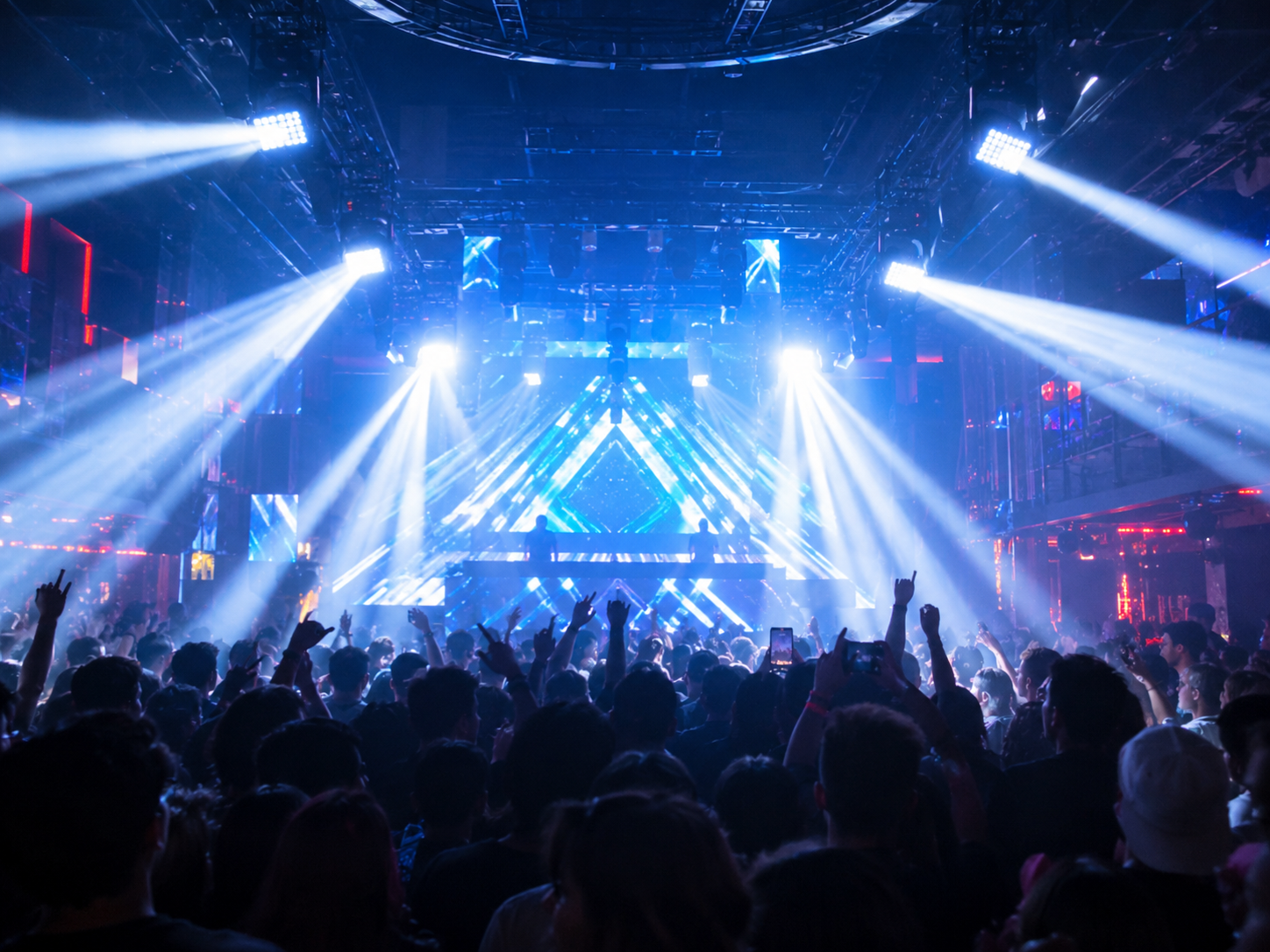
Table of Contents
Club strobe lights create rapid flashes of light that make movement on a dance floor appear sharp, dramatic, or momentarily frozen. DJs and lighting designers use them to emphasize musical drops, build energy during a dance set, and add visual contrast to other nightclub lighting effects.
However, strobe lighting needs careful planning. Rapid flashing can trigger seizures in some people with photosensitive epilepsy, and intense or poorly placed lights can make it harder for guests to move safely. Choosing the right fixture is only part of the job. Operators also need to understand the venue’s requirements, provide appropriate warnings, and plan how strobes work alongside other LED club lights.
This guide explains how nightclub strobe lights work, what to consider before using them, how to combine them with other club party lights, and how venues can create dynamic lighting without relying on continuous flashing.
What Are Club Strobe Lights?
Club strobe lights are lighting fixtures designed to produce short, repeated flashes. Unlike a conventional wash light that provides relatively continuous illumination, a strobe creates distinct bursts of light separated by darker intervals.
This effect changes how movement is perceived. A dancer, DJ, or moving object may appear to move in separate visual steps rather than as one continuous motion. The result can add impact to a music drop or create a dramatic change in the atmosphere of a nightclub.
Modern LED strobe fixtures may offer adjustable flash rates, brightness control, segmented lighting zones, color effects, and DMX control. Features vary by model, so venue operators should check the actual specifications instead of assuming every strobe offers the same functions.
How Does a Strobe Light Create the Freeze-Frame Effect?
The effect occurs because rapid flashes illuminate movement at separate moments. When the surrounding area becomes darker between flashes, the visual system receives intermittent information about the moving subject. Depending on the flash timing, brightness, movement, and viewing conditions, the motion can appear fragmented or frozen.
This effect is particularly noticeable on a dance floor, where moving bodies, arms, and objects create strong changes between successive flashes. It can be visually striking, but it is not suitable for every song, scene, or audience.
Why Do Nightclubs Use Strobe Lighting?
Emphasizing Musical Drops
A brief strobe sequence can emphasize a strong beat, transition, or drop in electronic dance music. When used selectively, it creates a noticeable change from the lighting that precedes it.
The effect is usually more effective when it has a clear musical purpose. If rapid flashes run continuously throughout a set, they may lose their impact and make the overall lighting experience tiring for some guests.
Adding Contrast to the Dance Floor
Strobe lighting can introduce a different visual texture from moving beams and steady color washes. It can highlight silhouettes, emphasize movement, and create a sharper visual rhythm during high-energy sections.
For a more balanced look, designers can combine short strobe sequences with steady LED washes or slower moving-head effects. This creates variation without making every part of the show equally intense.
Creating a More Flexible Lighting Show
When a strobe supports adjustable intensity and control, the operator can plan different looks for different parts of the event. A fixture may be used for a brief accent in one cue and remain inactive during quieter sections.
For venues with different types of music or private events, this flexibility can be more useful than a lighting setup built around a single effect.

Are Strobe Lights Safe to Use in Nightclubs?
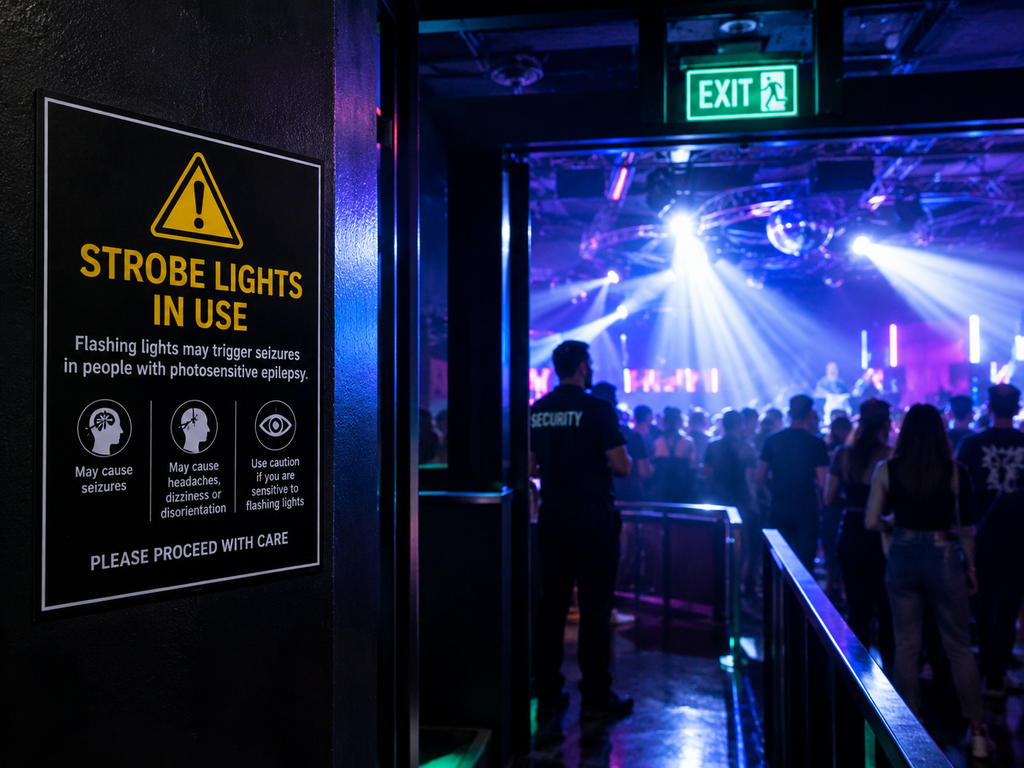
Strobe lights can be used in entertainment venues, but their use requires risk assessment and compliance with applicable local requirements. Rapid flashing can trigger seizures in people with photosensitive epilepsy. Some people may also experience discomfort, disorientation, headaches, or other adverse reactions to intense flashing light.
There is no single flash-rate setting that guarantees safety for every person and every viewing condition. Risk can depend on factors such as flash frequency, brightness, contrast, the area of the visual field affected, exposure duration, and individual sensitivity.
Understand Flash-Rate Guidance
You may encounter guidance discussing flashing at around 3 to 30 flashes per second as a range associated with photosensitive seizure risk, with sensitivity often particularly relevant within part of that range. This should not be interpreted as a universal legal limit or as a complete safety standard for nightclub operation.
The frequently repeated four-flashes-per-second figure is not a guarantee that a strobe is safe below that rate. Venue operators should consult the applicable regulations and safety guidance for their location, review the fixture’s operating capabilities, and obtain qualified advice when needed.
Provide Clear Warnings
Where strobe effects are used, provide clear and appropriately placed warnings before guests enter the affected area. Follow local requirements for warning signs and public information. Do not assume that a warning alone removes the risk.
Keep Routes and Essential Signage Visible
Emergency exits, escape routes, stairs, changes in floor level, and other safety-critical areas need appropriate visibility. Plan the lighting so that strobe effects do not obscure exit signs or make movement through the venue unnecessarily difficult.
Train Operators and Plan Alternatives
Lighting operators should know how to disable the strobe effect quickly and switch to a steady lighting look. The venue should also have a clear process for responding to guest concerns and for stopping an effect if a safety problem arises.
People with photosensitive epilepsy should follow their own medical guidance and avoid exposure to known triggers. Venue operators should not present any flash-rate setting, equipment feature, or operating method as a guarantee against seizures.
How to Choose Club Strobe Lights
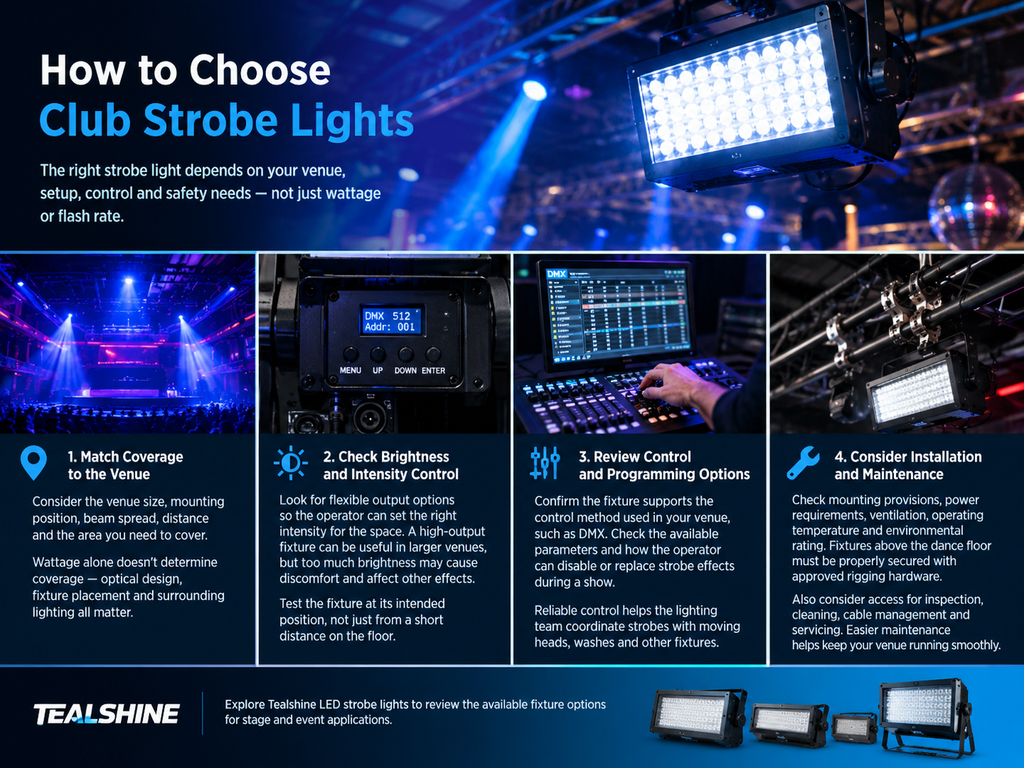
The best club strobe lights are not necessarily the fixtures with the highest wattage or fastest flash rate. A useful choice depends on the venue size, mounting position, required coverage, control system, operating conditions, and safety plan.
1. Match Coverage to the Venue
A compact bar or DJ booth may need a different lighting arrangement from a large nightclub with a wide dance floor. Consider the distance between the fixture and the audience, the beam spread, the mounting height, and whether the light needs to cover a particular zone or a larger area.
Do not judge coverage from wattage alone. Optical design, output, fixture placement, and the surrounding lighting all affect the result.
2. Check Brightness and Intensity Control
Look for control options that allow the operator to set a suitable output for the venue. A high-output fixture may be useful in a larger space, but excessive intensity can create discomfort and overwhelm other lighting effects.
Test the fixture at its intended position rather than evaluating it only from a short distance on the floor.
3. Review Control and Programming Options
For a programmed lighting show, check whether the fixture supports the control method used by the venue, including DMX where required. Review the available parameters and how the operator can disable or replace strobe effects during a show.
Reliable control is valuable because the lighting team can coordinate strobes with moving heads, washes, and other fixtures rather than operating each effect independently.
4. Consider Installation and Maintenance
Check mounting provisions, power requirements, ventilation, operating temperature, and any environmental rating relevant to the installation. Fixtures installed above a dance floor must be secured using appropriate mounting hardware and venue-approved rigging practices.
For permanent installations, also consider access for inspection, cleaning, cable management, and servicing. A fixture that is difficult to maintain can complicate venue operations over time.
Explore Tealshine LED strobe lights to review the available fixture options for stage and event applications.
How to Combine Strobe Lights with Other LED Club Lights
A nightclub lighting design usually works best when each fixture has a clear role. Strobes provide short flashes, while other lights establish color, movement, and the overall visual environment.
LED Moving Head Lights for Movement and Beam Effects
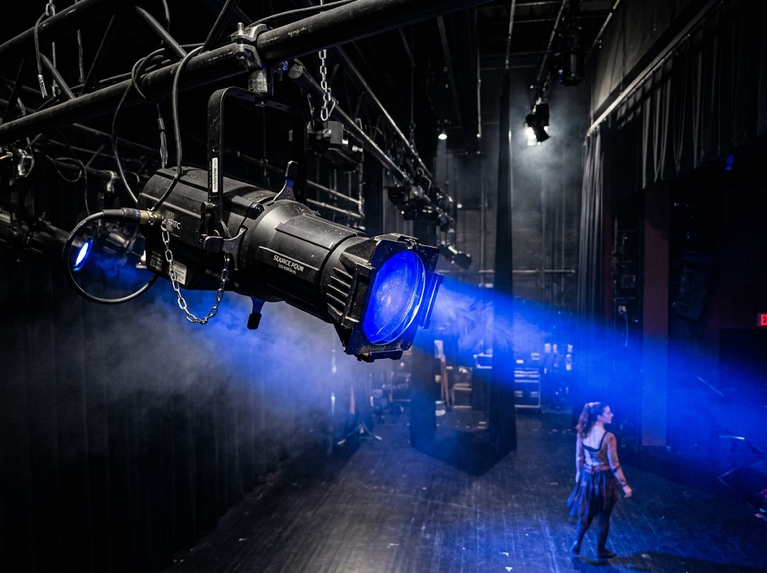
Moving head lights can change direction, color, and beam position during a show, depending on the fixture. They can create moving patterns across a dance floor, frame a DJ booth, or direct attention toward a particular performance area.
Using moving heads between strobe sequences gives the audience a different visual experience and prevents the show from relying on one effect. The movement speed and beam placement should match the music and the venue layout.
Explore LED moving head lights for dynamic nightclub and stage lighting setups.
LED PAR Lights for Color and Background Coverage
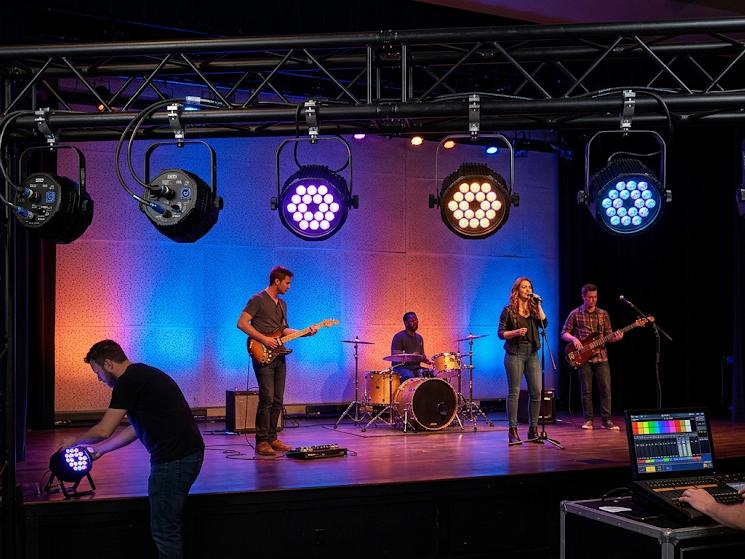
LED PAR lights can provide colored washes for walls, the DJ area, stage surfaces, and other parts of a venue. They help establish the background look while other fixtures create more focused or moving effects.
For example, a steady color wash can establish the scene, moving heads can add motion, and a brief strobe cue can emphasize a musical transition. This layered approach creates visual contrast without requiring constant flashing.
Disco Balls and Reflected Light
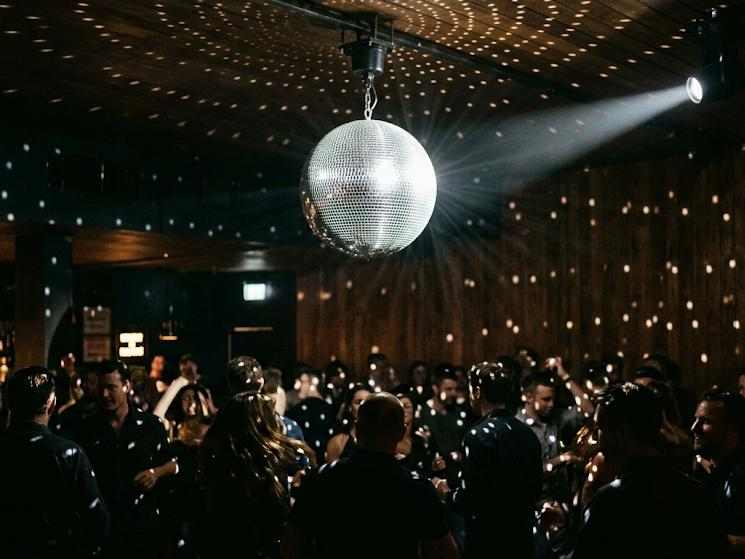
A disco ball creates a different kind of effect by reflecting light into many small moving points. When illuminated by a suitable spotlight, it can create a recognizable dance-floor look without using rapid flashing as the main visual effect.
Reflected points move as the ball rotates, so placement and beam direction matter. Avoid aiming intense light into areas where it creates unwanted glare or compromises visibility.
LED Strips and Decorative Club Lighting
LED strips and architectural lighting can add color around the DJ booth, bar, ceiling edges, and seating areas. They help the venue maintain a consistent visual identity between high-energy lighting cues.
Decorative lighting can also define different areas of a club. A calmer look around seating or lounge areas may provide visual variety without requiring every part of the venue to use the same effects.
Club Party Lights Without Constant Strobe Effects
Strobes are only one option for creating an energetic party atmosphere. If a venue wants to reduce flashing effects or offer a different visual style, it can build a show around color changes, moving beams, reflected light, and coordinated lighting cues.
- Color washes: Use steady or slowly changing colors to transform the look of the room.
- Moving beams: Add motion across the ceiling or dance floor without requiring rapid flashes.
- Disco-ball reflections: Create moving points of light with a classic dance-floor appearance.
- Architectural LED lighting: Define the bar, DJ booth, walls, and lounge areas.
- Timed lighting transitions: Change intensity, color, or movement in response to the music.
These alternatives do not automatically eliminate every lighting-related risk, but they give designers more options than relying on strobe effects alone. Brightness, contrast, movement, and the needs of the audience should still be considered.
Frequently Asked Questions
Are strobe lights allowed in nightclubs?
Strobe lights may be used in nightclubs, but the venue must follow the laws, regulations, and safety requirements that apply to its location. Operators should assess photosensitive seizure risks, provide appropriate warnings, maintain safe visibility, and establish procedures for disabling the effect.
What is the safest strobe flash rate for a club?
There is no single flash rate that guarantees safety for everyone. Flash-rate guidance must be interpreted in context, and a setting below a commonly cited threshold does not remove all risk. Consult the relevant local safety guidance and assess the complete lighting setup.
Can LED club lights create an exciting atmosphere without strobes?
Yes. Moving head lights, LED PAR lights, decorative lighting, and reflected light from a disco ball can create movement, color, and contrast. A well-planned sequence can build energy without making rapid flashing the main effect.
What should I look for when buying nightclub strobe lights?
Consider venue coverage, output control, supported control protocols, installation requirements, maintenance access, and the ability to disable the effect quickly. Confirm that the fixture suits the venue and its operating requirements.
Are strobe lights suitable for every party or event?
No. The suitability of strobe lighting depends on the event, audience, venue policies, and applicable safety requirements. Organizers should consider alternatives and make decisions based on the needs of the people attending.
Build a More Flexible Nightclub Lighting Setup
Club strobe lights can add strong visual accents to a DJ set, dance floor, or live event, but they should be part of a considered lighting design rather than the only source of excitement. Coverage, intensity, control, installation, and audience safety all matter when choosing equipment.
Combining strobe fixtures with moving heads, LED PAR lights, and decorative lighting gives operators more ways to shape the room and respond to different music styles. Tealshine provides LED stage lighting solutions for professional performance and event environments. Review the available fixture categories to plan a setup that matches your venue and production requirements.