Professional High Quality Stage Lighting Manufacturer


Table of Contents
For most stage, club, and touring setups, the safe pick is a fixture rated 100W or higher with an adjustable flash rate between 1 and 20Hz, RGB or amber color output, and built-in DMX control — that combination of power, speed, and control is what decides whether LED strobe lights blend into a rig or become the bottleneck holding the whole show back. The rest of this guide breaks down each of those specs, compares the LED strobe light bar format against single-head units, and shows where a RGB LED strobe light kit or amber LED strobe lights actually earn their place in an event lighting plan.
What to Look For First
Before comparing brands or price points, match the fixture to the room. A bar-sized DJ booth and a 3,000-seat concert hall need very different output, and buying by wattage alone is the single most common mistake first-time buyers make with strobe lights led fixtures. Use this as a starting checklist:
| Venue / Use | Recommended Wattage | Flash Rate Range | Format |
| Small DJ booth or bar | 30–60W | 1–15Hz | Compact single-head or 4-lens bar |
| Mid-size club or event hall | 80–150W | 1–20Hz | 8-lens strobe light bar |
| Concert stage or festival | 200W+ | 1–25Hz, sound-active backup | Multi-unit array with DMX |
| Outdoor or touring rig | IP65, 100W+ | 1–20Hz | Sealed-housing light bar |
Flash Rate and Output: The Numbers That Actually Matter
A strobe’s usable brightness isn’t just wattage — it’s lumens-per-watt efficiency and beam spread. A well-built 100W COB fixture typically outputs 8,000–10,000 lumens, which is roughly comparable to an older 1,500W xenon strobe but at a fraction of the power draw and heat output. Flash rate, measured in Hz (flashes per second), usually runs from 1Hz (a slow pulse) to 20–25Hz (near-continuous flicker), and most DMX consoles let an operator ramp between the two live during a show. For venues where the audience stands within 3 meters of the fixture, capping the top flash rate around 15Hz and posting a photosensitivity notice is standard practice for touring productions in the UK and EU.
LED Strobe Light Bar vs. Single-Head Fixtures
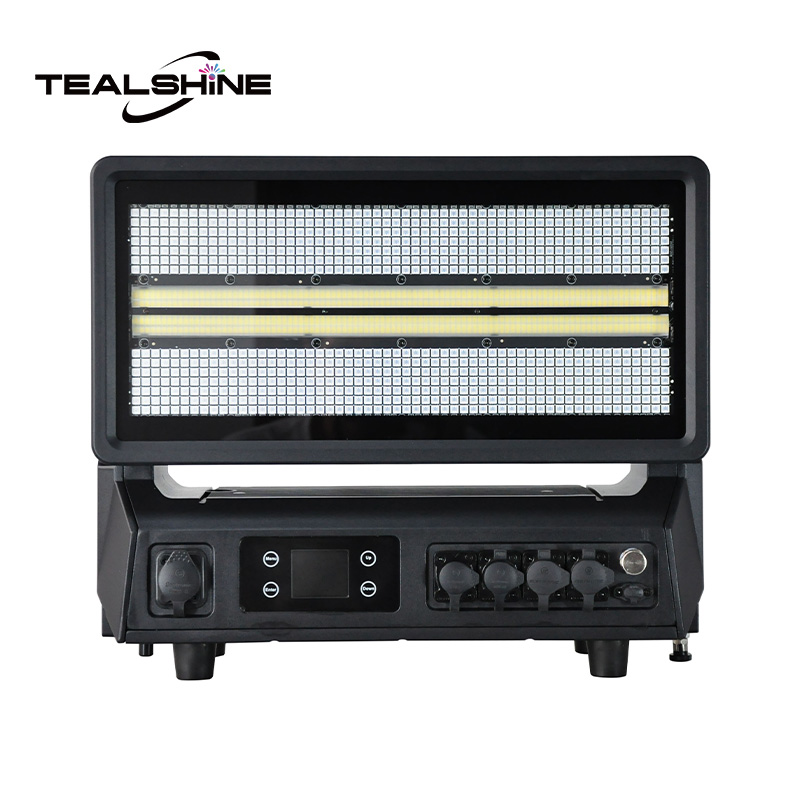
LED strobe light bar — typically built with 4, 8, or 16 individual lenses in one housing — spreads the flash across a wider beam angle, usually 25° to 90°, and is the more common choice for covering a 6–10 meter stage width with just two units. Single-head strobes throw a tighter, punchier beam and are easier to hide inside truss or under a DJ table when only an accent flash is needed rather than full-stage coverage. Rental companies buyinLed Strobe Lightsg in volume for both formats usually stock a mix: bars for wide wash coverage, single heads for targeted hits.
RGB LED Strobe Light Kit: Adding Color to the Flash
Where a plain white or amber flash reads as a hazard warning, a RGB LED strobe light kit lets the same fixture double as a wash light between strobe hits. Most kits use RGBW or RGBWA-UV chips, so the unit can hold a static color wash and then snap to full-brightness flash on cue — one fixture instead of two. This is the format most rental companies stock for weddings and club installs, since it removes the need to run a separate wash light and strobe on the same truss position. Fixtures built around this same modular LED-chip approach are worth comparing side-by-side before committing to one product line.
Amber LED Strobe Lights: A Different Job Than RGB
Amber output, roughly in the 585–595nm wavelength range, serves a narrower set of jobs than RGB. It’s used to simulate police or hazard warning lights on film and TV sets, for industrial-style stage design, and for warm, vintage-look flashes in photography and retro-themed events. Because amber LEDs typically run at a slightly lower lumen output than white or RGBW chips at the same wattage, buyers sourcing amber LED strobe lights in bulk should ask suppliers for lumen output measured on the amber channel specifically, not just the fixture’s total rated wattage. Manufacturers that can adjust LED bead color and CRI on request are the better fit for buyers who need a non-standard amber tone rather than a stock RGBW unit run through a gel or filter.
DMX Control and Syncing Multiple Units
Most professional-grade LED lights with strobe function ship with a 2-, 4-, or 6-channel DMX personality covering dimmer, strobe speed, color (on RGB units), and sometimes a macro channel for built-in chases. Running several fixtures off one DMX universe lets an operator sync flash timing across an entire rig instead of relying on each unit’s onboard sound-active mode — sound-active is a useful backup, but on most budget fixtures it drifts out of sync unit-to-unit within a few minutes. Buyers who need a specific DMX channel layout or protocol should confirm this at the sourcing stage — retrofitting DMX behavior after production tooling is locked is far more expensive than specifying it up front.
IP Rating and Build Quality for Touring or Outdoor Use
Fixtures rated IP20 are indoor-only and should stay off damp stages or outdoor decks. IP65-rated housings seal the driver and lens gasket against rain and dust, which matters for festival stages, outdoor weddings, and any touring rig that gets loaded and unloaded in weather. LED life expectancy on a well-cooled COB or SMD strobe typically runs around 50,000 hours, but that figure assumes adequate heat sinking — a housing that skips a full aluminum heat sink will show measurably faster output drop-off under continuous use. Checking a supplier’s IP and thermal test process before ordering is a quick way to separate a fixture built for touring from one built for a single indoor season.
Common Buying Mistakes to Avoid
- Buying by wattage alone — two 100W fixtures from different manufacturers can differ in usable lumens by 30% or more depending on LED chip quality and lens design.
- Skipping the DMX compatibility check — confirm channel count and mode against the house console before ordering, not after installation.
- Ignoring IP rating for outdoor or damp venues — an IP20 fixture left outside overnight is a common cause of early field failures.
- Overlooking photosensitivity requirements — public events with high-speed strobe effects often require posted warnings and, in some jurisdictions, a capped flash rate.
- Defaulting to RGB when the job only needs white or amber — RGBW chips cost more and can output less punch per watt than a dedicated single-color LED at the same price point.
Final Take: Matching LED Strobe Lights to Your Venue
There’s no single “best” fixture — the right LED strobe lights pick depends on room size, indoor vs. outdoor use, and whether color output matters as much as the flash itself. As a starting point: DJ booths and small bars do well with a compact single-head or short light bar; clubs, weddings, and mid-size venues get more use out of an RGB kit; and touring or outdoor stages should default to IP65-rated, DMX-controlled bars rated 100W or higher. For a spec that doesn’t fit an off-the-shelf model, it’s worth talking to a manufacturer about a custom wattage, lens angle, or DMX layout before settling for a compromise off the shelf.