Professional High Quality Stage Lighting Manufacturer


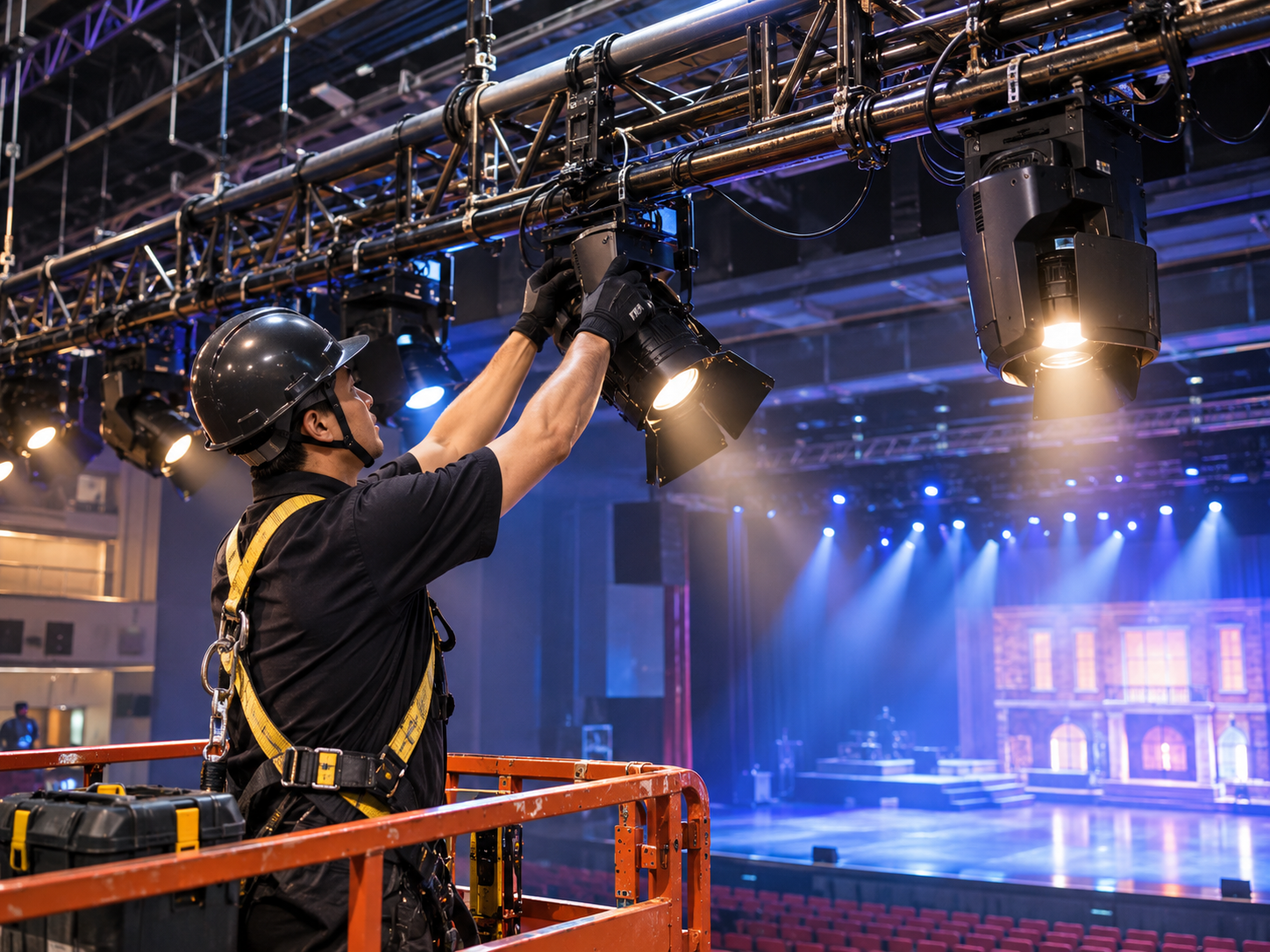
Table of Contents
Theatre lighting does more than illuminate performers and scenery. It is an essential part of the production environment, involving electrical equipment, overhead installations, control systems, cables, and continuous operation during rehearsals and performances. A lighting system that is not installed or maintained correctly can create risks for performers, technicians, venue staff, and audiences.
From a small community theatre to a professional performing arts venue, electrical safety and equipment management should be considered before the first fixture is installed. Incorrect power connections, overloaded circuits, damaged cables, inadequate ventilation, and unsecured lighting equipment can all lead to equipment failure or serious accidents.
For theatre managers, lighting designers, technical directors, rental companies, and production contractors, understanding these risks is an important part of planning reliable entertainment lighting. This guide covers the main safety considerations for theatre lights, including electrical installation, cable management, rigging, operating environments, inspections, and routine maintenance.
Why Is Safety Important in Theatre Lighting?
Theatre lighting systems often operate under demanding conditions. Fixtures may be suspended above performers, installed in restricted spaces, connected through complex power distribution systems, and operated for several hours during rehearsals and live performances.
Unlike ordinary household lighting, professional stage lighting frequently involves multiple fixture types, control equipment, distribution panels, trusses, and temporary cable routes. Each part needs to work correctly as part of the complete installation.
Good safety management helps theatre operators achieve several important objectives:
- Protect performers and technical crews: Reduce the risk of electric shock, burns, falls, and injuries caused by falling equipment.
- Prevent equipment damage: Avoid failures caused by incorrect voltage, excessive electrical loads, overheating, or unsuitable operating environments.
- Maintain production reliability: Reduce unexpected fixture failures, power interruptions, and lighting control problems during performances.
- Protect the audience: Keep walkways, emergency exits, and public areas free from electrical and installation hazards.
- Support long-term maintenance: Establish consistent inspection and servicing procedures for the venue’s lighting inventory.
Safety should not be treated as a final inspection immediately before opening the theatre. It should be included in equipment selection, installation planning, daily operation, and maintenance.

Common Safety Risks in Theatre Lighting Systems
Understanding the most common hazards helps production teams identify problems before they affect a performance. Some risks are related to electricity, while others involve installation, equipment positioning, or the surrounding environment.
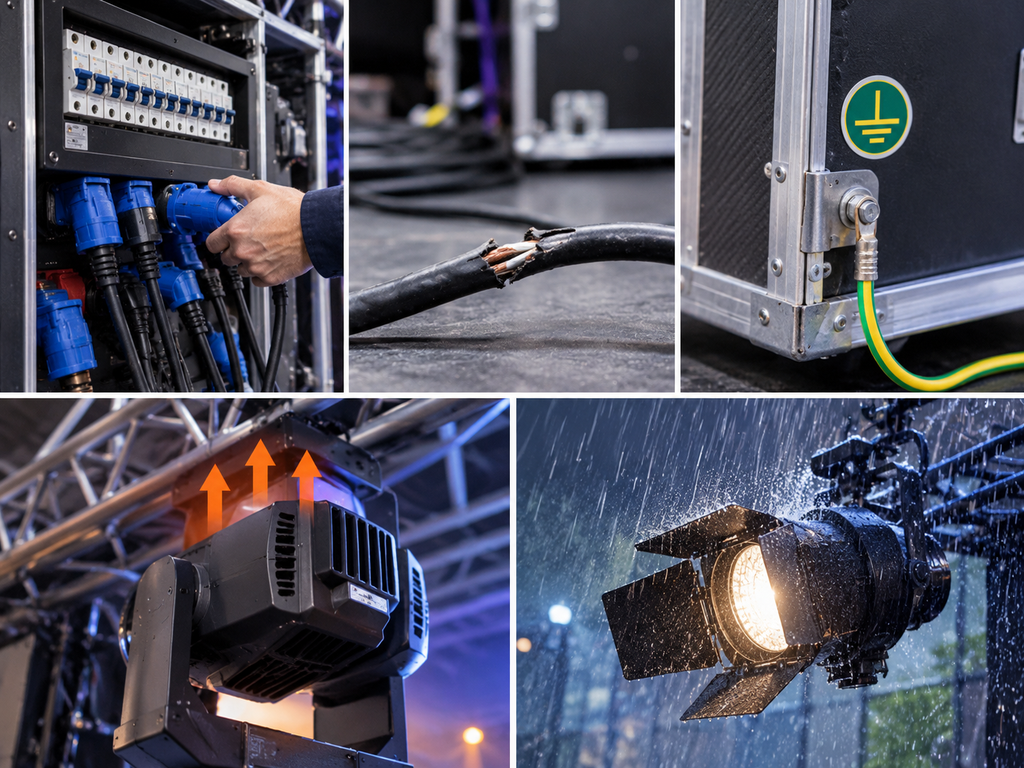
1. Electrical Overloads and Incorrect Power Connections
Professional theatre productions may use numerous lighting fixtures at the same time. When too many devices are connected to an unsuitable circuit, the electrical load can exceed the circuit’s rated capacity.
Overloading may cause protective devices to trip, connections to overheat, or electrical equipment to operate outside its intended conditions. Incorrect supply voltage or incompatible electrical connections can also damage fixtures and create additional hazards.
Before installing a lighting system, the technical team should review:
- The rated input voltage and frequency of each fixture
- The maximum electrical load of the planned lighting system
- The available circuit capacity and protective devices
- The requirements of power distribution equipment
- The electrical specifications provided by the fixture manufacturer
Power calculations and circuit arrangements should be completed by qualified electrical personnel in accordance with local electrical regulations. A simple total-wattage estimate should not replace a professional assessment of the installation.
2. Damaged Power Cables and Loose Connections
Power cables are frequently moved during theatre installations, rehearsals, touring productions, and equipment changes. Repeated bending, pulling, crushing, or contact with sharp edges can damage cable insulation and connectors.
Damaged cables may expose conductors, create intermittent connections, or increase the risk of electric shock and overheating.
Technicians should pay particular attention to:
- Cracked, cut, or exposed cable insulation
- Loose plugs and connectors
- Discolored or heat-damaged connection points
- Damaged strain reliefs and cable glands
- Connections that have been repaired with unsuitable materials
Damaged electrical cables should be removed from service and repaired or replaced by qualified personnel. Tape should not be used as a substitute for a proper electrical repair.
3. Inadequate Grounding and Electrical Protection
Grounding is an important part of electrical protection for equipment designed with a protective earth connection. It provides a path for fault current so that protective devices can operate under fault conditions.
If grounding connections are missing, damaged, or incorrectly installed, metal equipment housings may become hazardous when an electrical fault occurs.
For professional theatre installations, electrical personnel should verify protective earth continuity and the correct operation of relevant protective devices. Ground-fault protection may also be required in certain locations, particularly where moisture or outdoor conditions are involved.
Never remove a grounding pin or bypass a protective connection to make a fixture fit an incompatible outlet.
4. Overheating and Poor Ventilation
Stage lighting fixtures generate heat during operation. The amount depends on the fixture design, power consumption, cooling system, operating conditions, and installation environment.
LED fixtures generally consume less power than comparable traditional high-intensity lighting technologies, but they still contain heat-producing components such as LED modules and power supplies.
Insufficient airflow can increase internal temperatures, shorten component life, or activate thermal protection systems. Fixtures installed too close to curtains, scenery, insulation, or other combustible materials may also create additional fire risks.
Follow the manufacturer’s clearance and ventilation requirements. Keep cooling vents unobstructed, inspect fans where fitted, and avoid placing equipment in enclosed spaces unless the fixture is designed for that installation.
5. Water and Moisture Around Electrical Equipment
Moisture is an important safety concern in outdoor performances, temporary installations, and venues where drinks or cleaning liquids may come into contact with equipment.
Water entering a fixture, connector, or power distribution unit can damage electrical components and create a shock hazard.
Indoor-rated equipment should not be assumed suitable for rain, direct water spray, or high-moisture environments. Before selecting fixtures for outdoor entertainment lighting, check the product’s IP rating and the manufacturer’s stated installation conditions.
Electrical Safety When Installing Theatre Lights
Safe installation starts before the equipment reaches the stage. The lighting plan should account for fixture specifications, available power, mounting positions, cable routes, and access for maintenance.
Check Fixture Voltage and Electrical Specifications
Different stage lighting products may have different input voltage ranges, power consumption, connection types, and operating requirements.
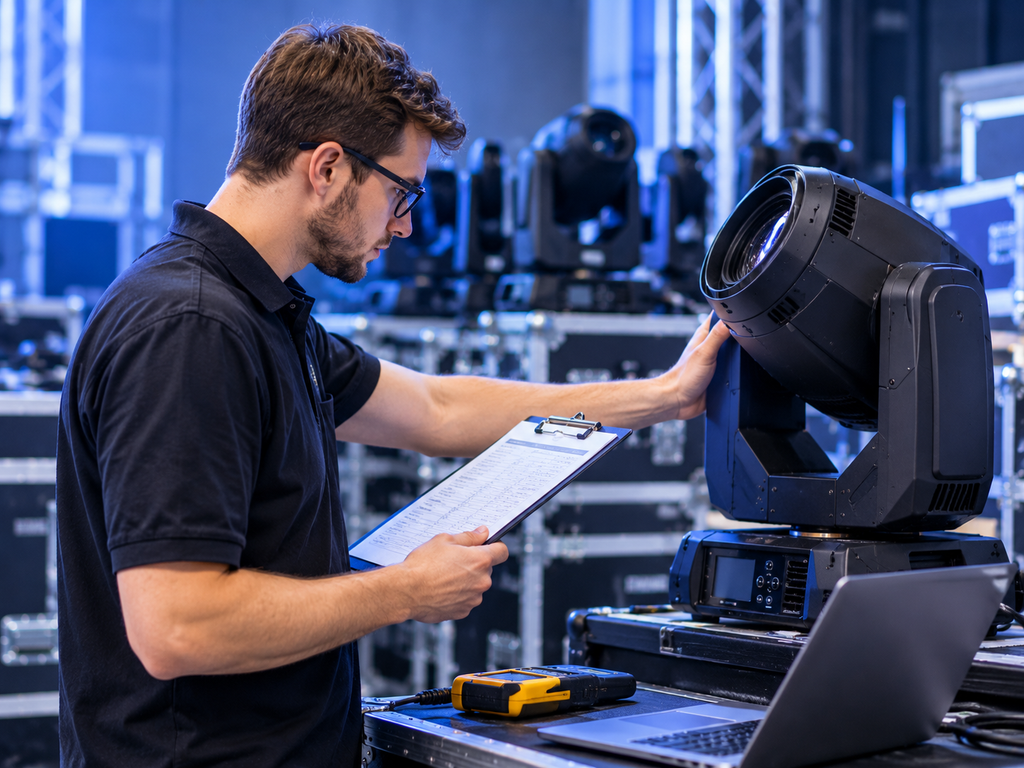
Before connecting theatre lights, compare the fixture nameplate and technical documentation with the available power supply. Confirm that the voltage, frequency, connectors, and electrical protection arrangements are suitable for the installation.
For international touring productions, do not assume that equipment purchased for one country can be connected directly to the power system in another. Check the specific fixture’s supported input range and use suitable power distribution equipment.
Plan Power Distribution Before Installation
A theatre lighting system may contain front-of-house fixtures, overhead truss lights, side lighting, floor fixtures, and backstage equipment. These devices should be included in the electrical load assessment before the final layout is approved.
Qualified personnel should consider:
- The total connected load and expected operating conditions
- The capacity and configuration of available circuits
- Protective devices and distribution equipment
- Connector compatibility and cable ratings
- Voltage drop over longer cable runs where relevant
- Emergency isolation and access to electrical panels
Do not connect additional fixtures simply because an outlet or distribution connection is available. The circuit’s actual capacity and protection arrangements must be verified first.
Use Suitable Power Cables and Connectors
Professional stage lighting installations require cables and connectors suitable for their electrical load, installation environment, and intended use.
Household extension cords and unsuitable adapters should not be used as substitutes for correctly rated professional equipment. The cable type, conductor size, connector rating, insulation, and protection level all matter.
For touring productions and frequently reconfigured lighting systems, clearly identifying cable types and connection points can also reduce installation mistakes.
Keep Signal and Power Connections Organized
Lighting control systems and electrical power systems serve different purposes. DMX and network cables transmit control data, while power cables supply electricity to the fixtures.
Both need to be installed and routed correctly. Keep connections secure, avoid unnecessary cable tension, and follow the equipment manufacturer’s recommendations for cable separation and routing.
For systems using DMX, check the correct cable type, connectors, termination, and fixture addressing. A reliable control connection helps prevent unexpected lighting behavior, although it does not replace electrical safety checks.
Rigging and Mechanical Safety for Theatre Lights
Electrical safety is only one part of a safe theatre lighting installation. Fixtures mounted above performers, scenery, or audiences also require suitable mechanical support and secondary safety measures.
Use Rated Clamps and Safety Attachments
Lighting fixtures installed on trusses, pipes, or other overhead structures must use mounting hardware suitable for the fixture and installation method.
Clamps, brackets, bolts, and secondary safety attachments should be compatible with the equipment and rated for the intended application. A fixture should never be supported by an improvised connection or an unsuitable mounting point.
Where required by the venue or applicable rigging standards, use an independent safety attachment designed for the fixture’s weight and installation conditions.
Check the Supporting Structure and Load Capacity
Before suspending multiple stage lights, confirm that the supporting structure can safely accommodate the total load and its distribution.
The assessment should consider the weight of fixtures, clamps, cables, accessories, and other suspended equipment. Dynamic effects, loading arrangements, and environmental conditions may also influence the structural requirements.
Truss systems, overhead suspension points, and complex rigging arrangements should be assessed and installed by competent professionals. Never assume that a structure is safe simply because it has supported a similar lighting setup in the past.
Inspect Fixtures Before Raising Them
Before lifting a fixture into position, check its housing, mounting points, clamps, safety attachments, and electrical connections.
Look for loose screws, cracked brackets, damaged handles, or signs of impact. Confirm that the fixture is securely attached before the lifting operation is completed.
When maintenance is required, lower the fixture to a suitable working position whenever possible rather than attempting repairs on an overhead installation.
Keep the Area Below Overhead Work Clear
During installation, adjustment, and maintenance, restrict access to the area below suspended equipment. Tools and accessories should be secured against accidental drops.
Only authorized personnel should enter the work area while overhead lighting equipment is being installed or serviced.
Cable Management and Stage Access Safety
Lighting cables are easy to overlook because they are often placed along the floor, behind scenery, or around technical work areas. Poor cable management can create trip hazards, damage electrical connections, and make emergency access more difficult.
Route Cables Away From Walkways
Whenever possible, route cables through designated technical areas instead of across performer entrances, audience walkways, and emergency exits.
When a cable must cross a traffic area, use an appropriate cable protection system that is suitable for the location and expected traffic. Secure the route so it does not move during the performance.
Avoid Excessive Bending and Cable Tension
Power and signal cables should not be sharply bent, stretched, crushed, or trapped under heavy equipment. Excessive tension can damage connectors and internal conductors even when the outer insulation appears intact.
Leave suitable cable slack near moving fixtures and connection points, following the manufacturer’s instructions. This is particularly important for moving head lights that change position during operation.
Label Cables and Distribution Points
Large theatre productions may involve dozens or hundreds of cables. Clear labels make it easier for technicians to identify connections, trace faults, and isolate the correct equipment during maintenance.
Use consistent labels for circuit identification, fixture positions, distribution points, and control connections. Keep the documentation updated whenever the lighting layout changes.
Keep Emergency Routes Accessible
Do not allow lighting cases, cable reels, stands, or temporary equipment to block emergency exits, fire equipment, or access to electrical isolation points.
Before the audience enters, check that the stage, backstage areas, technical positions, and public walkways remain accessible.
Choosing Safe Theatre Lights for Different Environments
Not every theatre or entertainment venue has the same operating conditions. A permanent indoor installation, a touring production, and an outdoor concert may require different fixture specifications and installation arrangements.
Indoor Theatre and Performing Arts Venues
Permanent theatres usually have established lighting positions, electrical distribution systems, and technical access areas. Fixture selection should take account of mounting compatibility, ventilation, operating noise, power requirements, and maintenance access.
For productions involving dialogue, music, or recorded audio, fan noise may also affect the suitability of certain fixtures. Review the manufacturer’s operating information and test equipment in the actual venue when noise is a concern.
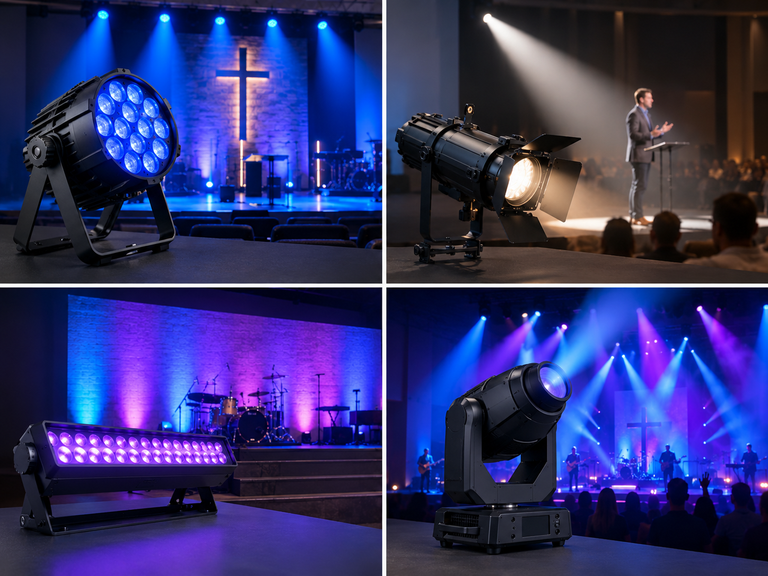
Theatre productions often use a combination of profile fixtures, Fresnels, PAR lights, wash fixtures, and moving heads. Each fixture should be installed according to its intended application and manufacturer’s instructions.
For more information about fixture selection and theatrical applications, read our guide to theatrical lighting design.
Concerts and Live Entertainment Productions
Concert lighting systems often contain more moving fixtures, effects, and temporary power connections than a basic theatre installation.
Touring productions should inspect equipment before loading, after transportation, and again after installation at the venue. Moving fixtures, power connections, and rigging hardware should receive particular attention because they may be exposed to repeated handling.
Lighting teams should also plan the distribution of power and control connections before the equipment is installed. This makes it easier to identify faults and reduces unnecessary changes during show preparation.
Outdoor Theatre and Festival Stages
Outdoor installations introduce additional risks from rain, humidity, dust, wind, uneven ground, and temporary electrical infrastructure.
Fixtures, connectors, distribution equipment, and cable protection must be suitable for the actual outdoor conditions. An IP rating applies to the equipment under specified test conditions; it does not automatically make every connection or installation weatherproof.
Outdoor production teams should also consider:
- Weather forecasts and procedures for severe weather
- Suitable protection for electrical connections
- Safe generator positioning and electrical distribution
- Ground conditions and cable routing
- Wind loading and stability of temporary structures
- Access restrictions around electrical and rigging areas
For additional guidance on outdoor installation and cable organization, see our outdoor stage setup and cable management guide.
Routine Inspection and Maintenance of Theatre Lighting Equipment
Even correctly installed lighting equipment can develop problems through regular use. Dust, heat, vibration, transportation, and repeated connection changes can affect fixture performance over time.
A structured inspection program helps identify problems before they cause equipment failure or safety incidents.
Before Every Performance
Technical teams should carry out a practical inspection before the venue opens. The exact procedure depends on the installation, but the following checks provide a useful starting point.
- Inspect visible power cables, plugs, and connectors for damage.
- Check that fixtures and mounting hardware remain secure.
- Confirm that safety attachments are correctly installed.
- Check that cooling vents are unobstructed.
- Look for unusual noise, overheating, or visible damage.
- Confirm that cables do not block walkways or emergency exits.
- Check that control systems and fixtures respond as expected.
- Verify that any temporary outdoor protection remains secure.
During Regular Maintenance
Routine maintenance should follow the manufacturer’s service instructions and the venue’s maintenance schedule.
Depending on the fixture, maintenance may include:
- Cleaning lenses and external surfaces using approved methods
- Checking fans, cooling systems, and ventilation openings
- Inspecting connectors, mounting points, and housing components
- Checking moving head mechanisms for unusual movement or noise
- Reviewing DMX and network connections
- Recording recurring faults and repair history
Always disconnect equipment from power before cleaning or servicing it, and allow hot components to cool where necessary. Internal electrical repairs should only be carried out by qualified personnel.
Keep Maintenance Records
Maintenance records help theatre operators identify repeated problems and make better equipment replacement decisions.
A useful record should include the fixture model, serial number, installation location, inspection date, identified fault, repair action, and the person responsible for the work.
For venue operators and equipment buyers, a supplier’s quality control procedures are also worth reviewing. Tealshine’s stage lighting quality control and testing process provides further information about electrical safety checks, high-voltage isolation testing, grounding resistance, leakage current measurements, and continuous operating tests.
Theatre Lighting Safety Checklist
A checklist makes it easier for production teams to follow the same safety procedures during installation, rehearsals, and performances. The following list can be adapted to the venue’s equipment and local requirements.
Electrical and Power Checks
- Confirm fixture voltage and electrical specifications.
- Verify the planned circuit loads and distribution arrangements.
- Check power cables, plugs, connectors, and protective devices.
- Confirm that required grounding and electrical protection are in place.
- Remove damaged electrical equipment from service.
Installation and Rigging Checks
- Use suitable mounting hardware and safety attachments.
- Verify the supporting structure and approved load arrangements.
- Inspect fixture housings and mounting points.
- Keep unauthorized personnel away from overhead work areas.
- Ensure that fixtures are installed according to manufacturer instructions.
Operating Environment Checks
- Keep ventilation openings clear.
- Maintain appropriate clearance from combustible materials.
- Confirm that fixtures are suitable for indoor or outdoor conditions.
- Protect electrical connections from water and moisture.
- Keep emergency exits and access routes unobstructed.
Before the Audience Enters
- Complete the required pre-show inspection.
- Test lighting fixtures and control systems.
- Secure cable routes and protect crossing points.
- Confirm that technicians know the emergency isolation procedure.
- Make sure that the relevant safety equipment and emergency contacts are accessible.
What Should Theatre Lighting Technicians Do in an Emergency?
Even a carefully planned lighting installation can experience unexpected problems. A fixture may produce an unusual smell, a cable may become damaged, a circuit breaker may trip, or a piece of equipment may become unstable.
Technical teams should know how to respond without creating additional risks.
Electrical Faults or Suspected Overheating
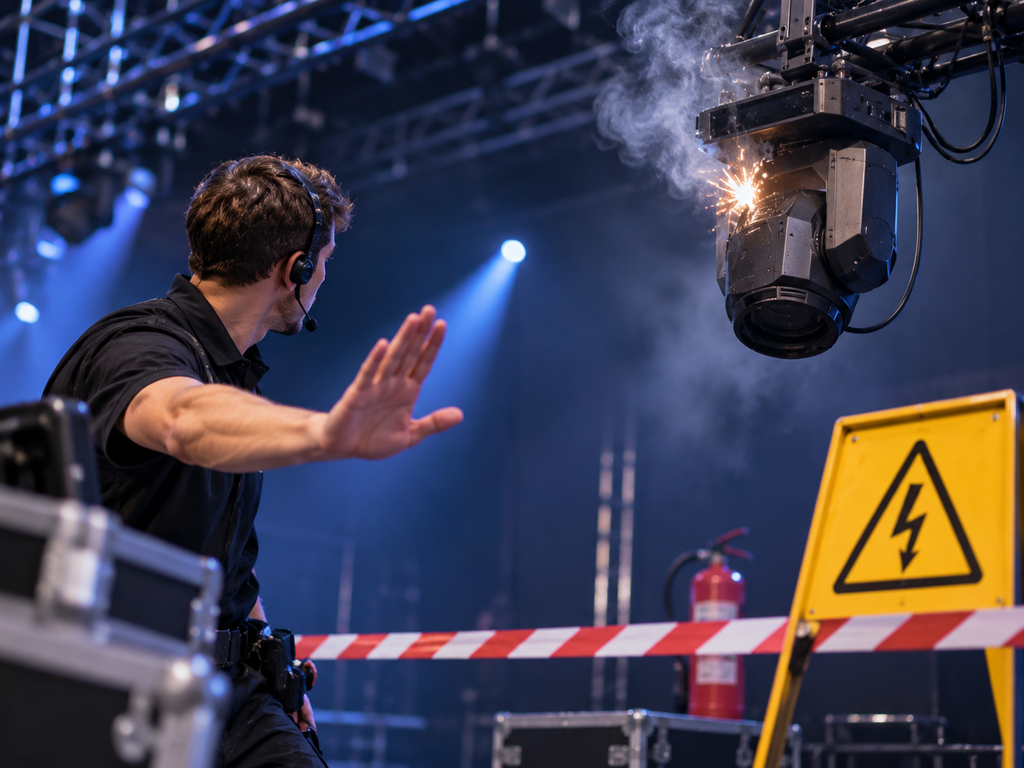
If a fixture, cable, or connector shows signs of overheating, smoke, sparking, or electrical damage, stop using the affected equipment and isolate the supply where it is safe to do so.
Do not touch exposed conductors or attempt to disconnect damaged equipment while it may still be energized. Keep people away from the affected area and contact qualified electrical personnel.
Equipment Failure During a Performance
If a fixture stops working or behaves unexpectedly, the operator should follow the production’s established fault procedure. Avoid opening the fixture or attempting internal repairs during a live performance.
Where possible, isolate the faulty unit and use an approved alternative lighting arrangement to maintain safe visibility for performers and crew.
Fire or Electric Shock
For an electrical fire, use the venue’s emergency response procedure and suitable firefighting equipment. Do not use water on energized electrical equipment.
If someone receives an electric shock, do not touch the person while they may still be in contact with a live electrical source. Isolate the power if it can be done safely, call emergency services, and follow instructions from trained emergency responders.
All theatre personnel should know the location of emergency exits, electrical isolation points, first-aid equipment, and the venue’s emergency communication procedures.
How to Choose Reliable Theatre Lighting Equipment
Safety considerations should also influence equipment purchasing decisions. A fixture may offer attractive output, color effects, and control functions, but buyers should evaluate its technical documentation, installation requirements, and suitability for the intended environment.
Review Electrical Specifications and Documentation
Check the input voltage range, power consumption, connection requirements, operating temperature, and installation instructions. Product documentation should clearly identify the conditions under which the fixture is designed to operate.
For international procurement, confirm that relevant compliance documents and test reports are available for the specific model and target market. Certification and compliance requirements vary by country, product category, and application, so buyers should verify the applicable requirements rather than relying on a generic certification list.
Consider Thermal Management and Build Quality
Housing design, cooling components, power supply quality, and internal electrical protection all influence long-term equipment reliability.
For venues that operate lights for extended periods, ask suppliers about thermal management, continuous operating conditions, and the testing procedures used during production.
Check Environmental Suitability
For indoor theatres, consider ventilation, operating noise, dust exposure, and installation clearance. For outdoor entertainment lighting, check the fixture’s IP rating and the suitability of its connectors and installation accessories.
Do not select an outdoor fixture based on the IP rating alone. The complete installation must be suitable for the environment.
Evaluate the Manufacturer’s Quality Control
For distributors, rental companies, and large venue projects, supplier evaluation should go beyond the product specification sheet.
Ask how the manufacturer checks electrical insulation, grounding, leakage current, thermal performance, and continuous operation. Consistent quality control can help reduce the risk of receiving equipment with manufacturing defects.
These checks are particularly relevant when purchasing multiple fixtures for the same venue, where consistent performance and reliable long-term operation matter.
Frequently Asked Questions About Theatre Lighting Safety
What are the main safety risks associated with theatre lighting?
The main risks include electrical overloads, damaged cables, incorrect grounding, overheating, moisture exposure, unsecured fixtures, and trip hazards. Overhead rigging failures can also cause serious injuries if lighting equipment is not installed and inspected correctly.
Are LED theatre lights safer than traditional stage lights?
LED fixtures generally use less electrical power and produce less radiant heat than many traditional stage lighting technologies. However, they are not risk-free. Their power supplies, internal components, cables, connectors, cooling systems, and mounting arrangements still require proper installation and maintenance.
How often should theatre lighting equipment be inspected?
Visible cables, connectors, mounting arrangements, and equipment condition should be checked before use. More detailed inspections and maintenance should follow the manufacturer’s instructions, venue procedures, and applicable regulations. Overhead installations and electrical systems may require additional scheduled inspections by competent personnel.
Can indoor theatre lights be used for outdoor performances?
Not necessarily. Indoor fixtures may not provide adequate protection against rain, dust, or moisture. Check the fixture’s IP rating, connection protection, and manufacturer instructions before using it outdoors.
Why is grounding important for stage lighting?
Protective grounding helps provide a path for fault current in equipment designed with a protective earth connection. It supports the operation of electrical protection devices and helps reduce the risk of electric shock. Grounding arrangements should be verified by qualified electrical personnel.
What should be checked before installing theatre lights on a truss?
Check the fixture’s weight, mounting points, compatible clamps, safety attachments, and the supporting structure’s approved capacity. The installation should be assessed and completed by competent rigging personnel in accordance with the relevant standards and venue requirements.
Do wireless DMX systems eliminate stage lighting cable hazards?
No. Wireless DMX can reduce the number of signal cables needed between lighting devices, but fixtures still require electrical power unless they are specifically designed for battery operation. Power cable routing, electrical protection, and installation safety remain necessary.
Build a Safer and More Reliable Theatre Lighting System
Reliable theatre lighting depends on more than fixture performance. Electrical planning, suitable equipment, secure installation, organized cable routing, ventilation, routine inspection, and trained technical personnel all contribute to a safer production environment.
For theatre operators, production companies, rental businesses, and lighting distributors, these considerations should be part of both equipment selection and long-term maintenance planning.
At Tealshine, we manufacture professional LED stage lighting fixtures for theatres, concerts, event venues, and entertainment projects. Our product range includes LED PAR lights, moving head lights, LED wall wash lights, LED strobe lights, and LED light bars.
If you are planning a theatre lighting project or sourcing fixtures for professional entertainment applications, contact our team to discuss your application, installation environment, technical requirements, and product selection.