Professional High Quality Stage Lighting Manufacturer


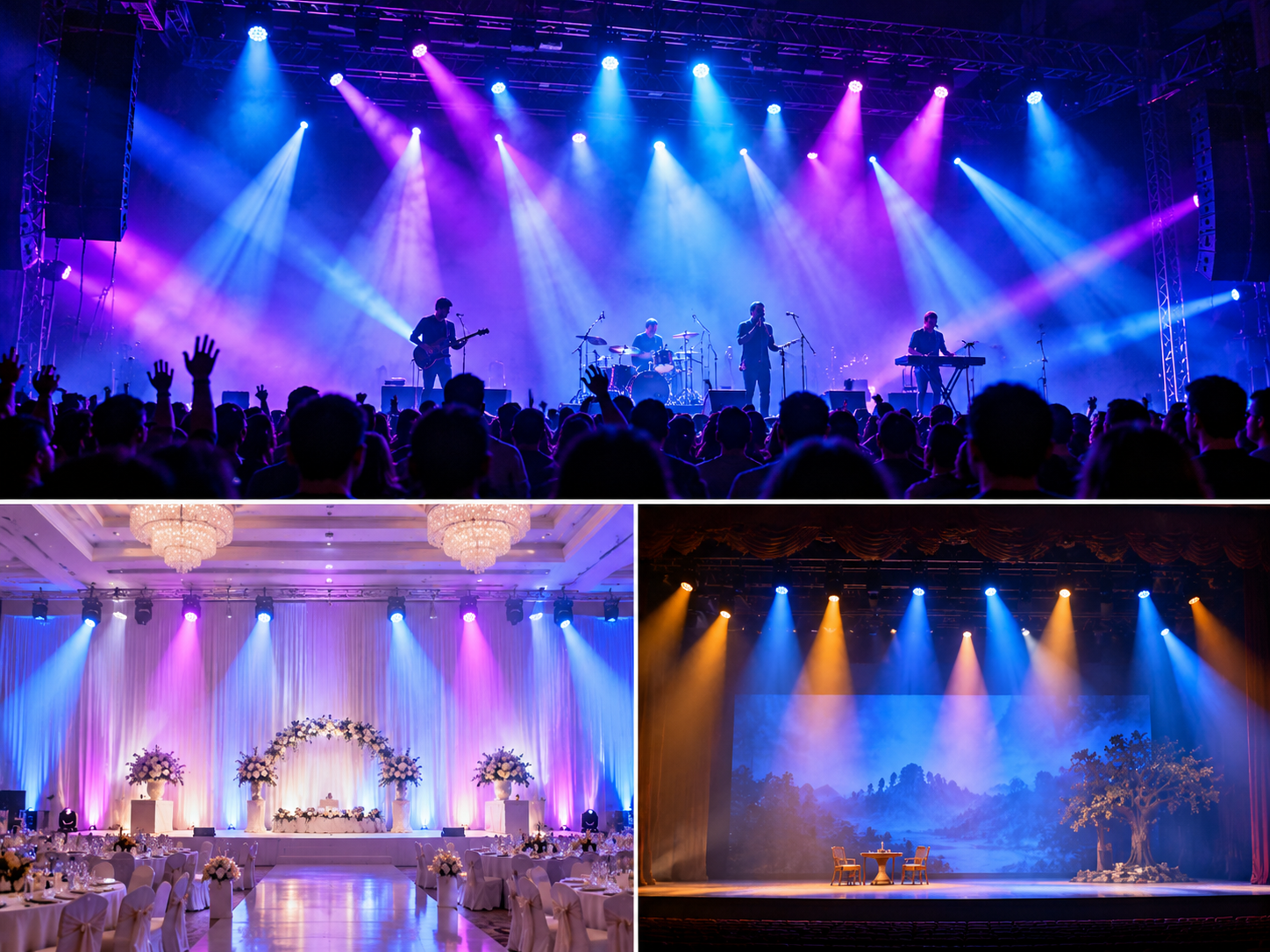
Table of Contents
When planning stage lighting, one common question is whether to choose PAR lights or wash lights. The two terms are often used together, and sometimes even interchangeably. However, they do not describe exactly the same thing.
A PAR light is a type of lighting fixture, while a wash describes a lighting function or effect: spreading light across a relatively broad area to create consistent illumination or color. This means an LED PAR fixture can actually be used for stage wash lighting. A wash moving head, on the other hand, is designed specifically to combine broad illumination with motorized movement.
For event production companies, lighting rental businesses, venue operators, and stage lighting buyers, understanding this distinction makes it easier to select equipment that matches the project. The best choice depends on the coverage area, required movement, beam control, color effects, and installation conditions.
This guide compares PAR lights and wash lights from a practical perspective, explains where each type works best, and shows how to choose the right combination for different stage applications.
What Does PAR Mean in Lighting?
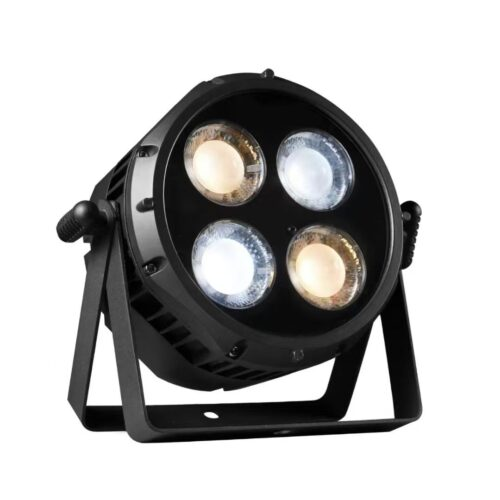
PAR stands for Parabolic Aluminized Reflector. The term originally referred to a lamp design that used a reflector to direct light forward. PAR lamps became widely used in stage and entertainment lighting because they provided a relatively straightforward way to produce directional illumination.
Traditional PAR cans commonly used replaceable lamps. Modern LED PAR lights use LED arrays and optical components to produce different beam spreads and color effects.
In stage lighting, PAR fixtures are frequently used for:
- Colored stage washes and background illumination
- Backlighting and side lighting
- Uplighting walls, columns, and decorative structures
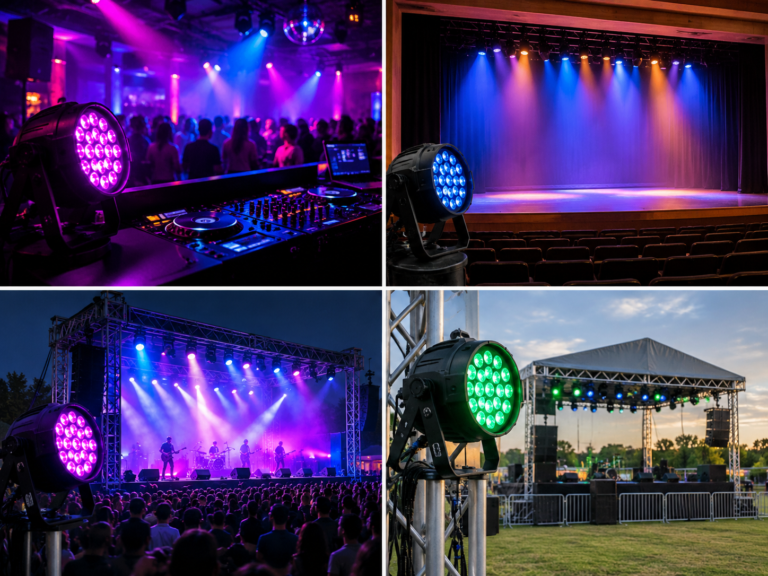
- General color effects for concerts, DJs, and live events
- Supplementary illumination across performance areas
The important point is that PAR describes a fixture category, not one fixed beam characteristic. Some PAR lights produce relatively concentrated beams, while others are designed for wider coverage. Their actual performance depends on the optics, light source, and fixture design.
What Is Wash Lighting?
Wash lighting is a technique used to illuminate a broad area with relatively even light distribution. Instead of concentrating illumination on one small subject, it creates a wider field of light across a stage, backdrop, group of performers, or architectural surface.
Stage wash lighting is commonly used to establish the overall color and visual atmosphere of a performance. It can provide a consistent background for moving effects, help illuminate several performers at once, or change the mood of a venue between different parts of an event.
A wash effect can be created by different types of fixtures, including:
- Fixed LED PAR lights
- Wash moving head lights
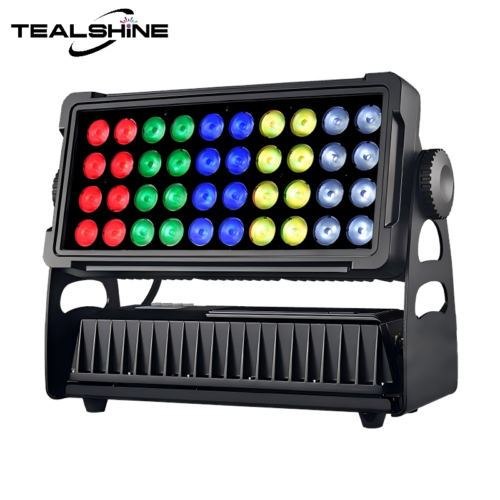
- Dedicated LED wall wash fixtures
- LED light bars and battens
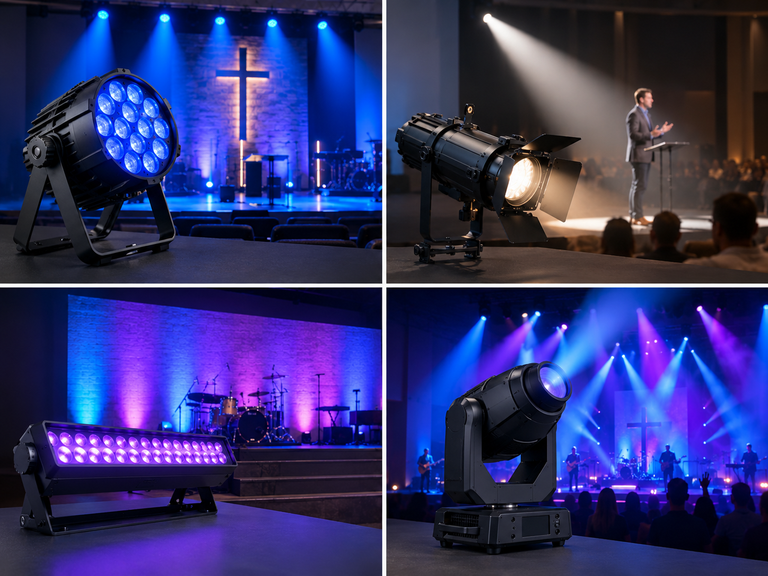
These fixtures can all produce broad illumination, but they are not interchangeable in every situation. A fixed PAR light provides coverage from one selected position. A wash moving head can change its direction during a performance. A wall wash fixture is designed around the distribution requirements of a surface.
PAR Light vs Wash Light: What Is the Difference?
The most useful way to compare PAR lights and wash lights is to look at their intended function and fixture design rather than treating them as two completely separate lighting categories.
| Comparison | LED PAR Light | Wash Moving Head |
| Main role | Fixed-position illumination and color effects | Broad illumination with motorized movement |
| Position | Usually stays in its installed position | Can pan and tilt during a show |
| Coverage | Depends on beam angle and optical design | Depends on zoom range and optical design |
| Lighting effect | Can produce stage washes, backlight, and colored effects | Can create moving washes and dynamic color coverage |
| Installation | Often straightforward for fixed rigs | Requires suitable mounting and movement clearance |
| Control | May support DMX and standalone modes | Often supports DMX control for movement and lighting functions |
| Typical applications | Small stages, DJ setups, backdrops, fixed stage positions | Concerts, festivals, large event stages, dynamic productions |
A dedicated wall wash fixture is another option when the main task is illuminating a long backdrop, wall, or scenic surface. It should be evaluated separately from a wash moving head because its optical design and installation requirements may be quite different.
Is a PAR Light Also a Wash Light?
Yes. This is an important distinction for anyone comparing stage lighting equipment.
An LED PAR light can be used as a wash light when its beam spread, output, and position are suitable for covering the target area. For example, several LED PAR fixtures mounted along a stage truss can create a continuous colored wash across a performance space.
However, not every PAR light is suitable for every wash application. A narrow-beam PAR may produce a concentrated pool of light, while a wider-beam model may be more appropriate for general coverage.
Likewise, not every moving head is a wash fixture. Beam moving heads are designed to create concentrated shafts of light, while spot moving heads are intended for more defined projections and effects.
When evaluating a product, check its optical design and intended function instead of relying only on the product name.
When Should You Choose LED PAR Lights?
LED PAR lights are a practical choice when a lighting setup needs reliable coverage from fixed positions. They are particularly useful for installations where fixtures do not need to change direction during a performance.
Fixed Stage Wash Lighting
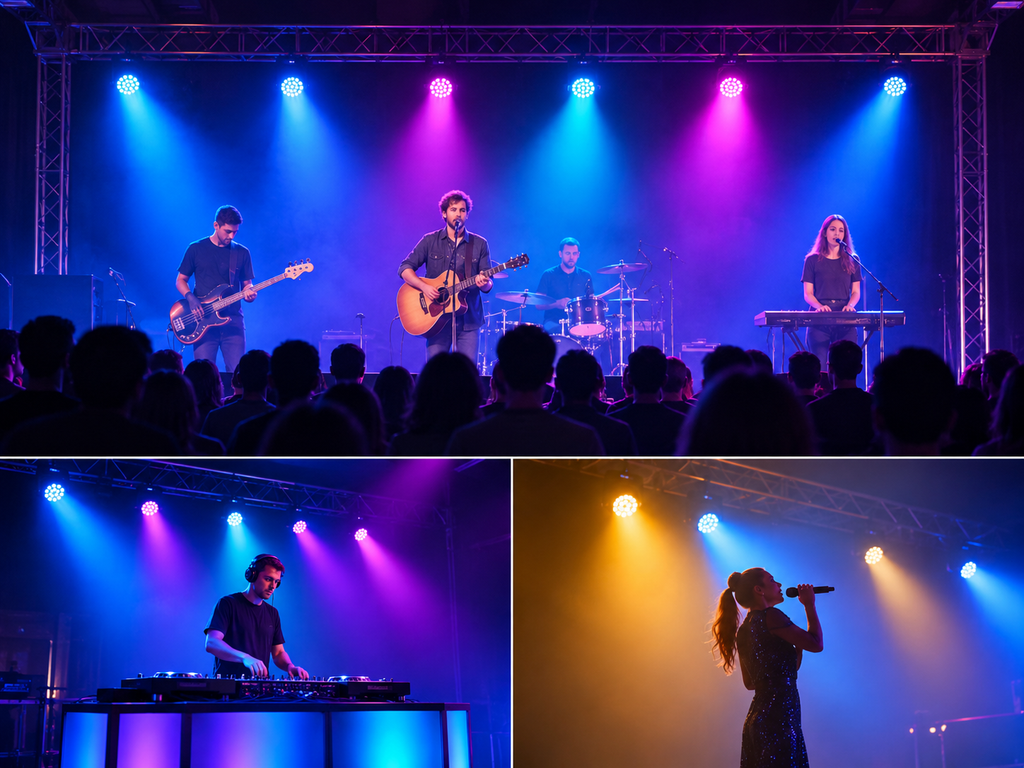
For a small or medium-sized stage, multiple LED PAR fixtures can be arranged along a front or rear truss to provide colored coverage. Each fixture illuminates a section of the stage, and the beams can overlap to create a more continuous wash.
This arrangement is useful for bands, school performances, church stages, and multipurpose venues where the lighting design needs to remain relatively consistent.
The main selection factors are beam angle, fixture output, color configuration, mounting distance, and the number of units required.
DJ Booths and Compact Event Setups
Portable DJ setups often have limited space and installation time. Fixed LED PAR fixtures can provide background color, illuminate the DJ booth, and create a basic stage atmosphere without requiring motorized movement.
For mobile operators, also consider fixture weight, mounting options, power connections, control modes, and transportation requirements.
A compact fixture may be convenient, but it still needs sufficient output and suitable beam coverage for the intended venue.
Backlighting and Side Lighting
PAR lights are also useful for creating color from the rear or sides of a performance area. Backlighting can help separate performers from the background, while side lighting can add color and visual depth.
In these applications, the goal is not necessarily to illuminate the entire stage evenly. Instead, fixtures are positioned to create a particular layer of the lighting design.
For more precise performer illumination, PAR lights may need to work alongside profile spotlights, Fresnels, or other dedicated fixtures.
When Should You Choose Wash Lights for Stage?
A dedicated wash fixture becomes more useful when the lighting design requires broad coverage, adjustable movement, or more flexible control over the illuminated area.
Concerts and Music Festivals
Large concerts and festivals often require lighting that can change throughout a performance. A wash moving head can reposition its beam, shift colors, and cover different sections of the stage as the show progresses.
For a festival stage, the lighting team may need to illuminate several performers, create changing background colors, and coordinate visual transitions with music and other effects.
When selecting the best wash lights for festivals, consider:
- The size and depth of the stage
- Throw distance from truss positions to the target area
- Available zoom or beam adjustment
- Light output under the intended color settings
- DMX control and fixture grouping
- Environmental protection for outdoor installations
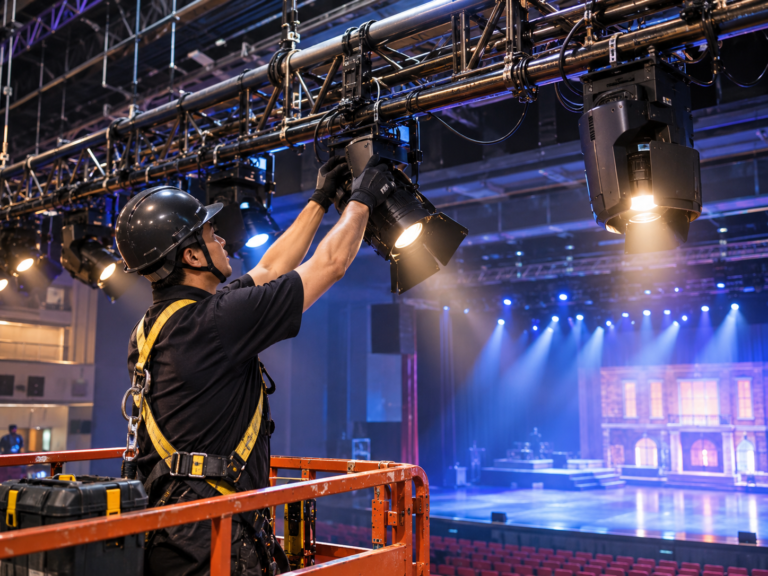
- Maintenance access and transport requirements
For outdoor events, check the fixture’s IP rating and the manufacturer’s stated operating conditions. A fixture should not be treated as weatherproof simply because it is used at a festival.
A combination of fixed PAR fixtures and wash moving heads can provide both consistent stage coverage and dynamic movement.
Weddings and Banquet Venues
Wedding venues often need lighting that complements the room rather than overpowering it. Wash fixtures can illuminate stage backdrops, reception areas, walls, and decorative structures with coordinated colors.
The best LED wash lights for wedding venues are not necessarily the most powerful models. The right choice depends on the room size, ceiling height, surface colors, desired atmosphere, and whether the lighting needs to change during the event.
For example, a ballroom may use fixed LED PAR lights for wall uplighting and background color, while a wash moving head provides additional movement around the stage or dance floor.
When evaluating equipment for wedding applications, pay attention to:
- Smooth dimming for gradual changes in atmosphere
- Color options that suit different event themes
- Fan noise, especially in quiet indoor venues
- Fixture size and appearance
- Wireless or DMX control options, depending on the setup
- Ease of installation and removal
For rental companies serving weddings, flexible fixtures that can be used in different room layouts may be more practical than equipment designed for only one fixed installation.
Theater and Performing Arts
Theater productions often need controlled lighting changes that support different scenes. Wash fixtures can help establish the color and general appearance of the stage, while other fixture types provide more precise illumination for performers.
A fixed PAR wash may be suitable for coloring a backdrop or adding side light. A wash moving head can provide additional flexibility when the production requires changing coverage between stage areas.
However, wash lighting should not replace dedicated front lighting when clear facial visibility and controlled illumination are essential. A complete theater lighting design usually combines different fixture types according to their roles.
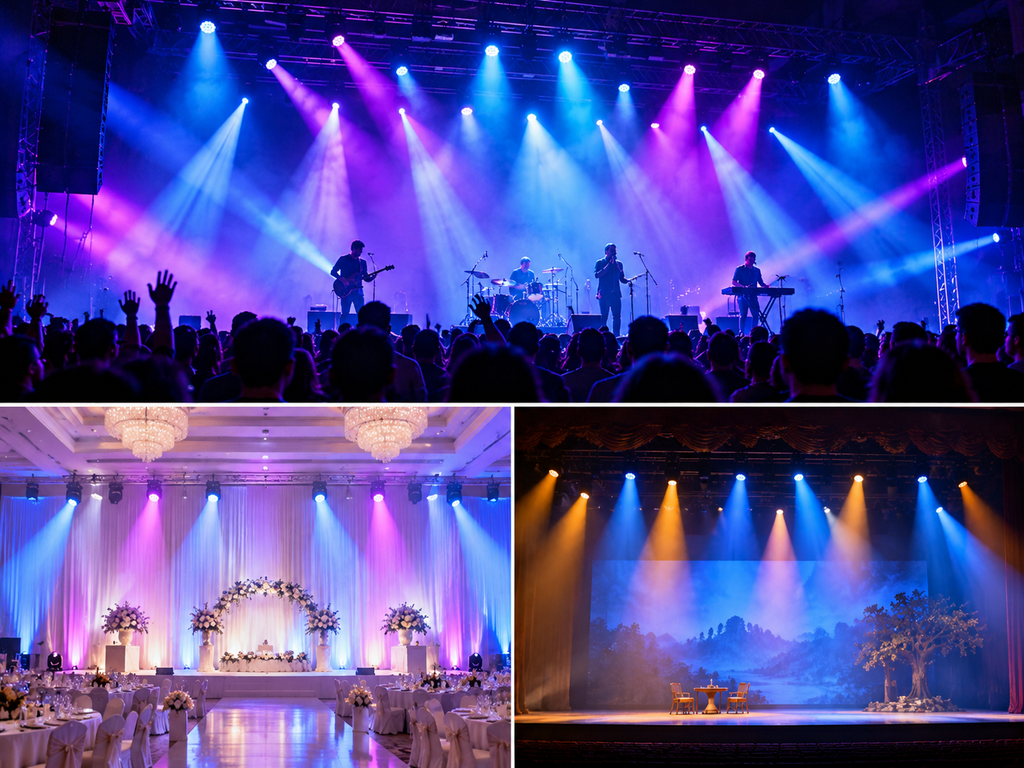
PAR Lighting for Stage: How to Choose the Right Setup
There is no universal fixture arrangement that works for every stage. The most practical approach is to identify the lighting tasks first and then select the fixtures that can perform them.
| Stage Requirement | Suitable Fixture Option | Main Consideration |
| Fixed colored stage coverage | LED PAR lights | Beam angle, output, and spacing |
| Changing wash direction | Wash moving heads | Pan, tilt, zoom, and control |
| Backdrop illumination | PAR lights or wall wash fixtures | Surface coverage and evenness |
| Dynamic concert effects | Wash moving heads with other effect fixtures | Movement, programming, and output |
| Small DJ booth | Compact LED PAR lights | Size, mounting, and control |
| Wedding venue uplighting | LED PAR lights or dedicated uplights | Color quality and dimming |
| Long scenic wall | Wall wash fixtures or LED bars | Distribution and fixture spacing |
1. Measure the Coverage Area
Before choosing a fixture, measure the width and height of the stage or surface that needs illumination. Also record the approximate distance between the fixture and the target area.
These measurements help determine whether a wide or narrow beam is more appropriate and how many fixtures may be needed.
A wider beam generally covers a larger area at the same distance, while a narrower beam concentrates light into a smaller area. However, wider coverage does not automatically mean sufficient illumination. Always consider the fixture’s actual output and beam distribution.
2. Compare Beam Angle and Output
Beam angle is one of the most important specifications when selecting stage wash lights.
A narrow beam can be useful when fixtures are mounted farther from the target or when a smaller area needs concentrated illumination. A wider beam is often more suitable for general coverage or nearby surfaces.
When comparing products, check the manufacturer’s stated beam angle and photometric information. If possible, request illuminance data at a specified distance so that different models can be evaluated under comparable conditions.
Do not use wattage alone as a measure of brightness. LED efficiency, optics, color settings, and beam distribution all affect the final result.
3. Consider Color Mixing and Dimming
Color requirements vary between venues and productions. A DJ event may use saturated colors, while a wedding venue may need softer tones and gradual transitions.
Common LED configurations include RGB and RGBW, although some fixtures use additional LED colors to support different mixing requirements.
Buyers should consider the colors they actually need, how smoothly the fixture dims, and whether the output remains suitable at different color settings.
For installations with multiple fixtures, consistency between units is also important. Differences in color appearance can become noticeable when several lights are used together.
4. Check Control Compatibility
A fixed LED PAR may operate through onboard programs, DMX, or other supported control methods. A wash moving head may also require movement channels and additional programming.
Before ordering, confirm the control modes, DMX channel requirements, connector types, and compatibility with the existing lighting console.
If the project uses multiple fixtures, consider how they will be addressed and grouped. A clear control plan can make setup and operation more efficient.
Should You Use PAR Lights and Wash Lights Together?
In many professional lighting setups, combining different fixture types is more practical than choosing only one.
PAR lights can provide fixed-position color and supplementary coverage. Wash moving heads can add movement and adjust their coverage during the performance. Other fixtures, such as beam and spot moving heads, can create more concentrated effects.
Consider a live music stage:
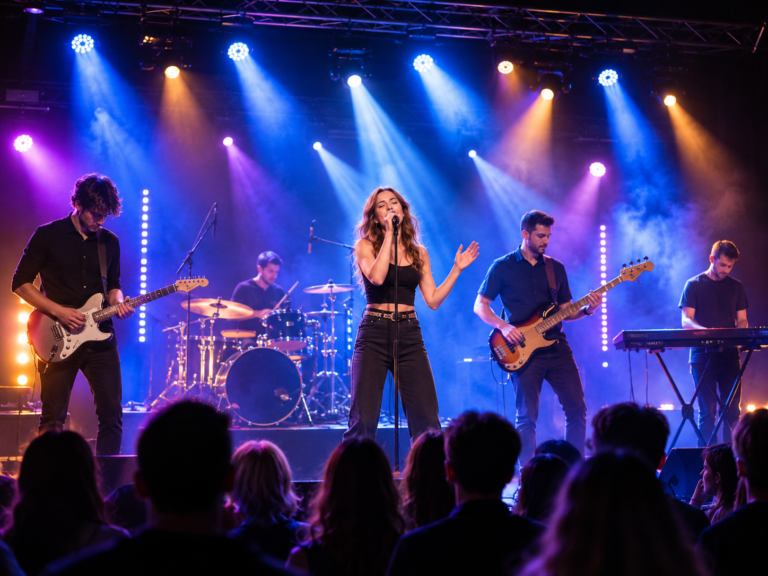
- Fixed LED PAR lights provide consistent color across the rear of the stage.
- Wash moving heads change direction and color during different sections of the performance.
- Beam moving heads create concentrated effects above the performers.
- Profile fixtures provide more controlled illumination where required.
This layered approach gives the lighting operator more flexibility without requiring one fixture type to perform every task.
The same principle applies to wedding and corporate events. Fixed PAR lights can provide background color, while a small number of moving wash fixtures add visual movement when needed.
The ideal combination depends on the venue, budget, production requirements, and available installation positions.
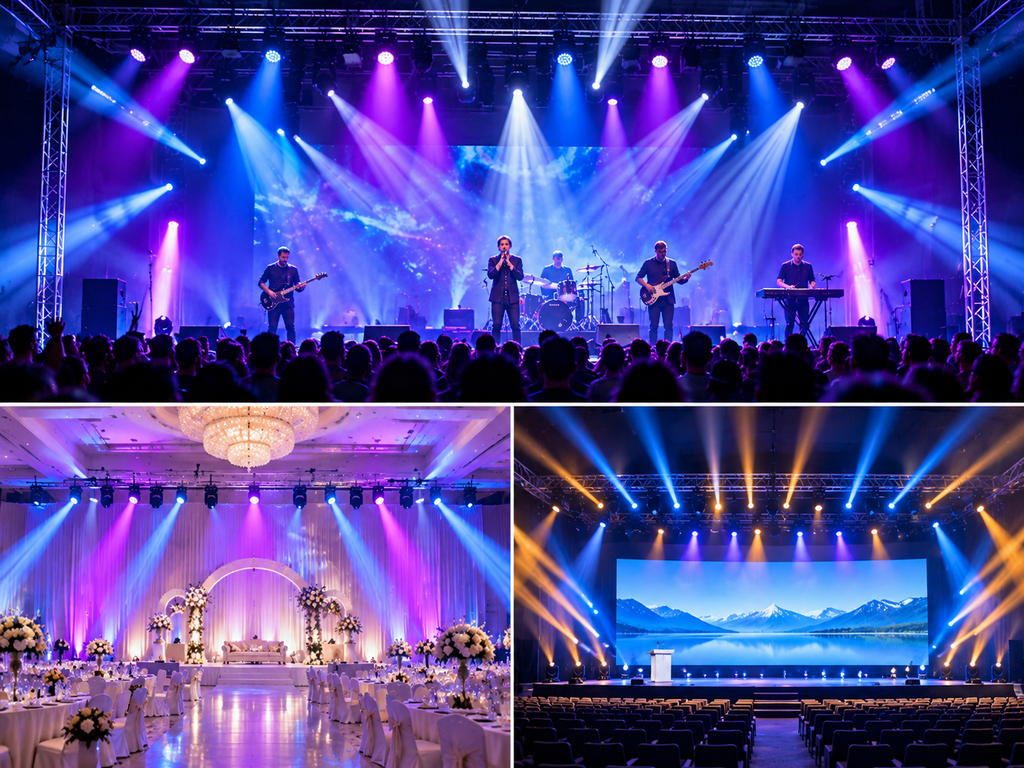
What Should Buyers Check Before Purchasing Stage Wash Lights?
For distributors, rental companies, and project contractors, choosing the right equipment also means evaluating the supplier and the long-term requirements of the installation.
Product Consistency
When purchasing several fixtures for the same project, ask about consistency in color output, brightness, and control behavior. A sample test can help confirm whether the fixtures match the intended application before a larger order is placed.
Installation and Maintenance
Check fixture dimensions, mounting accessories, cooling arrangements, connection requirements, and access to serviceable components.
For rental inventory, transportation and setup time are also important. Fixtures that are easy to pack, connect, and configure may be more practical for operators handling multiple events.
Technical Documentation
Request the specifications needed to evaluate the fixture, including:
- Power consumption and electrical requirements
- Beam angle and available photometric data
- LED configuration and color functions
- DMX channel modes and control options
- Dimensions and mounting information
- IP rating, where relevant
- Warranty terms and available replacement parts
For OEM or ODM projects, confirm customization options, order quantities, packaging requirements, and technical approval procedures before production.
Frequently Asked Questions About PAR Lights and Wash Lights
What is the main difference between a PAR light and a wash light?
A PAR light is a type of fixture, while a wash describes a broad lighting effect or function. An LED PAR light can produce a stage wash when its beam angle and output are suitable for the target area. A wash moving head is a dedicated fixture that combines broad illumination with motorized movement.
What does PAR stand for in stage lighting?
PAR stands for Parabolic Aluminized Reflector. The term originated from reflector-based lamp designs used in stage and entertainment lighting. Modern LED PAR fixtures use LED light sources and optical components to produce different beam spreads and lighting effects.
What is a wash light used for?
A wash light is used to illuminate a broad area such as a stage, group of performers, backdrop, or wall. It helps create consistent coverage, add color, and establish the atmosphere of concerts, weddings, theater productions, and other events.
Are PAR lights suitable for stage wash lighting?
Yes. LED PAR lights are commonly used for stage wash lighting, especially in fixed installations. The number of fixtures, beam angle, output, and mounting positions determine whether they can provide the required coverage.
What are the best wash lights for festivals?
The best choice depends on the stage size, throw distance, lighting design, and outdoor conditions. Wash moving heads are useful when the production needs dynamic movement and adjustable coverage. Fixed LED PAR lights can provide additional color and background illumination. For outdoor use, check the fixture’s environmental protection rating.
What are the best LED wash lights for wedding venues?
The best fixtures depend on the room layout and desired atmosphere. Fixed LED PAR lights can work well for wall uplighting and background color, while wash moving heads can add movement to larger stages or reception areas. Smooth dimming, suitable color options, low operating noise, and convenient installation are useful factors to compare.
Can PAR lights and wash lights be controlled by DMX?
Many LED PAR fixtures and wash moving heads support DMX control, but the available functions vary by model. Check the supported channel modes and control options before purchasing, particularly when adding new fixtures to an existing lighting system.
Choose the Right Lighting Combination for Your Stage
PAR lights and wash lights are not necessarily competing options. A PAR fixture can provide wash lighting, while a dedicated wash moving head offers additional movement and coverage flexibility.
For a fixed stage installation, LED PAR lights may provide a practical foundation. For festivals, concerts, and larger productions, wash moving heads can add dynamic coverage. For weddings and event venues, a combination of fixed uplighting and adjustable wash fixtures can support different room layouts and event styles.
At Tealshine, we work with stage lighting buyers, distributors, and event production businesses to help identify suitable lighting options for different applications. Share your venue requirements, target coverage area, control preferences, and estimated quantity with our team to discuss your project.